On New Year’s Eve 1985, a World War II-era Douglas DC-3 carrying teen idol Ricky Nelson went down in a Texas cow pasture after an in-flight fire. Seven people died, including the 45-year-old singer. Two people who were not on that plane were his 18-year-old twin sons, Matthew and Gunnar. Their father’s sudden, unexplained change of plans only days earlier is the reason they are alive today.

From Shy Child to Rock ’n’ Roll Star
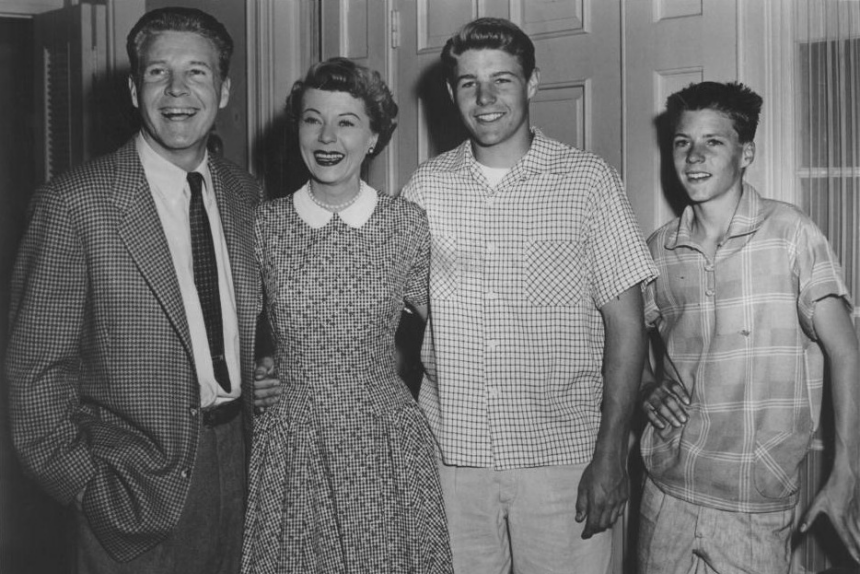
Eric Hilliard “Ricky” Nelson was born May 8, 1940, in Teaneck, New Jersey. He grew up in the public eye as the younger son of Ozzie and Harriet Nelson on the long-running radio and television show The Adventures of Ozzie and Harriet. A shy boy who struggled with severe asthma, Ricky first appeared on the program as a child and later became one of the biggest teen idols of the late 1950s and early 1960s.
Hits such as “Poor Little Fool,” “Travelin’ Man,” “Hello Mary Lou,” and later “Garden Party” made him a household name. He married actress Kristin Harmon in 1963. The couple had four children: Tracy, twins Matthew Gray and Gunnar Eric (born 1967), and Sam. By the mid-1980s, Ricky was still touring, often in smaller venues, to support his lifestyle and legal obligations after a difficult divorce.
The Phone Call That Changed Everything
In late December 1985, Ricky was on a short Southern tour. The plan was for Matthew and Gunnar—then living with their father—to fly to Alabama, meet him, and continue on his private DC-3 (registration N711Y) to a New Year’s Eve show in Dallas. The twins had never flown on the old “Flying Bus” and were excited about the trip. Bags were packed.
Then, just days before departure (accounts place the call around December 27), Ricky phoned them. Gunnar later recalled that his father “didn’t sound like himself” and was unusually resolute:
“I’ve decided I don’t want you to fly on the plane. I’d love to spend time with you guys on New Year’s, but if that’s the case, I want you to fly commercial to Dallas. We’ll just meet there.”
When the boys protested that the whole point had been to ride the plane with him, Ricky was firm: either commercial or stay home. The twins ultimately stayed in California. They never saw their father again.
Both sons have described the decision as a premonition or gut feeling. The aircraft had a history of mechanical issues, including an earlier engine failure that year. Whether Ricky sensed something specific or simply felt uneasy, the call kept his sons off the flight.
:max_bytes(150000):strip_icc():focal(749x0:751x2)/Gunnar-Matt-Ricky-Nelson-1-121025-5eb0a920c96a41d380d873cbd6f3c0ea.jpg)
December 31, 1985: Fire in the Cabin
The DC-3 departed Guntersville, Alabama, around 1 p.m. local time with nine people aboard: Ricky, his fiancée Helen Blair, five members of his band and crew, and two pilots. About three hours into the flight, while cruising near 6,000 feet, smoke began filling the cabin.
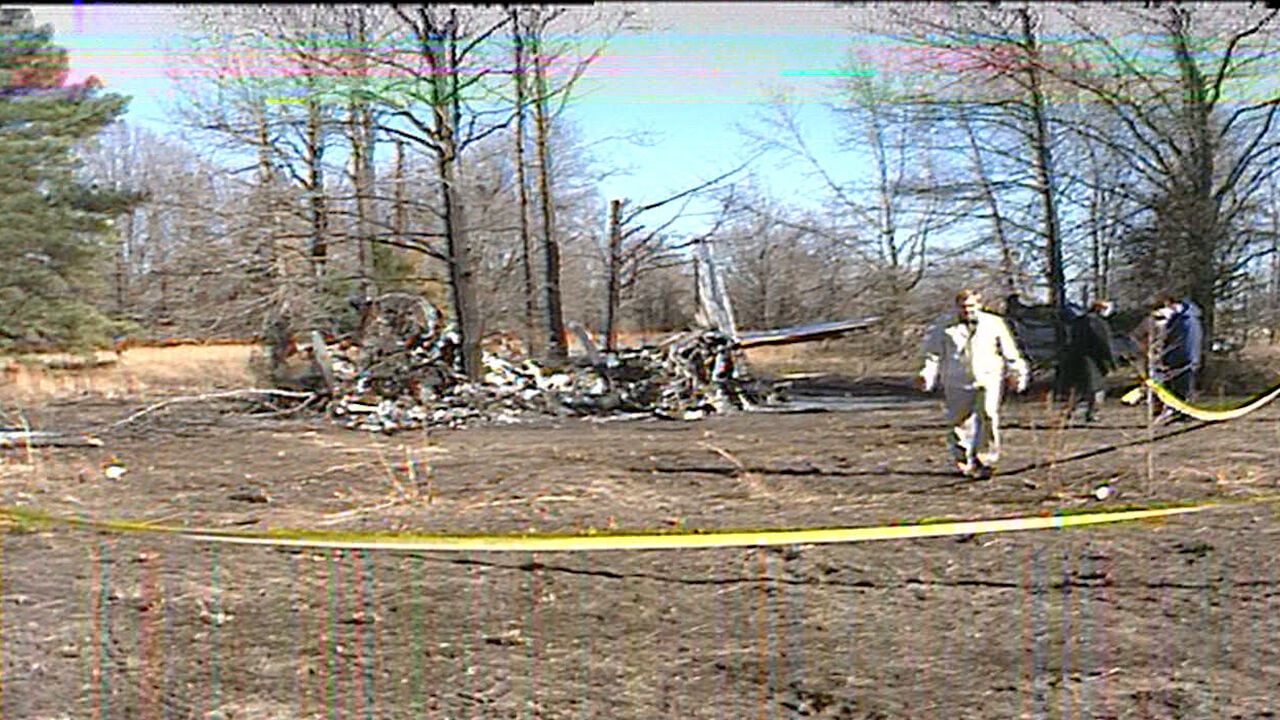
The pilots declared an emergency and attempted to reach an airport near De Kalb, Texas. They could not make it. At approximately 5:14 p.m. CST the aircraft made a forced landing in a pasture less than two miles short of a landing strip. It struck wires, a pole, and trees. The pilots escaped through the cockpit windows, suffering serious burns. Everyone in the passenger cabin—seven people—perished as the fire consumed the plane.

What the Investigation Found
The National Transportation Safety Board investigated for months. The fire originated in the aft cabin area near the floorline, in the vicinity of the gasoline-powered cabin heater. The exact ignition source could not be determined with certainty, but the NTSB found no evidence that freebasing cocaine caused the fire—a rumor that spread quickly in the tabloid press. Toxicology showed small amounts of cocaine in some victims, including Ricky, but the official findings pointed to the heater area and criticized the pilots for not fully following the in-flight fire checklist (opening fresh-air vents, not using supplemental oxygen or the available extinguisher in a timely way).
The plane itself was an aging C-47 converted to DC-3 configuration that Ricky had purchased earlier in 1985. It had already experienced at least one serious mechanical problem that year.
Legacy of a Father’s Instinct
Matthew and Gunnar Nelson went on to form the band Nelson. Their 1990 album After the Rain produced multi-platinum hits, including “(Can’t Live Without Your) Love and Affection.” They have continued performing and have spoken openly about the final conversation and the call that saved them. In recent years they have written about their father with deep affection, describing him as both a loving parent and someone they came to admire as a peer in music.

Ricky Nelson’s death at 45 cut short a career that bridged 1950s teen idol status and later rock credibility. The plane crash remains a tragic chapter, complicated by early rumors that the official record later rejected. What stands out most clearly decades later is a father’s last-minute decision—whether driven by intuition, mechanical concerns, or something less tangible—that kept his twin sons safely on the ground.
That single phone call is the reason Matthew and Gunnar Nelson are still here to tell the story.