The Justice Department is moving to revoke the citizenship of 39 naturalized Americans it says lied about criminal histories, the latest step in a 2026 denaturalization surge that has already produced more court filings than the government typically brought in a decade.
NBC News reported on October 5, 2026, that it had obtained a draft announcement describing the action. The individuals are accused of immigration fraud by lying or omitting facts on their applications to become U.S. citizens. Allegations in a draft or a complaint are not findings. Only a federal judge can cancel a certificate of naturalization.
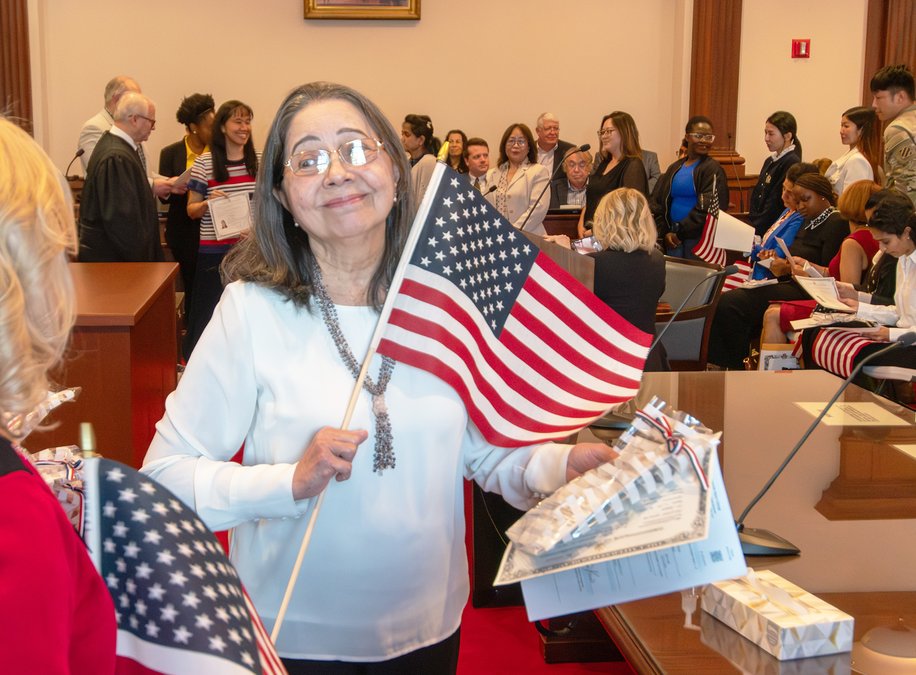
That legal limit is the fact naturalized citizens need most. Citizenship granted at a ceremony is not a visa the agency can pull by letter. It is also not automatic or permanent if the government later proves it was illegally obtained. The gap between those two rules is where the 2026 campaign sits.
What denaturalization actually is
Denaturalization is a court process that cancels citizenship acquired through naturalization. It does not apply to people who are citizens because they were born in the United States. Birthright citizenship is a separate fight, and it is not the tool the Justice Department is using in these cases.
Congress wrote the main civil power into 8 U.S.C. § 1451, also called INA § 340. The government may ask a federal district court to revoke naturalization if it was illegally procured, or if it was procured by concealment of a material fact or by willful misrepresentation. A second route is criminal. A conviction for knowingly procuring naturalization contrary to law, under 18 U.S.C. § 1425, requires the court to revoke citizenship.
For most of the last half-century, civil denaturalization was rare. Syracuse University’s Transactional Records Access Clearinghouse (TRAC) has tracked an average of well under one civil case a month from 2008 onward, and about 11 cases a year from 1990 to 2017. Cases clustered around war criminals, terrorism, and clear identity fraud. The Biden administration filed 24 cases over four years, according to Justice Department figures cited by USA Today. The first Trump term filed 102.
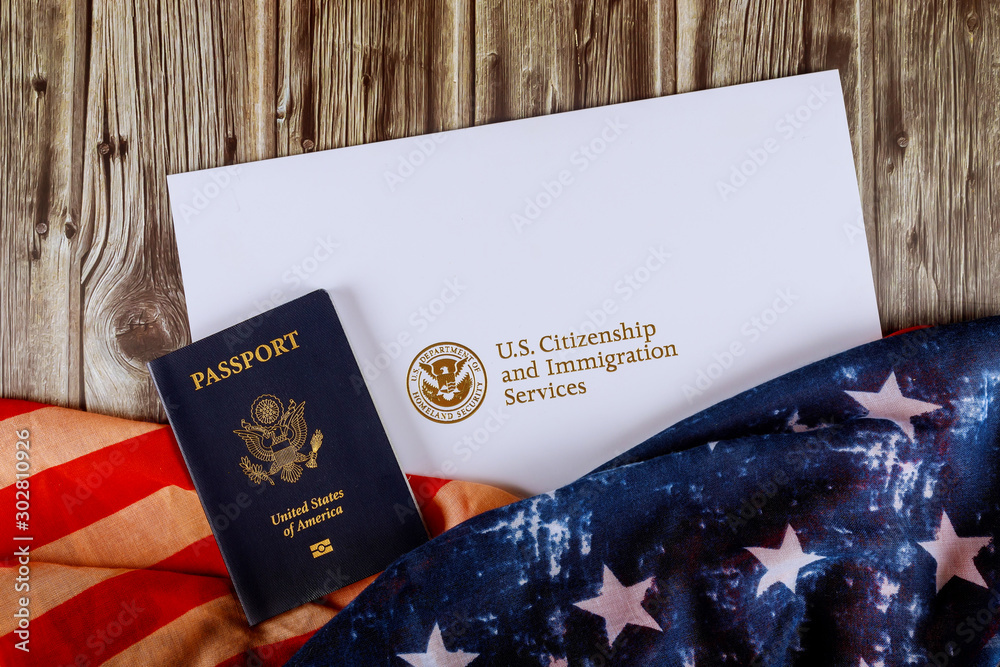
The certificate issued after the oath is the document these lawsuits seek to cancel. Answers on Form N-400 do not expire when the ceremony ends. They stay in the immigration file.
How the 2026 campaign escalated
The policy turn started before the filing surge. On June 11, 2025, Civil Division Assistant Attorney General Brett Shumate told Justice Department lawyers to prioritize and maximally pursue denaturalization in every case the law and the evidence would support. The memo listed national-security cases, war crimes, fraud, and felonies that were not disclosed during naturalization, plus a catch-all for other referrals the division judged important enough to file.
Filings stayed quiet at first. TRAC counted eight civil denaturalization complaints in all of 2025. Then the pace broke.
- May 2026: at least 15 complaints.
- Early June 2026: 18 more in the first half of the month.
- January through July 2026: at least 105 civil lawsuits, including 50 in July alone, according to TRAC data reported by Newsweek.
- August 3–11, 2026: the department announced a batch of 25 complaints and said it had filed 123 civil denaturalization complaints since January 20, 2025, which it called the most in recorded history.
- June 2026: CNN reported that a senior Justice Department official said the administration planned to file at least 250 cases by October, with U.S. attorney offices possibly adding several hundred more.
TRAC found about 125 such lawsuits nationwide from 2008 through 2025. The first seven months of 2026 nearly matched that entire stretch. Cases landed in at least 37 states and the District of Columbia. Florida led with 19 filings through July, followed by Texas and Maryland with 10 each.

The department has framed the work as fraud enforcement, not a general review of naturalized citizens. Acting Attorney General Todd Blanche said in August that citizenship “must be obtained lawfully and honestly,” and that the July–August batch was “only the beginning.” USCIS spokesperson Zach Kahler told Newsweek the agency has a “zero-tolerance policy” for lies or misrepresentations in naturalization and is working with the Justice Department to recommend denaturalization where citizenship was obtained through fraud.
USCIS Director Joseph Edlow used similar language on September 23, 2026, after a Charlotte grand jury indicted Sha Bahadur Ghaley, a naturalized citizen from Bhutan, for naturalization fraud tied to alleged sexual offenses against a child that prosecutors say were denied on his 2017 application. Civil complaints were also filed against three other people in that district. Those charges and complaints remain allegations until a court rules.
The September policy rewrite did not create new grounds
On September 14, 2026, USCIS issued Policy Alert PA-2026-13 and reorganized Volume 12, Part L of its Policy Manual. The section is now titled “Loss of U.S. Nationality and Revocation of Naturalization.” It took effect the same day and cites Executive Orders 14148 and 14161. USCIS said the alert did not change the circumstances under which a naturalized citizen can lose citizenship. Public comment was open into October.
What did change is internal machinery. The manual now puts referral rules and priority categories in one place. It tells officers that when a U.S. citizen files a petition or application, the agency should determine whether that citizen obtained citizenship lawfully. After a denaturalization, USCIS reviews pending and previously approved forms that person filed for relatives.
Priority categories described in the guidance and in law-firm summaries of it include:
- Terrorism, espionage, and other national-security links
- Egregious public-safety cases
- Human-rights violations
- Gang and cartel activity
- Undisclosed felonies, violent crimes, and sex offenses
- Human trafficking
- Fraud against public funds and certain financial crimes
- False identity and false claims to U.S. citizenship
- Unlawful voting before naturalization
- Marriage fraud
Reporting in late 2025 and early 2026 said field offices were asked to supply the Justice Department’s Office of Immigration Litigation with 100 to 200 denaturalization referrals a month. A referral is not a lawsuit, and a lawsuit is not a revocation. The numbers still explain why filings jumped after years of near-dormancy.
The four legal grounds, and the burden the government must meet
USCIS lists four statutory grounds. They are narrower than a headline about “revoking citizenship” suggests.
Illegal procurement means the person did not meet a requirement at the moment citizenship was granted: lawful admission as a permanent resident, the residence and physical-presence rules, or good moral character. Deception is not required if eligibility was missing.
Concealment or willful misrepresentation requires a false statement that was willful and material, and that the person obtained citizenship as a result. Under Kungys v. United States, materiality turns on whether the truth would have had a natural tendency to influence the decision. An innocent mistake, a transposed date, or an omitted job is not the same case as a hidden identity, a concealed removal order, or a denied felony.
Membership in certain organizations barred by INA § 313 within five years of naturalization can be treated as evidence that the person lacked attachment to the Constitution at the time of the oath.
An other-than-honorable military discharge can undo citizenship that was granted on the basis of service, for people naturalized on or after November 23, 2003, if they leave before completing five years of honorable service.
In a civil case the government must prove its claim by clear, convincing, and unequivocal evidence that leaves no doubt. There is no statute of limitations and no right to a court-appointed lawyer. In a criminal § 1425 case the standard is beyond a reasonable doubt, the limitations period is generally 10 years, and Maslenjak v. United States (2017) requires the government to show that the illegal act contributed to obtaining citizenship. After that criminal window closes, the same facts can still be filed as a civil case.
A crime committed after naturalization does not, by itself, strip citizenship. It becomes relevant if it shows the person was ineligible during the good-moral-character period, or lied about conduct that had already occurred.
Who is in the filed cases, and who is not
The complaints the department has publicized are not random audits of long-settled citizens. August’s 25-case batch, filed between July 20 and August 3, involved natives of 17 countries and allegations that included attempted murder, child sexual abuse, domestic violence, marriage fraud, identity fraud, and practicing medicine without a license. TRAC reported that sexual abuse of a minor was the single largest underlying basis in the July complaints it reviewed. Other public cases have involved health-care fraud, stock fraud, and a former diplomat who admitted working for Cuba.
That pattern cuts both ways. It supports the administration’s claim that the docket is aimed at people who allegedly should never have been sworn in. It also shows why volume targets worry defense lawyers. Civil denaturalization has fewer protections than a criminal case. People least able to hire counsel are the ones most exposed if a weak file is filed to meet a monthly number. Immigration advocates and the Migration Policy Institute have argued that the more immediate effect may be fear: naturalization no longer feels like the last step in the process.
Scale still matters. About 8 million people naturalized in the decade before this surge. TRAC’s 105 lawsuits in seven months are a sharp break from history and a tiny share of the naturalized population. USCIS has also made new naturalization harder. A National Foundation for American Policy analysis found approvals down about 78 percent from January 2025 to July 2026, and the denial rate up from 8.4 percent to 20.1 percent. DHS has cited a roughly 75 percent drop. Those figures are about people still applying, not about people already sworn in.
The oath is the legal moment eligibility is judged. Later misconduct does not rewind it unless the file shows the person was ineligible, or untruthful, at that moment.
What revocation does to status, travel, and family
If a judge revokes naturalization, the person returns to the status held before citizenship. That may be lawful permanent residence. It may be no status at all. Removal proceedings can follow. A passport and a certificate of naturalization tied to the revoked grant lose their force.
Family consequences depend on the ground, under INA § 340(d):
- If revocation is for concealment or willful misrepresentation, a spouse or child who derived citizenship through that person loses it, whether they live in the United States or abroad.
- If revocation is for illegal procurement, derived citizenship generally survives.
- Organization-membership and military-discharge grounds affect derived citizens mainly if they are living outside the United States at the time.
A relative who loses derived citizenship cannot later use that same relationship to naturalize again. USCIS also rechecks family petitions the denaturalized person filed. Anyone about to file an I-130, or any other benefit, on the basis of their own naturalization should read the old file first.
What naturalized citizens should do in 2026
Most naturalized citizens will never see a complaint. The practical risk is concentrated on people whose A-file contains a prior identity, an undisclosed arrest, a removal order, a finding of marriage fraud, or a serious crime during the statutory good-moral-character window that was denied on the N-400.
A short file review is still worth doing before the next benefit application, because that application is now an explicit moment for USCIS to look back.
- Keep copies of the N-400, the certificate, old passports, visas, and I-94 records.
- List every name, date of birth, and A-number ever used, and make sure later forms match.
- Collect arrest, charging, and disposition records, including cases that were dismissed.
- Do not “correct” an old answer by repeating it. If a new form would conflict with the N-400, resolve the conflict with counsel before filing.
- Do not assume a civil case is time-barred. It is not.
- If a complaint arrives, the deadline to answer in federal court is short. This is not a USCIS request for evidence.
An honest mistake can still be defended. Willfulness and materiality are the usual battlegrounds, and the government has to prove both to a standard that leaves no doubt. Concealing a disqualifying crime or a second identity is a different case, and 2026 filings show that is where prosecutors are spending their time.
Questions naturalized citizens are asking
Can USCIS cancel my citizenship by itself? No. USCIS investigates and refers. The Justice Department files in federal court. A judge decides.
Can I lose citizenship for a crime I committed after the oath? Not by itself. The government has to tie the conduct to eligibility or truthfulness at the time of naturalization.
Is there a deadline? Not for civil revocation. Criminal naturalization-fraud charges generally face a 10-year limit.
Does this affect my U.S.-born children? No. Children born in the United States are citizens by birth. Children who derived citizenship through a parent can be affected, and only on the grounds above.
Are 250 cases the same as 250 revocations? No. The October target reported by CNN was for filings. Each defendant can contest the case. By late July 2026 the department had said it had won at least 19 of the cases filed in this term.
Should I avoid filing for my spouse because of this? Not automatically. A petition can trigger a look-back. That is a reason to compare the petition with the old N-400 before filing, not a reason for every naturalized citizen to freeze.
The October 5 draft announcement, the July filing record, and the September referral rewrite all point the same direction. The Trump administration has turned a rarely used statute into a standing enforcement program, aimed on the public record at fraud and concealed serious crime, with more cases still being prepared. For the several million people who naturalized on a complete and accurate application, the legal threshold has not moved. For anyone whose file would not survive a second reading, 2026 is the year that second reading became routine.