Nearly two decades after three-year-old Madeleine McCann disappeared from a holiday apartment in Portugal, one of the world’s most widely followed missing-person investigations continues to raise questions.
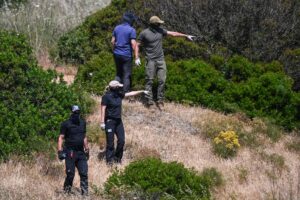
In June 2025, German and Portuguese police launched another extensive search in Portugal’s Algarve region, concentrating on areas close to a former residence associated with the investigation’s prime suspect, Christian Brueckner.
The operation brought forensic specialists, search teams, and investigative equipment to rural land near Praia da Luz, where Madeleine vanished on May 3, 2007.
For her family and millions of people who have followed the case, the renewed activity represented another attempt to uncover answers to a mystery that has remained unresolved for years.
However, the three-day operation ended on June 5, 2025, without a publicly announced breakthrough. Subsequent developments have also changed Brueckner’s legal circumstances, making it important to distinguish the original search from the current status of the investigation.
Why Police Returned to Portugal to Search for Madeleine McCann
The June 2025 operation was conducted by Portuguese authorities at the request of German investigators.
Officers focused on countryside between Praia da Luz and property previously associated with Christian Brueckner, a German national who had lived in the Algarve.
The investigation involved areas of dense vegetation, deserted buildings, rural tracks, and land that investigators believed warranted further examination.
German police had identified Brueckner as their leading suspect in 2020. Portuguese authorities subsequently designated him a formal suspect in 2022.
Despite years of investigation, Brueckner has not been charged in connection with Madeleine’s disappearance. He has denied any involvement.
The renewed search illustrated investigators’ determination to examine possible evidence even after so much time had passed.
It also raised a critical question: could an overlooked location hold information that earlier investigations had missed?
What Investigators Searched Near the Suspect’s Former Home

During the operation, authorities concentrated on several types of locations where potential evidence might have remained concealed.
Investigators examined abandoned buildings, cleared overgrown vegetation, investigated wells, and searched the surrounding land.
Reports from the scene described officers working with digging equipment and forensic tools. Some areas were cordoned off while teams inspected locations that might otherwise have gone unnoticed.
The search was particularly challenging because the countryside had changed considerably since Madeleine disappeared in 2007.
Vegetation grows, buildings deteriorate, roads change, and weather conditions can alter the landscape over time.
Nevertheless, forensic investigators can sometimes identify material years after an incident, depending on its condition and the environment in which it has remained.
In this case, police did not publicly establish that the locations they searched contained evidence directly connected to Madeleine.
Although media reports described the collection of certain materials, none was publicly confirmed as a decisive discovery in the case.
What Happened to Madeleine McCann in 2007?

Madeleine Beth McCann was on holiday with her parents, Kate and Gerry McCann, and her younger twin siblings in Praia da Luz, a resort village on Portugal’s southern coast.
On the evening of May 3, 2007, Madeleine was sleeping in the family’s holiday apartment while her parents were dining with friends at a nearby restaurant.
When Kate returned to check on the children, Madeleine was missing.
The disappearance immediately sparked an intensive police response, followed by widespread media coverage and international appeals.
Her photograph became familiar around the world as authorities and volunteers searched for information about what had happened.
Over the following years, investigators examined witness accounts, potential sightings, forensic findings, and numerous theories.
Yet none of those inquiries established a definitive public account of Madeleine’s fate.
The case became one of the most recognizable missing-child investigations in modern history, prompting extensive debate about missing-person procedures, international police cooperation, and the challenges of investigating a disappearance without conclusive evidence.
Who Is Christian Brueckner, the Prime Suspect?

Christian Brueckner became the central figure in the German investigation after prosecutors publicly identified him as their prime suspect in June 2020.
He previously lived in Portugal and spent time in the Algarve, including during the period surrounding Madeleine’s disappearance.
Brueckner was convicted of raping an elderly woman in Praia da Luz in 2005 and received a seven-year prison sentence.
German prosecutors have maintained that they suspect him of involvement in Madeleine’s disappearance. However, they have not publicly presented evidence sufficient to bring charges against him in that case.
In October 2024, a German court acquitted Brueckner of several additional sexual-offence allegations unrelated to Madeleine.
That acquittal did not determine whether he was involved in the McCann case, nor did his earlier conviction establish guilt in Madeleine’s disappearance.
He was released from prison in September 2025 after completing his sentence for the unrelated rape conviction.
As of November 2026, Brueckner remains the leading suspect in the German inquiry, but no criminal conviction or charge has established his involvement in Madeleine’s disappearance.
Previous Searches That Failed to Solve the Madeleine McCann Mystery

The June 2025 search was not the first time investigators had returned to Portugal looking for new evidence.
Over the years, several major operations have taken place in different locations associated with the investigation.
In 2014, British investigators searched areas of scrubland around Praia da Luz, using specialist equipment and forensic techniques.
In 2020, Portuguese officers also examined wells as investigators continued pursuing potential leads.
Another widely publicized search took place in May 2023 around the Arade reservoir, a body of water located inland from the coastal resort.
German authorities requested that operation as part of their continuing investigation.
Although police collected material for examination, the reservoir search did not produce a publicly confirmed breakthrough that explained Madeleine’s disappearance.
The history of these operations demonstrates why investigators face such a difficult task.
Even with international cooperation and modern forensic methods, locating reliable evidence from an incident that happened many years earlier can be exceptionally challenging.
Each unsuccessful search leaves investigators needing to reassess available information while considering whether additional leads justify further action.
Why the June 2025 Police Search Ended Without a Breakthrough
After three days of searching, German and Portuguese authorities concluded their operation on June 5, 2025.
Officers had examined rural land, derelict structures, and other potential locations, but no major discovery was publicly announced when the search ended.
Some reports described the discovery of animal bones and clothing during the operation. However, those reports did not establish a connection between the items and Madeleine.
The absence of an announced breakthrough should not be confused with proof that every possible lead has been exhausted.
Forensic examinations can take time, particularly when investigators need to determine the age, origin, or relevance of material recovered from outdoor environments.
Nevertheless, the search did not produce the resolution that Madeleine’s family and the public had hoped for.
The operation ended with the central questions unanswered: what happened to Madeleine, where is she, and who, if anyone, was responsible for her disappearance?
What Is the Latest Madeleine McCann Case Update in 2026?

The investigation has continued beyond the June 2025 search, although important developments have occurred in the legal situation of its prime suspect.
Brueckner was released from German prison in September 2025 after serving his sentence in an unrelated case.
German authorities subsequently maintained close surveillance of him.
On October 30, 2026, ITV News reported that the round-the-clock police surveillance imposed after his release was ending.
Separately, German prosecutors have pursued a legal challenge concerning Brueckner’s acquittal on other sexual-offence charges. Those proceedings are not charges over Madeleine’s disappearance.
British police have also continued their own investigation, known as Operation Grange, which began in 2011.
Despite the passage of time, the inquiry remains active. No publicly confirmed evidence has established Madeleine’s fate, and Brueckner has not been charged with her disappearance.
These developments underline an essential distinction: suspicion and investigation are not the same as a criminal conviction.
How Madeleine’s Parents Have Kept Hope Alive

For Kate and Gerry McCann, the disappearance of their daughter has been a deeply personal tragedy lived under extraordinary public attention.
Over the years, they have repeatedly expressed their determination to discover what happened to Madeleine.
In May 2025, the family marked 18 years since her disappearance. Later that month, Madeleine would have turned 22.
In a message marking her birthday, the family reflected on Madeleine’s continuing place in their lives and the pain of her absence.
Their appeals have helped maintain international awareness of the case, even as years have passed without a definitive answer.
For families facing long-term disappearances, uncertainty can create a particularly difficult situation. Without reliable information, it becomes impossible to know whether to expect a reunion or prepare for an entirely different outcome.
The McCann family’s experience has also highlighted the importance of taking missing-child reports seriously, preserving evidence, and ensuring information can be shared across international borders.
Could Modern Forensic Technology Help Solve the Mystery?
Advances in forensic science may offer investigators new opportunities to examine old evidence.
Modern DNA analysis, improved digital investigation techniques, and renewed examination of previously collected materials can sometimes reveal information unavailable during an original investigation.
For example, specialist software can help laboratories interpret complicated DNA mixtures. However, such analysis depends on the quality and quantity of the evidence and must meet appropriate scientific and legal standards.
Investigators may also revisit historical witness statements, telephone records, travel information, and other material to identify previously overlooked connections.
In the Madeleine McCann case, the value of these methods will depend on whether usable evidence exists and whether it can reliably answer questions about the events of May 2007.
Technological improvements offer possibilities, but they do not guarantee a breakthrough.
The most important requirement remains credible, independently verifiable evidence that can withstand scrutiny in a criminal investigation.
What Happens Next in the Madeleine McCann Investigation?
The future of the investigation depends on whether authorities can obtain additional evidence capable of establishing what happened.
German, Portuguese, and British investigators have conducted separate but interconnected inquiries, reflecting the international nature of the case.
Potential developments could include further forensic analysis, new witness testimony, renewed scrutiny of historical evidence, or additional searches if credible information emerges.
However, no future police operation should be treated as confirmed without an official announcement.
The June 2025 search represented an important investigative effort, but it did not publicly resolve the case.
Nearly twenty years after Madeleine disappeared, the central mystery remains unanswered.
For her family, investigators, and those who have followed the case since 2007, the hope is that reliable evidence will eventually provide the answers that have remained elusive for so long.
Until then, Madeleine McCann’s disappearance remains one of the most closely watched unresolved missing-person cases in the world.
Frequently Asked Questions About the Madeleine McCann Case
When did the latest major search in Portugal take place?
German and Portuguese police conducted the search from June 3 to June 5, 2025, in countryside near Praia da Luz.
Who is the main suspect in Madeleine McCann’s disappearance?
Christian Brueckner is the prime suspect identified by German investigators. He has denied involvement and has not been charged in connection with Madeleine’s disappearance.
Did police find Madeleine McCann during the June 2025 search?
No. The operation concluded without a publicly announced breakthrough or discovery establishing her whereabouts.
Is Christian Brueckner still in prison?
No. He was released in September 2025 after serving a sentence in an unrelated rape case.
Is the Madeleine McCann case still being investigated?
Yes. Authorities have continued investigating the disappearance, and the case remains unresolved as of November 2026.