A historic victory in Michigan’s 2026 U.S. Senate election has produced one of the most talked-about political speeches of the midterm season. Democratic candidate Abdul El-Sayed not only defeated Republican Mike Rogers in a closely watched contest but also delivered a memorable response to President Donald Trump and Vice President JD Vance.
After months of personal attacks, heated political disagreements, and criticism centered on his Muslim identity, El-Sayed used his victory speech to send a message about American democracy, political representation, and the power of voters.
His sharpest remark was directed at Trump, who had repeatedly targeted El-Sayed during the campaign.
Instead of ignoring those attacks, the 42-year-old physician and former public health official addressed the president directly, turning an insult about his name into a statement about his newly elected position.
The moment quickly attracted attention, but the story behind the exchange reaches far beyond a single political joke.
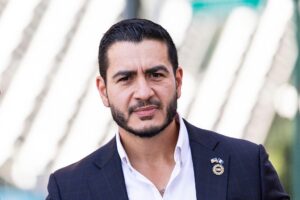
Caption: Abdul El-Sayed celebrates his historic Michigan Senate election victory after defeating Republican Mike Rogers.
Abdul El-Sayed Makes History in Michigan’s Senate Election
On November 3, 2026, Michigan voters chose Abdul El-Sayed to represent their state in the U.S. Senate, delivering a significant Democratic victory in an important battleground state.
The Associated Press called the race early on November 4, confirming that El-Sayed had defeated former Republican congressman Mike Rogers.
The result made El-Sayed the first Muslim elected to the United States Senate, a historic milestone in American political representation. He is expected to formally take office when the new Congress convenes in January 2027.
The seat was open following Democratic Senator Gary Peters’ decision to retire, creating an opportunity for both parties to compete for an important position in Washington.
For Republicans, Michigan represented a potential opportunity to gain a Democratic-held Senate seat. For Democrats, retaining the seat was critical to their broader electoral strategy.
El-Sayed’s victory demonstrated that a progressive candidate could win a competitive statewide election while campaigning on healthcare reform, economic affordability, and limiting the influence of corporate money in politics.
His achievement also represented a remarkable political comeback after he lost Michigan’s Democratic gubernatorial primary in 2018.
Eight years later, he was celebrating a victory that would change the composition and history of the U.S. Senate.
The Victory Speech That Put Donald Trump in the Spotlight
The atmosphere at El-Sayed’s election-night gathering in Detroit was one of celebration and relief.
Supporters cheered as the senator-elect thanked the voters, volunteers, and campaign workers who helped carry him through a difficult race.
But his speech was about more than celebrating an election result.
Throughout the campaign, Trump and several Republican figures had questioned El-Sayed’s suitability for office, with some attacks focusing heavily on his name, religion, and background.
El-Sayed used his victory address to turn those attacks into an argument about belonging in the United States.
He emphasized that people from different religious and cultural communities had supported his candidacy, suggesting that his victory reflected a broader coalition than his opponents had anticipated.
Then came the moment that drew particular attention.
Addressing Trump’s repeated difficulty or unwillingness to use his name correctly, El-Sayed said:
“Donald, I know you struggled with my name. So after JD swears me in in January, you can just go on and call me Senator.”
The remark transformed months of criticism into a confident declaration of political victory.
Rather than responding with another personal insult, El-Sayed pointed to the election result itself.
Voters had given him a position that the president would now have to recognize.

Caption: President Donald Trump repeatedly criticized Abdul El-Sayed during the 2026 Michigan Senate campaign.
Why Trump Targeted Abdul El-Sayed During the Campaign
The confrontation between Trump and El-Sayed did not begin on election night.
In the closing weeks of the Michigan Senate race, Trump publicly criticized the Democratic candidate in increasingly personal terms.
At a campaign event in Iowa shortly before Election Day, Trump described El-Sayed as a “jihadist lunatic” and suggested that he should be required to pass through additional security screening before entering the Senate.
Trump also portrayed the candidate as a political extremist and made allegations involving the Muslim Brotherhood.
No evidence emerged supporting claims that El-Sayed had connections to terrorist organizations.
The rhetoric became a major point of controversy, with critics arguing that attacks on a candidate’s religion undermined meaningful debate about public policy.
El-Sayed rejected the characterization and insisted that Michigan voters were more concerned about everyday economic challenges.
Issues such as grocery prices, gasoline costs, housing expenses, and access to affordable healthcare became central themes of his campaign.
The clash highlighted a broader disagreement over campaign priorities.
Trump and Republican allies portrayed El-Sayed’s progressive policies as dangerous, while El-Sayed argued that opponents were emphasizing identity and ideological labels instead of presenting solutions to economic problems.
Republican Mike Rogers also challenged El-Sayed’s political positions, particularly his healthcare proposals and foreign policy views.
Ultimately, voters were presented with two sharply different visions for Michigan’s future representation in Washington.
El-Sayed’s Earlier Response Included a Lie Detector Challenge
Before his victory speech, El-Sayed had already demonstrated his willingness to confront Trump’s personal remarks with humor.
During a campaign appearance at Western Michigan University, he responded to Trump’s suggestion that he should face metal detector screenings.
El-Sayed jokingly proposed a different kind of test for the president: a lie detector.
He challenged Trump to answer questions about his relationship with the late Jeffrey Epstein, as well as his continued claims about the outcome of the 2020 presidential election.
The exchange was intended as a political rebuttal, not as evidence establishing any new misconduct by Trump.
It also revealed a campaign strategy that El-Sayed repeatedly used throughout the race.
Instead of allowing his opponents to define him through religious stereotypes or personal attacks, he attempted to redirect attention toward their public statements and political records.
His eventual victory gave that approach a more powerful conclusion.
The candidate who had been portrayed as unfit for the Senate would now be joining the chamber as an elected representative of Michigan.
JD Vance Also Became a Target of El-Sayed’s Victory Speech
President Trump was not the only senior Republican who received a pointed message during El-Sayed’s celebration.
Vice President JD Vance also became part of the senator-elect’s remarks.
El-Sayed addressed Vance with an Arabic term of affection, “habibi,” before joking about the vice president’s role in the Senate swearing-in ceremony.
The humor rested on a longstanding institutional tradition.
As vice president, Vance serves as president of the Senate. The vice president ordinarily administers the oath of office to incoming senators, although the president pro tempore can perform that duty when the vice president is absent.
That tradition gave El-Sayed an opportunity to highlight the irony of his political opponents’ position.
Regardless of their disagreements during the campaign, the incoming senator would be entitled to take his seat under the same constitutional system that governs every other elected senator.
His joke also illustrated how a political speech can use humor to communicate a serious idea about the peaceful transfer of authority and respect for electoral outcomes.

Caption: Vice President JD Vance became part of El-Sayed’s victory-speech remarks about the January 2027 Senate swearing-in ceremony.
Who Is Abdul El-Sayed? His Background and Political Career
Abdul El-Sayed’s path to the U.S. Senate was unusual.
Born in Michigan to a family with Egyptian roots, El-Sayed built his professional career in medicine and public health before becoming a prominent progressive political figure.
He previously led Detroit’s health department and later served in a senior public health role in Wayne County.
His experience in healthcare shaped much of his political outlook, particularly his focus on improving access to medical services.
In 2018, he entered Michigan’s Democratic gubernatorial primary and gained national attention for his progressive platform. Although he lost that race, he developed a political following and became closely associated with issues such as universal healthcare and economic inequality.
His 2026 Senate campaign represented another opportunity to bring those priorities into elected office.
He also faced a demanding Democratic primary against Representative Haley Stevens, who was supported by more establishment-oriented figures in the party.
The primary involved substantial outside spending and reflected broader disagreements over the direction of the Democratic Party.
El-Sayed’s eventual primary win, followed by his general-election victory, strengthened the argument among progressives that their economic message can appeal to a wide range of voters.
Still, his ability to win an election is only one measure of political success.
His next challenge will be translating campaign promises into legislation.
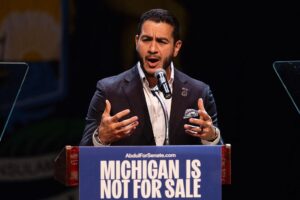
Caption: El-Sayed built his political reputation around public health, grassroots organizing, and progressive economic policies.
Healthcare, Inflation, and the Cost of Living Were Major Campaign Issues
Although the election attracted national attention because of attacks on El-Sayed’s identity, everyday financial pressures were central to his message.
The senator-elect promoted several proposals intended to address the cost of living and the influence of wealthy donors in American politics.
One of his most recognizable positions is support for Medicare for All, a proposal for a universal healthcare system intended to provide comprehensive coverage to Americans.
Supporters argue that such a system could reduce financial uncertainty for patients and simplify access to treatment.
Critics question how it would be financed, how existing insurance arrangements would change, and whether it could win sufficient support in Congress.
El-Sayed also emphasized affordable housing, higher wages, and policies aimed at reducing the financial burden on working families.
His campaign repeatedly connected those concerns with arguments about corporate influence in politics.
By highlighting the role of major donors and outside political organizations, he positioned himself as a candidate seeking to challenge established Washington interests.
Rogers, meanwhile, emphasized his experience in Congress and his positions on national security, immigration, and economic policy.
The contrast between the candidates reflected a larger debate about what Michigan voters wanted from their next senator.
For El-Sayed, the political challenge now is to demonstrate that his policy proposals can deliver meaningful results.
Why His Victory Matters to Muslim Americans
El-Sayed’s election carries significance beyond Michigan because no Muslim candidate had previously been elected to the U.S. Senate.
For Muslim Americans, the outcome represents a new chapter in political representation at the national level.
The victory has attracted particular attention in Michigan communities with significant Arab American and Muslim populations, including Dearborn.
However, El-Sayed has emphasized that his political identity cannot be reduced to his faith alone.
He ran to represent the entire state, including residents with different religious beliefs, cultural backgrounds, and political priorities.
That distinction was important to his broader campaign message.
Supporters saw his success as evidence that candidates could overcome attempts to make their religious identities a political disadvantage.
Others viewed the result primarily through the lens of healthcare policy, economic concerns, and opposition to Trump.
Both interpretations help explain why the election resonated so widely.
It was simultaneously a landmark in American religious representation and a significant contest over the country’s economic and political direction.
What the Michigan Senate Win Means for National Politics
Michigan’s Senate election was one of several major contests in the 2026 midterms.
The state has long been an important political battleground, with results often shaped by relatively narrow differences between Republican and Democratic coalitions.
El-Sayed’s victory protected a Democratic-held Senate seat that Republicans had hoped to capture.
It also gave progressive Democrats a prominent example of a candidate winning a competitive statewide race after embracing policies that are sometimes portrayed as too ambitious for swing-state voters.
That does not necessarily mean every element of El-Sayed’s platform enjoys broad national support.
Local campaign organization, candidate appeal, opposition weaknesses, and economic conditions can all influence election outcomes.
Nevertheless, the result will likely become part of the debate over how Democrats should approach future national elections, including the 2028 presidential contest.
Progressive leaders may point to his victory as evidence that direct appeals about healthcare and affordability can resonate beyond reliably Democratic areas.
More moderate Democrats may focus on the importance of building broad coalitions and responding to local economic concerns.
The implications will become clearer as the next Congress begins its work.
What Happens Next for Abdul El-Sayed?
Winning the election does not immediately make El-Sayed a sitting senator.
As senator-elect, he must complete the transition process and take the oath of office when the new congressional term begins in January 2027.
Once seated, he will be expected to participate in Senate votes, legislative negotiations, committee work, and constituent services.
Among the issues likely to define his early tenure are healthcare, federal spending, economic affordability, and the influence of political donors.
His positions on foreign policy, including criticism of Israel, could also make him an influential and controversial figure in Senate debates.
With substantial political attention already surrounding his election, his first months in Washington will be closely watched.
For supporters, the goal will be to see whether his grassroots campaign can translate into effective representation.
For critics, the focus will be on the practical consequences of his policy agenda.
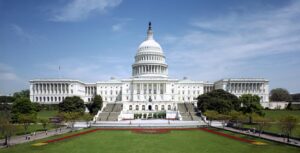
Caption: El-Sayed is expected to take office in the U.S. Senate in January 2027, beginning a six-year term representing Michigan.
Frequently Asked Questions
Did Abdul El-Sayed win the 2026 Michigan Senate election?
Yes. Democrat Abdul El-Sayed defeated Republican Mike Rogers in Michigan’s November 3, 2026, U.S. Senate election. The Associated Press called the race on November 4.
Is Abdul El-Sayed the first Muslim U.S. senator?
He is the first Muslim elected to the U.S. Senate. He is expected to become the first Muslim serving in the chamber after taking the oath of office in January 2027.
What did Abdul El-Sayed say about Donald Trump?
During his victory speech, El-Sayed mocked Trump’s earlier attacks on his name by suggesting the president could simply address him by his new title, “Senator.”
Who did Abdul El-Sayed defeat?
He defeated former Republican congressman Mike Rogers, who had also unsuccessfully sought a Michigan U.S. Senate seat in 2024.
When will Abdul El-Sayed officially take office?
His Senate term is scheduled to begin in January 2027, following the required oath-taking process.
A Historic Victory With a Message Beyond Michigan
Abdul El-Sayed’s election victory will be remembered for several reasons.
He became the first Muslim elected to the U.S. Senate, defeated a prominent Republican opponent, and helped demonstrate the electoral strength of progressive politics in an important battleground state.
Yet it was his response to Donald Trump that provided one of the night’s most memorable moments.
After months of attacks aimed at his name and identity, El-Sayed used the title he had earned through the election to make his point.
The exchange was humorous, but the underlying message was serious: electoral success is determined by voters, not by a candidate’s religion or by an opponent’s willingness to recognize their identity.
For El-Sayed, the campaign is over, but the harder work of governing is about to begin.
His success in the Senate will ultimately depend not on the sharpness of his victory speech, but on how effectively he represents Michigan and advances the policies that helped him win.
For now, however, his election marks a historic development in American politics and a significant moment in the country’s ongoing conversation about democracy, representation, and belonging.