The president’s televised remarks brought a deeply personal dimension to a national controversy over immigration enforcement, public safety, and the search for accountability.
When Renee Nicole Good lost her life during an encounter with a federal immigration officer in Minneapolis, her death became the center of a national debate that extended far beyond Minnesota.
Questions about immigration enforcement, constitutional rights, and the use of deadly force quickly dominated American headlines. Yet behind those political disagreements was a family facing a devastating reality.
Three children had lost their mother. Parents were mourning their daughter. And a community was searching for answers.
Less than a week after the fatal shooting, President Donald Trump faced an unexpectedly personal question during a television interview.
What message would he offer Renee Good’s grieving father, a man described as one of his own political supporters?
His response revealed a more sympathetic tone than his initial public statements. However, it also demonstrated how divided the country remained over the circumstances surrounding Good’s death.
Months later, the case entered another significant chapter when her family filed lawsuits against the federal government and immigration officials.
1. The Minneapolis ICE Shooting That Sparked a National Debate
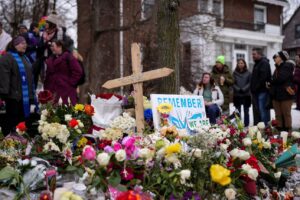
On January 7, 2026, 37-year-old Renee Nicole Good was fatally shot by a US Immigration and Customs Enforcement officer in Minneapolis, Minnesota.
The incident occurred during an expanded federal immigration enforcement operation that had already generated considerable disagreement between government officials and local communities.
Good was an American citizen, a mother of three, and a relatively recent resident of Minneapolis.
Federal authorities defended the officer’s actions, arguing that the encounter presented a serious safety threat. Minneapolis officials, however, questioned whether the circumstances justified the use of deadly force.
Video evidence became an important part of the controversy, with different parties disputing what it demonstrated.
The disagreement raised concerns about federal law enforcement practices, officer training, and the rights of people who encounter immigration authorities.
For residents of Minneapolis, the tragedy also brought renewed attention to the relationship between law enforcement agencies and the communities they serve.
For Good’s family, however, the consequences were far more immediate and personal.
No political statement or public debate could change the fact that someone they loved would never return home.
2. Who Was Renee Nicole Good? A Life Beyond the Headlines

Before her name became associated with one of the most widely discussed immigration enforcement incidents of 2026, Renee Good was a mother with creative ambitions and close family relationships.
She graduated from Old Dominion University in December 2020 with a degree in English.
Writing and poetry were important parts of her life. Her creative work had received recognition during her university years, reflecting an interest in literature that extended beyond her academic studies.
Following her death, Old Dominion University released a statement acknowledging the loss of one of its graduates.
Her relatives remembered a woman who brought humor, warmth, and affection into their lives.
Good had relocated from Kansas City to Minneapolis with her partner and young son, establishing a new chapter in her family’s life.
Her youngest child had already experienced the death of his father before losing his mother.
These personal circumstances help explain why her death resonated with people who had never met her.
While much of the national discussion focused on federal immigration policy, those who knew Good remembered her through everyday experiences, family gatherings, creative interests, and shared memories.
Her identity was considerably more complex than the competing political descriptions that emerged after her death.
3. Donald Trump Faces a Difficult Question on National Television

On January 13, 2026, President Donald Trump participated in an interview with CBS Evening News anchor Tony Dokoupil.
During their conversation, Dokoupil raised the subject of Renee Good’s death and introduced a particularly personal element to the discussion.
The journalist explained that he had communicated with Good’s father, Timothy Ganger, whom he described as a Trump supporter.
Despite his political views, Ganger was grieving the loss of his daughter and troubled by the way she had been characterized following the shooting.
Homeland Security Secretary Kristi Noem had accused Good of domestic terrorism, a characterization that became the subject of considerable disagreement.
The interview presented Trump with a question that was different from the usual political arguments surrounding immigration enforcement.
Instead of asking exclusively about the officer’s conduct or federal policy, Dokoupil asked what the president would say to a father who had lost his daughter.
It was a moment that placed personal grief at the center of a national political conversation.
4. What Did Trump Say to Renee Good’s Father?
Trump responded by expressing concern for the grieving family.
“I want to say to the father that I love all of our people,” Trump told CBS News.
The president also suggested that Good may have been a “solid, wonderful person” under ordinary circumstances.
The comments represented a noticeable change in tone compared with some of his earlier remarks following the incident.
Nevertheless, Trump continued to criticize Good’s conduct and defend the responsibilities of federal immigration officers.
He argued that immigration personnel were performing challenging duties under difficult circumstances.
His response therefore contained two distinct messages: an acknowledgment of a family’s suffering and continued support for his administration’s immigration enforcement approach.
Importantly, the televised remarks were not an announcement that Trump had privately contacted Ganger. Nor did they constitute an admission of legal responsibility or a withdrawal of the administration’s defense of the officer.
The distinction matters because public expressions of sympathy and legal determinations are fundamentally different things.
5. Why Renee Good’s Father Became Part of the National Conversation
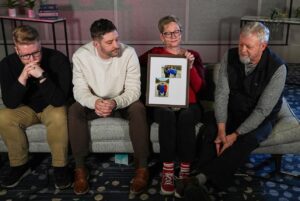
Timothy Ganger’s reported support for Trump added another dimension to the controversy.
Political discussions in the United States frequently present immigration enforcement as an issue divided between supporters and opponents of the administration.
But individual experiences do not always fit neatly within those divisions.
Someone may support stricter immigration enforcement while believing that federal officers should be held accountable for their decisions.
Similarly, recognizing the difficulties of law enforcement work does not prevent someone from asking whether a particular encounter was handled appropriately.
Ganger’s situation illustrated how a national policy dispute can become profoundly personal.
In a subsequent interview with Reuters on January 14, Trump described the incident as unfortunate and adopted a more restrained tone.
During a White House appearance on January 20, he again discussed the tragedy and acknowledged that immigration officers can make mistakes.
Trump also expressed hope that Good’s father continued to support him.
These remarks did not settle the factual or legal disagreements surrounding the shooting. They did, however, demonstrate the complicated intersection of political loyalty, government responsibility, and personal loss.
6. Another Family Member Shares His Perspective
Good’s former father-in-law, Tim Macklin Sr., also discussed her death during a January 13 interview with CNN.
Macklin, who identified himself as a Trump supporter, offered a perspective shaped by both his personal beliefs and his family’s connection to Good.
He remembered her affectionately and spoke about the difficult circumstances facing those left behind.
Rather than placing responsibility on a single individual, he emphasized his religious faith and the importance of compassion.
His grandson had now experienced the loss of both parents.
The interview demonstrated that members of an extended family can hold different interpretations of a tragedy while sharing the same experience of bereavement.
Political differences do not necessarily diminish the significance of family relationships.
For children affected by the death of a parent, questions of political responsibility also exist alongside practical challenges involving emotional well-being, stability, and long-term family support.
7. The Wider Debate Over ICE, Public Safety, and Civil Rights
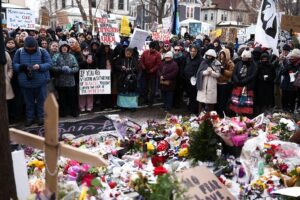
The death of Renee Good intensified discussions about the role of federal immigration enforcement agencies in American communities.
Supporters of expanded enforcement argue that immigration officers are responsible for implementing federal law and protecting public safety. They emphasize that officers may face unpredictable situations and must sometimes make difficult decisions under pressure.
Critics argue that federal enforcement operations require stronger oversight, transparent investigations, and clear limits on the use of force.
The case brought several broader concerns into focus:
- The standards governing federal officers’ use of deadly force.
- The importance of law enforcement training and de-escalation.
- Constitutional protections for American citizens and other residents.
- Independent investigations following fatal encounters.
- Cooperation between federal, state, and local authorities.
These questions extend beyond the immigration debate.
They concern the balance between government authority and individual rights, as well as the public’s confidence in the institutions responsible for enforcing the law.
Effective accountability requires investigators to examine evidence independently rather than relying exclusively on political statements or public opinion.
8. Renee Good’s Family Pursues Legal Accountability
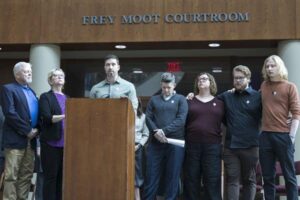
The legal response to Good’s death began shortly after the January shooting.
Her family retained the civil rights law firm Romanucci & Blandin, which had previously represented the family of George Floyd.
At the time, the US Department of Justice indicated that it did not see grounds to begin a federal criminal civil rights investigation into Good’s death.
The family nevertheless pursued its own legal efforts.
On October 1, 2026, the Associated Press reported that Good’s family had filed two civil lawsuits connected to the fatal encounter and the broader federal immigration operation in Minnesota.
One lawsuit seeks compensation from the United States government for her wrongful death. The other alleges civil rights violations involving federal officials and immigration enforcement activities.
The family’s attorneys argue that the circumstances surrounding Good’s death warrant legal accountability.
The lawsuits represent allegations that must be evaluated through the judicial process. Their filing does not, by itself, establish that the defendants are legally responsible.
The October development marked a significant expansion of a case that had already generated months of public scrutiny.
For Good’s relatives, the legal proceedings offer a formal avenue through which they can seek answers and challenge the government’s account.
9. Remembering Renee Good Beyond Politics
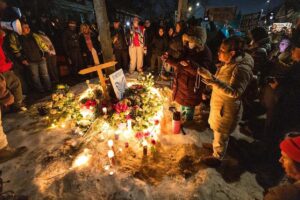
As the controversy surrounding her death continued, photographs, flowers, candles, and handwritten messages became visible reminders of the human loss behind the headlines.
Community memorials provided a space for people to express sympathy and reflect on the events that had affected Minneapolis.
For Good’s children, parents, partner, and siblings, remembrance carries a meaning that extends far beyond public demonstrations or political debates.
They are remembering a mother, daughter, partner, sister, and writer whose life included aspirations, relationships, and experiences unrelated to immigration policy.
Trump’s televised message to her father remains a notable moment in the story because it briefly shifted the conversation toward that personal dimension.
But sympathy alone cannot answer the questions that followed her death.
Those questions require reliable evidence, transparent legal procedures, and a willingness to distinguish established facts from disputed allegations.
The lasting significance of Renee Good’s story may ultimately depend on how those responsibilities are addressed.
Frequently Asked Questions
What did Donald Trump say to Renee Good’s father?
During a CBS News interview on January 13, 2026, Trump expressed concern for Good’s father and suggested that his daughter may have been a wonderful person, while continuing to defend federal immigration officers.
Was Renee Good an American citizen?
Yes. Renee Nicole Good was a 37-year-old American citizen and mother of three.
Did Trump personally contact Renee Good’s father?
His January 13 remarks were delivered during a televised interview. That interview did not establish that a private conversation had taken place.
Has Renee Good’s family filed a lawsuit?
Yes. On October 1, 2026, her family filed two civil lawsuits relating to her death and federal immigration enforcement activities.
Final Thoughts
The fatal shooting of Renee Good became a defining moment in the national discussion about immigration enforcement and law enforcement accountability in 2026.
President Trump’s message to her grieving father introduced a personal element into an intensely political controversy. His comments acknowledged the family’s loss while maintaining his administration’s support for federal immigration personnel.
With legal proceedings adding another chapter to the story, questions about accountability, public safety, and individual rights remain significant.
Beyond those questions is an enduring reality: a family lost someone they loved.
Remembering that human dimension is essential to any meaningful discussion of Renee Good’s life, death, and legacy.
Reporting sources: CBS News, Reuters, Associated Press, CNN, Old Dominion University and the original Bitty School article.