A viral claim suggested that the White House had found an unusual reason to keep President Donald Trump’s youngest son out of the military. But the facts tell a very different story.
Barron Trump has spent much of his life outside the political spotlight, despite being the youngest son of one of America’s most recognizable presidents. However, a controversy surrounding U.S. military service unexpectedly placed him at the center of a heated national conversation.
As tensions between the United States and Iran escalated in early 2026, social media users began asking whether Barron Trump should join the military. The debate quickly generated thousands of reactions, political jokes, and questions about military recruitment rules.
Then an extraordinary claim began spreading online.
According to viral social media posts, the White House had supposedly declared Barron Trump ineligible for military service because he was simply too tall.
The unusual explanation immediately attracted attention. Some users questioned whether height could genuinely prevent someone from serving in the U.S. Army, while others accused political leaders of applying different standards to their own families.
But there was one major problem with the story: there was no verified White House announcement granting Barron Trump an exemption because of his height.
So where did the rumor come from, how tall is Barron Trump, and what do the actual U.S. military eligibility rules say?
The answers reveal how a political joke developed into a misleading online claim.
Why Barron Trump Became Part of the Military Debate
The controversy gained momentum after the United States and Israel launched military strikes against Iran on February 28, 2026.
With military action dominating headlines, public discussions quickly turned toward the responsibilities of political leaders and the sacrifices expected of American service members.
For some critics of President Trump, the conflict raised a particularly personal question: Would members of the president’s own family be willing to serve?
Barron Trump became a prominent subject of that debate.
Born on March 20, 2006, Barron turned 20 in 2026. His age placed him within the group of young American men generally covered by Selective Service registration requirements.
His famous surname also ensured that conversations about military service attracted widespread attention.
Social media users began sharing the hashtag #SendBarron, suggesting that the president’s youngest son should demonstrate support for the armed forces through military service.
Some posts were serious political criticism, while others were clearly intended as satire.
The trend reflected broader disagreements about military intervention, government accountability, and the personal consequences of decisions made by elected officials.
However, online criticism of the president does not establish any obligation for Barron Trump to enlist, nor does it provide evidence that he has requested an exemption.
The Satirical Website That Fueled the Conversation
Another important element was the appearance of a website called DraftBarronTrump.com.
The site was created by comedy writer Toby Morton, who has worked on television programs including South Park.
Rather than functioning as an official government resource, it used political satire to comment on the administration and the debate surrounding military action.
Its message attracted attention because it turned a familiar political argument into an intentionally provocative scenario involving the president’s son.
The website and related social media discussions helped amplify the #SendBarron conversation.
Unfortunately, political satire can become misleading when individual claims are removed from their original context.
A joke shared alongside real news reports may eventually be repeated as though it were a confirmed statement from a government official.
That distinction became crucial when the rumor about Barron’s height began circulating.
Did the White House Really Say Barron Trump Was Too Tall for Military Service?
This is the central question behind the controversy.
In early March 2026, social media posts claimed that the White House had announced Barron Trump was too tall to serve in the U.S. military.
Some versions of the rumor suggested that his reported height of 6 feet 9 inches made him automatically ineligible.
The claim sounded unusual, but it also appeared plausible enough to attract widespread discussion because military organizations do maintain physical and medical eligibility standards.
However, fact-checking reports found no credible evidence supporting the supposed announcement.
Investigations published in March 2026, including reporting by VT and fact-checking outlet Mala Espina, found no official White House statement establishing that Barron Trump had received a height-based military exemption.
There was no authenticated announcement showing that the administration had declared him unfit for service on those grounds.
The distinction is important: military height restrictions may exist, but that does not mean the White House issued the statement attributed to it.
A potentially realistic explanation is not the same as a verified government decision.
The viral posts blurred that difference, transforming speculation into something that appeared to be official news.
How Tall Is Barron Trump?
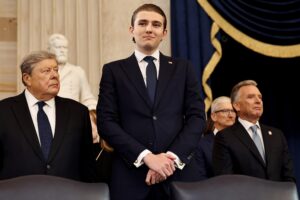
Barron Trump’s height has attracted attention for years, particularly during public appearances alongside his parents.
At his father’s January 2025 inauguration, photographs showed him standing noticeably taller than many people around him.
Various media reports have estimated his height at approximately 6 feet 7 inches to 6 feet 9 inches.
President Trump has previously described his son as approximately 6 feet 7 inches tall, while other reports have suggested a slightly greater measurement.
Without a current, independently verified measurement, it would be misleading to insist that one particular figure is unquestionably correct.
This uncertainty matters because the military eligibility debate depends heavily on the precise number.
A difference of only one or two inches could affect whether someone meets a particular service’s physical entry standard.
More importantly, even a confirmed measurement would not, by itself, prove that the person had been officially rejected or exempted from service.
An individual eligibility determination requires an actual assessment under the applicable rules.
Can Someone Really Be Too Tall to Join the U.S. Army?
Surprisingly, height can be relevant to military service.
Military organizations must consider whether applicants can safely perform assigned duties, wear required equipment, and operate within the physical limitations of particular vehicles and work environments.
For example, certain positions involving armored vehicles, aviation equipment, or confined spaces may present additional challenges for unusually tall individuals.
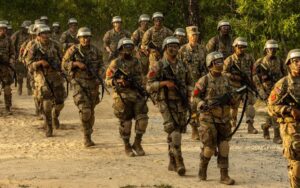
Historical U.S. Army accession regulations have specified a height range of 58 to 80 inches.
That upper figure corresponds to 6 feet 8 inches.
This is one reason the viral rumor appeared believable to people who were familiar with older Army recruitment standards.
However, military eligibility is more complicated than comparing someone’s reported height with a single number.
In July 2026, the U.S. Army also announced a significant update to its body composition assessment system, replacing longstanding height-and-weight tables with a waist-to-height ratio measurement.
Under the updated body composition standard, a ratio below 0.55 is the benchmark.
That change should not be confused with eliminating every possible medical, physical, equipment-related, or occupational restriction.
The Army’s published recruitment guidance also describes individual eligibility reviews and waivers for certain disqualifying conditions.
Therefore, the question of whether Barron Trump personally qualifies for any branch of military service cannot be answered conclusively through photographs or social media estimates.
There is no verified public evidence that the military has formally evaluated his height and issued an individual eligibility decision.
Is Barron Trump Required to Join the Military?
One of the most common misunderstandings surrounding the story involves the difference between registering for the draft and actually serving in the armed forces.
These are two separate matters.
The United States has relied on an all-volunteer military force since the end of military conscription in 1973.
The Selective Service System nevertheless maintains a registration system that could support a future draft if the necessary legal authorization were granted.
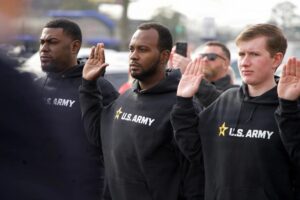
Under federal law, nearly all male U.S. citizens and certain male immigrants between the ages of 18 and 25 are required to register.
Registration does not mean that an individual has enlisted, received military orders, or been selected for active-duty service.
As of October 2026, there is no active U.S. military draft.
This means that Barron Trump, like other young Americans, is not automatically required to enter the U.S. Army simply because he is within the relevant age range.
Questions about whether he has complied with registration rules are also separate from questions about physical eligibility. His individual registration status should not be assumed without reliable evidence.
Could Barron Trump Be Drafted if the United States Introduced Conscription?
Hypothetically, a future military draft could make Selective Service eligibility more consequential.
According to the Selective Service System, the first group considered under its draft lottery process would generally include men turning 20 during the calendar year of the lottery.
Because Barron Trump turned 20 on March 20, 2026, his age would place him in that initial age group if a qualifying draft were activated in 2026, subject to the applicable law and procedures.
But that is only a hypothetical scenario.
A draft would require the necessary federal authorization, and the selection process would not consist of the president personally choosing individual recruits.
Those selected would also undergo further processing, including medical and other eligibility assessments.
Depending on the circumstances and governing rules, individuals could raise claims involving deferment, postponement, exemption, or other legally recognized considerations.
There is no basis for concluding that Barron Trump has already received a special draft exemption.
The president’s son being eligible for registration is not the same thing as the president’s son being ordered to serve.
Why Donald Trump’s Own Military History Entered the Discussion
Another reason the rumor became politically sensitive was President Donald Trump’s history during the Vietnam War era.
Trump did not serve in the military and received multiple deferments during that period, including educational deferments and a medical deferment associated with a diagnosis of bone spurs.
Those deferments have been the subject of political scrutiny and news reporting for years.
The renewed discussion surrounding Barron Trump revived arguments about whether political leaders and their families should be expected to share the risks associated with military conflict.
Critics argued that decisions involving the deployment of American forces should be accompanied by an appreciation of the sacrifices made by military personnel and their families.
Others emphasized that Barron Trump is a private individual and should not automatically be held responsible for his father’s political decisions.
These competing perspectives explain why the story attracted such an intense reaction.
However, President Trump’s military history does not determine his son’s legal eligibility for service.
The two issues may be politically connected in public debate, but they remain legally and factually distinct.
Why the False White House Claim Spread So Quickly
The rumor combined several ingredients that frequently make misleading information successful online.
First, it involved a highly recognizable family and a politically controversial subject.
Second, it contained an unusual detail: the suggestion that someone could be considered too tall to join the military.
Third, it appeared during a period of heightened public emotion surrounding military operations.
Finally, it circulated in an environment where satire, commentary, screenshots, and actual reporting were being shared together.
The result was a claim that some readers accepted before checking whether an official source had actually made the announcement.
The story demonstrates why it is important to distinguish between a government statement, a journalist’s interpretation, a social media allegation, and a piece of political satire.
In this case, the lack of an authenticated White House statement was the decisive fact.
What Is Barron Trump Doing Instead of Serving in the Military?
Barron Trump has generally maintained a comparatively private life.
After graduating from Oxbridge Academy in Florida in 2024, he enrolled at New York University’s Stern School of Business.
Reporting in 2026 indicated that he had subsequently been studying at NYU’s Washington, D.C., campus.
His public activities have largely involved education, family appearances, and occasional participation in major political events connected to his father.
He has not publicly announced a confirmed plan to enlist in the U.S. Army.
That does not establish whether he has privately considered a military career, and speculation about his personal intentions should not be presented as fact.
Military service is a significant personal and professional commitment. Public curiosity about a president’s family member does not provide reliable insight into that person’s private decisions.
Frequently Asked Questions About Barron Trump and Military Service
Did the White House exempt Barron Trump because he was too tall?
No verified official statement supports that claim. The allegation circulated online in March 2026, but fact-checkers found no credible evidence that the White House had announced such an exemption.
Is Barron Trump really 6 feet 9 inches tall?
His reported height varies between approximately 6 feet 7 inches and 6 feet 9 inches. A precise, current measurement has not been independently confirmed in the reporting reviewed.
What is the U.S. Army’s maximum height requirement?
Older Army accession regulations cited a maximum of 80 inches, or 6 feet 8 inches. Eligibility also depends on current regulations, medical standards, individual assessments, and occupational requirements. The Army introduced updated body composition screening rules in July 2026.
Is there currently a military draft in the United States?
No. The United States continues to use a volunteer military, although the Selective Service System maintains registration requirements for most men aged 18 through 25.
Can the president’s son be drafted?
Being related to a president does not by itself establish exemption from a future draft. Any applicable eligibility, classification, or exemption decision would depend on the law and official procedures in force.
Final Verdict: The Truth Behind the Barron Trump Military Rumor
The controversy surrounding Barron Trump’s military eligibility began with a politically charged discussion but developed into a much larger misinformation story.
The internet claimed that the White House had offered an extraordinary explanation for why the president’s youngest son could not serve in the U.S. military.
The central allegation was not supported by any verified official announcement.
Although Barron’s reported height raises legitimate questions about physical eligibility standards, it does not prove that he received an exemption, failed a military assessment, or was prevented from enlisting.
There is also no active military draft requiring him or other eligible young Americans to enter the armed forces.
Ultimately, the story is a reminder that viral political claims can become popular long before their underlying evidence has been examined.
And in this case, the most important fact is also the simplest: the widely circulated White House excuse was never substantiated.