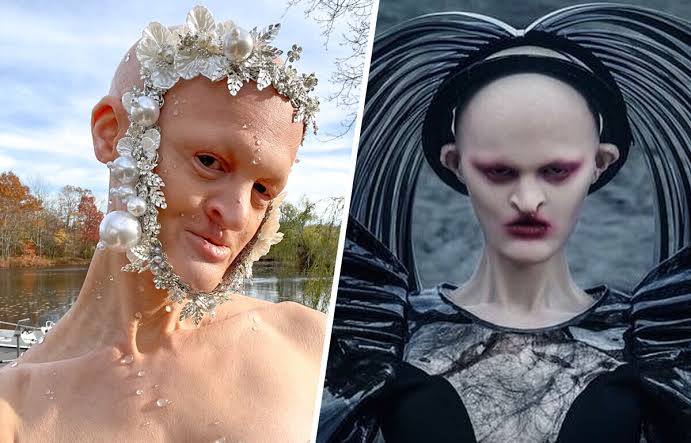
Melanie Gaydos never tried to look like everyone else. She simply decided the world should expand its idea of beauty to include her.
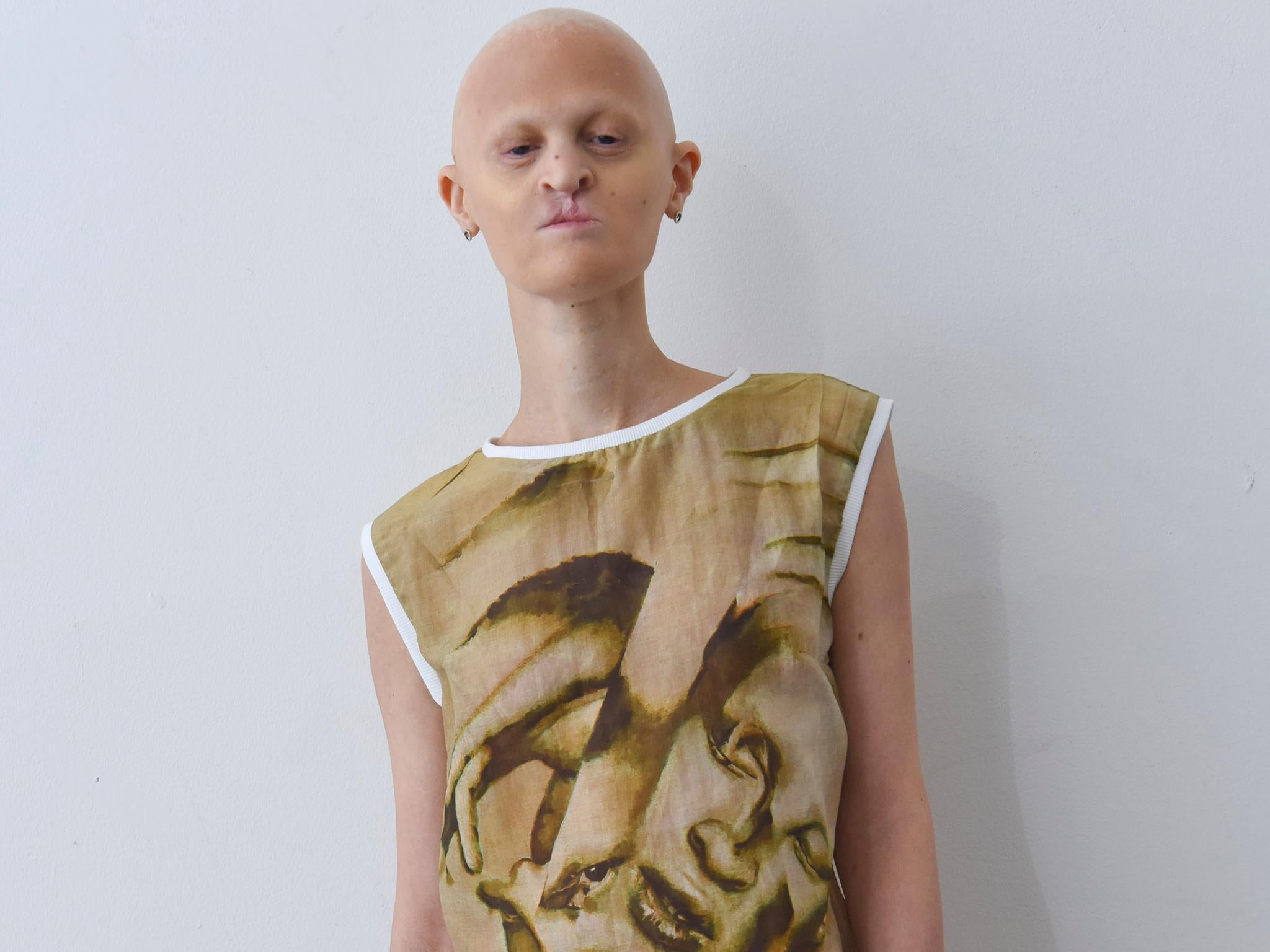
Born with ectodermal dysplasia, a rare genetic condition that affects the development of hair, teeth, nails, skin, and related structures, Melanie grew up without a full head of hair and with significant dental differences. The disorder also damaged her eyelashes in a way that left her partially blind, and she has experienced hearing challenges. As a child she underwent numerous surgeries (estimates range from 30 to 40) and spent time in and out of hospitals.
Yet she never saw her body as a problem that needed fixing.
“I always thought of my body as a vehicle, and it certainly doesn’t affect who I am,” she has said. Curiosity, judgment, and fear from others came later. Personally, she felt at home in herself.
Understanding Ectodermal Dysplasia
Ectodermal dysplasias are a group of more than 180 related genetic disorders that disrupt the normal development of structures derived from the embryonic ectoderm. These commonly include hair, teeth, nails, sweat glands, and skin. Some forms also affect vision, hearing, temperature regulation, and other systems.
The condition is rare, affecting fewer than 200,000 people in the United States. Prevalence estimates vary, but studies suggest roughly 7 cases per 10,000 births worldwide for the broader group, with specific subtypes much rarer. There is no cure—management focuses on symptoms such as dental care, temperature control (because many cannot sweat normally and risk overheating), skin protection, and supportive therapies.
In Melanie’s case, the disorder produced alopecia (sparse or absent hair), missing or atypical teeth (she lived for years with only a few baby teeth and molars), bilateral cleft lip and palate issues, fragile or absent nails, and complications that reduced vision. Eyelash growth inward scratched her corneas as a child. She has described growing some hair but never enough for a full head, joking that it sometimes resembled a cartoon character.
These physical realities shaped her medical childhood, but they did not define her self-image.
Growing Up Different in “Abercrombie Land”
Melanie grew up in Trumbull, Connecticut—a quiet, family-oriented suburb she has called “Abercrombie Land,” where preppy, polished looks dominated. She stood out immediately. Classmates and strangers reacted with curiosity, judgment, or fear. Some treated her as if she were ill or contagious.
Family life brought additional challenges, including alcoholism and abuse. She has spoken candidly about periods of profound isolation and dark thoughts as a teenager, once believing she might not live past 18. Art became an early refuge. She drew, painted, and created fantastical worlds where she could exist freely.
Her grandmother offered quiet strength, encouraging her to walk tall, embrace femininity, and stay strong. Melanie has said that outside judgmental environments, her appearance never truly bothered her. “I was never, ever bothered by the way that I look. It has nothing to do with me.”
Choosing Not to Hide
For years Melanie wore wigs and, later, dentures in an effort to blend in. Then she stopped. She realized the cover-ups were not her style and no longer served her. Around the time she was studying art in New York, she began modeling exactly as she is—no enhancements, no disguises.
The decision was deliberate. Modeling had once felt off-limits. “Even though I ‘had the body,’ I did not have the face,” she recalled. Industry voices told her she would be limited to niche work and would never walk a major runway or land commercial campaigns. She refused to accept that boundary.
In 2010 she moved to New York to pursue a bachelor’s degree in drawing and fine art at Pratt Institute. There she met creative people. A commercial fashion photographer who also shot portraits in the club scene invited her to sit for him after she admired his work. She also began answering Craigslist and Model Mayhem ads looking for unique faces. Photographers bored with conventional commercial work sought her out precisely because she looked different.
The first time she truly felt beautiful, she has said, was during her first proper photoshoot with photographer Adrian Buckmaster in 2011. Even now she admits there are moments of doubt. “There are times, even today, when I don’t feel beautiful… there is a small part of me that doesn’t want to be rejected.” The difference is that she no longer lets those moments dictate her choices.
Breaking Into Fashion Against the Odds
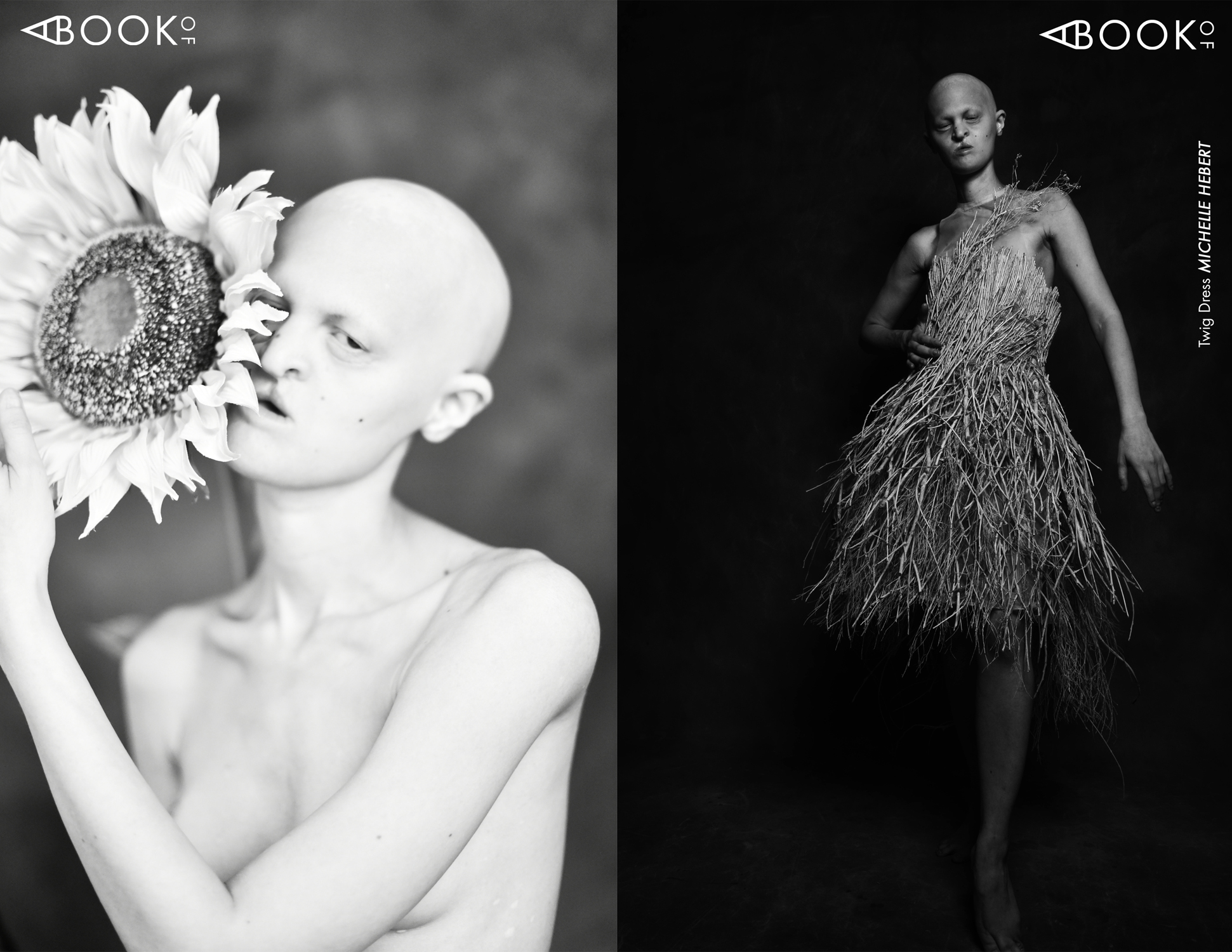
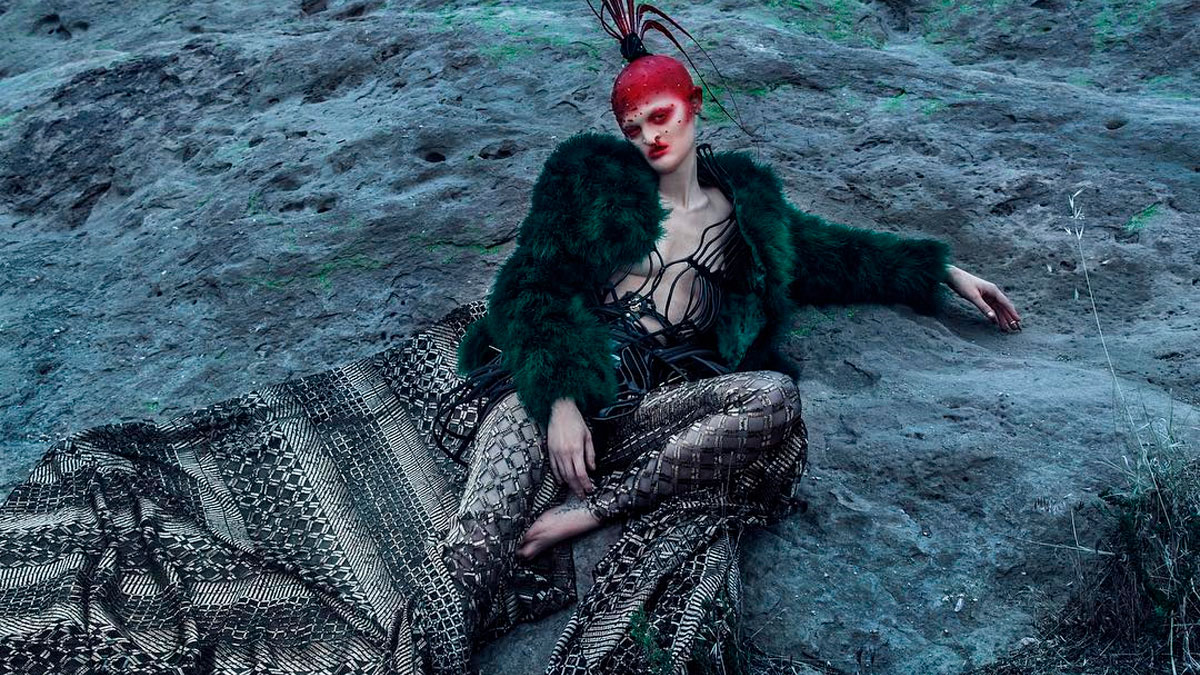
Melanie’s career has quietly but steadily expanded the definition of who belongs on a fashion set. She has appeared in magazines including Vogue, Cosmopolitan, i-D, LOVE, Galore, and Paper. She has walked the runway at New York Fashion Week more than once, including for Nina Athanasiou.
A pivotal early moment came when she wrote a heartfelt letter (complete with hearts and smiley faces) to renowned Spanish photographer Eugenio Recuenco. He responded by flying her to Berlin to star in the music video for Rammstein’s “Mein Herz Brennt.” The collaboration opened European doors and introduced her to a broader audience that appreciated her otherworldly presence.
She has continued working in the rock and metal worlds, including projects with Behemoth (music video and album packaging) and collaborations involving Kat Von D Beauty (featured as one of the “Muses,” with an eyeshadow shade named after her). High-fashion photographers such as Tim Walker have shot her for major editorials. She has also appeared in commercial work and independent films and shorts, with acting credits including roles in Vesper (2022), Insidious: The Last Key, and other projects.
Throughout, she has largely operated independently, without a traditional major agency. Photographers and designers who once might have overlooked someone with her features have instead chosen to highlight them.

A Different Kind of Power
Melanie’s presence challenges more than aesthetics. It questions the assumption that beauty must follow a narrow script. She has spoken about how limited society can be—and how much wider the human mind is capable of becoming.
“I’ve had many people tell me I would never be able to do runway or commercial work… I don’t believe that the world or the human mind works this way because mine doesn’t,” she said. “Even though society is limited, the human mind has so much potential and possibility that it is not even aware of.”
Her message is practical as well as philosophical: take time to learn who you are, stop forcing yourself into shapes that do not fit, and stop being afraid of change. “The fear of the unknown holds a lot of people back. There is so much power we each can hold—it is time to start exercising that.”
She has described modeling as therapeutic—a space to be completely open. Beauty, for her, is “more a feeling and a state of being” rather than a fixed set of features. She has noted that fashion is slowly reimagining its ideals, but only because people like her keep showing up and refusing to shrink.
More Than Representation
Melanie Gaydos is not asking for pity or special treatment. She is demonstrating, through her work and her presence, that the old rules were never as fixed as they seemed. By refusing to alter herself to meet outdated expectations, she has forced parts of the fashion industry to adjust instead.
Her story is not only about one rare genetic condition. It is about the quiet, persistent decision to take up space exactly as you are—and to keep walking forward until the room expands around you. She has expressed interest in supporting the National Foundation for Ectodermal Dysplasias and similar causes, and in creating networks that help others with the condition feel less alone.
In an industry still learning to value difference, Melanie continues to model a simple but radical idea: the most powerful version of yourself is the one that refuses to disappear.
Her career, spanning high fashion, music videos, editorials, and film, proves that uniqueness is not a barrier—it can be the very thing that opens doors. For anyone who has ever been told they do not fit the standard, her journey offers a clear invitation: stop hiding, start claiming space, and watch the definition of beauty expand to meet you.
This expanded version weaves in verified biographical details, medical context, career milestones, and Melanie’s own words while keeping the original emotional core. It is structured for strong reader engagement (subheadings, quotes, narrative flow, visual breaks) to support higher dwell time and RPM/CPM potential on content platforms.