Nearly 20 years before Abdul El-Sayed won Michigan’s 2026 U.S. Senate election, the former president publicly applauded a young graduate’s message about bringing people together.
A few seconds of old commencement footage can look entirely different when history catches up with it. In 2007, former President Bill Clinton stood before graduates at the University of Michigan and praised a student speaker whose name was not yet familiar in national politics: Abdul El-Sayed.
Nineteen years later, that student is Michigan’s senator-elect. After El-Sayed defeated Republican Mike Rogers in the November 3, 2026, election, the archived exchange began circulating widely online. Its appeal was immediate: here was a future political figure, still at the beginning of his professional life, receiving extraordinary public encouragement from a former president.
The footage is a compelling look at an early encounter. It is not evidence that Clinton knew the election result in advance, or that the two men planned a political career together. What it does show is that El-Sayed’s ability to speak about difficult divisions had already made an impression.
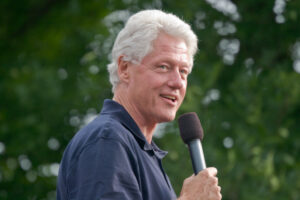
Image: Bill Clinton at a separate July 2007 event. Roger H. Goun / Wikimedia Commons, CC BY 2.0. This is not a still from the commencement.
What the resurfaced Bill Clinton video actually shows
The original moment took place during the University of Michigan’s 2007 spring commencement. El-Sayed delivered the senior address, and Clinton, the featured commencement speaker, followed him at the lectern. Rather than moving straight into his prepared message, Clinton singled out the younger speaker for praise.
He said he wished people convinced that religious and cultural communities could never understand one another had been able to hear the student’s remarks. Clinton then summed up his admiration in a striking line: “I just wish every person in the world could have heard you speak today.”
The camera’s attention turns toward El-Sayed, making the identity of the student unmistakable. In 2007, it was a memorable graduation-day compliment. In November 2026, it became a widely shared political flashback.
Journalist Yashar Ali helped bring the old footage back into circulation on November 2, shortly before voters went to the polls. Its renewed popularity was fueled by the contrast between the young graduate on screen and the politician campaigning for one of the country’s most closely watched Senate seats.
Watch the archival moment: Bill Clinton praises Abdul El-Sayed at the 2007 commencement.
The message that caught Clinton’s attention
The substance of El-Sayed’s commencement address is just as important as the celebrity reaction to it. Speaking to fellow graduates, he reflected on what their time at the university had changed in them and what obligations they carried into the world beyond campus.
Rather than treating graduation solely as a personal achievement, he emphasized responsibility, empathy, participation and service. His message invited students to listen across differences, care about people beyond their immediate circles and believe that their actions could help shape the future.
The University of Michigan’s own 2007 financial report later highlighted the student address, offering independent confirmation that the speech was regarded as an important part of the ceremony. The university president’s letter celebrated El-Sayed’s message about personal growth and the community’s role in producing it.
In hindsight, those ideas sound like themes from a public-service career. Yet the speech deserves to be heard on its own terms, as a young graduate’s appeal to his classmates—not simply as a campaign preview. It was this emphasis on solidarity across perceived boundaries that Clinton publicly admired.

Image: Michigan Stadium during a 2012 sporting event; illustrative view of the commencement venue, not the 2007 ceremony. Lenarc / Wikimedia Commons, CC BY-SA 3.0.
Watch El-Sayed’s original address: University of Michigan senior commencement speech, 2007.
The unexpected career advice Clinton reportedly gave him
The recorded praise was not the entire story. During an October 2026 appearance on The Weekly Show with Jon Stewart, El-Sayed recalled that Clinton approached him after the ceremony and asked why he intended to attend medical school.
El-Sayed explained that he saw medicine as a natural direction for his future. According to his recollection, Clinton had another possibility in mind: someone capable of reaching an audience might eventually be effective in elected office.
At the time, El-Sayed did not consider that path realistic. He has described feeling that his Muslim identity and unfamiliar-sounding name would make a political career difficult to imagine. In the podcast conversation, he told the story with humor, including his surprise at receiving political encouragement when his academic plans were centered on becoming a doctor.
That account is El-Sayed’s retrospective description of a private exchange; it was not captured in the commencement clip itself. The distinction matters. The video verifies Clinton’s public praise, while El-Sayed’s interview provides his own recollection of what happened afterward.
Hear the later recollection:
Who is Abdul El-Sayed? From medical training to public health leadership
Long before his Senate victory, El-Sayed had built a career around health and government. He attended the University of Michigan and later became a Rhodes Scholar at the University of Oxford, where he earned a doctorate in public health. He also completed his medical degree at Columbia University.
Those qualifications helped shape his approach to politics. He has consistently treated medical care, insurance coverage and the circumstances in which families live as interconnected public-policy questions—not just matters of individual treatment.
From 2015 to 2017, he led the Detroit Health Department, and from 2023 to 2025 he headed Wayne County’s Department of Health, Human and Veterans Services. The roles put him in contact with the practical challenges of serving communities: budgets, access to care, prevention, public trust and the need to translate ambitious policy into administration.
These experiences also explain why health care became such a central part of his political identity. El-Sayed has advocated Medicare for All and criticized the influence of major corporations on health policy. Supporters see his medical and public-health background as an asset; critics argue that far-reaching coverage proposals still require convincing financing plans and workable legislation.
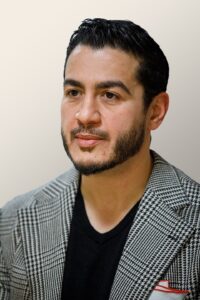
Image: Abdul El-Sayed in February 2025. Kenneth C. Zirkel / Wikimedia Commons, CC BY-SA 4.0.
A political setback in 2018—and a different outcome in 2026
El-Sayed did not move directly from the graduation stage to the U.S. Senate. His first major campaign for elected office ended in defeat. In 2018, he sought Michigan’s Democratic nomination for governor but lost the primary to Gretchen Whitmer.
The result showed both the reach and the limitations of his early political appeal. He had developed a recognizable progressive platform, but recognition and enthusiasm were not sufficient to win the nomination. Instead of disappearing from public life, he continued speaking about public health, economic security and the Democratic Party’s direction.
In 2026, he entered the race for the U.S. Senate seat being vacated by retiring Democrat Gary Peters. He won a competitive Democratic primary against U.S. Representative Haley Stevens before facing former Republican congressman Mike Rogers in November.
The general election brought major spending, arguments about the future of health care, disputes over foreign policy and intense scrutiny of El-Sayed’s identity. Rogers and Republican allies cast his agenda as too far to the left for Michigan. El-Sayed and his supporters argued that voters were looking for a direct challenge to high costs and corporate influence.
On November 3, voters chose El-Sayed. The Associated Press and other major news organizations projected his victory, making him the first Muslim elected to the United States Senate. As of November 6, he is senator-elect; he has not yet begun serving his Senate term.

Image: El-Sayed at Michigan Technological University, October 22, 2025. Conlan Houston / Wikimedia Commons, CC BY-SA 4.0.
Why the Michigan Senate race mattered beyond one candidate
Michigan is an important political battleground, and the open seat represented an opportunity for both parties. Democrats wanted to retain it after Peters decided not to seek another term. Republicans hoped Rogers could win a state where national elections have frequently been closely contested.
The policy differences were substantial. El-Sayed campaigned on expanding access to affordable health care, addressing everyday costs and limiting the role of corporate money in elections. Rogers criticized his opponent’s progressive positions and argued that his approach would be too costly or disruptive. Health insurance and Medicare for All became especially visible subjects because they touch household finances as well as the federal budget.
The election also carried a symbolic dimension. El-Sayed is the son of Egyptian immigrants, and his victory marks a significant milestone for Muslim representation in federal politics. His campaign encountered attacks involving his faith, including allegations of extremist associations that he rejected and that Reuters reported were unsupported by evidence.
In his victory remarks, El-Sayed emphasized that Michigan voters had allowed him to compete on a vision for the state rather than on assumptions about his name or religion. His result was historic, but it was also the outcome of an ordinary democratic test: voters assessed candidates, competing plans and rival political arguments.
Barack Obama’s 2026 support adds another layer to the story
Clinton was not the only former president to take notice of El-Sayed. In October 2026, Barack Obama publicly backed the Democratic nominee and appeared with him at a Detroit campaign rally on October 24.
Obama’s support was an explicit endorsement in an active election, which makes it different from Clinton’s graduation-day compliment. By the time Obama campaigned for El-Sayed, the candidate had a long public-health résumé, an established platform and a closely fought general-election race underway.
The contrast makes the resurfaced footage even more interesting. One former president praised the young speaker’s message before he entered electoral politics. Another later advocated for him as a Senate candidate. Neither moment by itself explains the election outcome, but together they trace an unusual arc from student oratory to national political prominence.
For readers, the distinction also helps separate a feel-good historical coincidence from a more substantive story about persistence, public leadership and changing expectations of who can win statewide office.
Why this nearly 20-year-old video resonates now
The timing explains much of the clip’s appeal. Archival footage is particularly powerful when the viewer knows what happened afterward. A seemingly ordinary day becomes a beginning; a compliment becomes a sign of possibility; and an old question about a career choice gains fresh significance.
There is also a deeper theme linking the two moments. Clinton responded in 2007 to a call for understanding across religious differences. Nearly two decades later, El-Sayed won an election in which religious identity became a controversial issue. Viewers are understandably struck by that contrast.
Still, the most responsible interpretation avoids claiming that a former president foresaw a specific result. Clinton recognized an effective student speaker, and El-Sayed says he encouraged him to consider politics. The electoral breakthrough came only after years of education, government work, a failed campaign, organizing and a difficult contest.
It is that long journey—not a mystical prediction—that makes the video worth revisiting.
Image: East Front of the U.S. Capitol in Washington, D.C. Ibagli / Wikimedia Commons, CC0.
What comes next for Michigan’s senator-elect?
El-Sayed’s election is a beginning rather than the end of the political story. Once in office, his promises on health coverage, household affordability and political money will face the constraints of congressional procedure, legislation and negotiation. Campaign speeches can set priorities, but making federal law requires agreement among many lawmakers.
His supporters will watch for efforts to translate the campaign’s agenda into proposals. Opponents will scrutinize the fiscal and practical implications. Voters across Michigan, regardless of how they voted, will be looking for representation and results.
For now, the video brings the story back to a campus stage in 2007. A young graduate asked people to imagine a more connected society. Bill Clinton was impressed enough to say so in public. Nineteen years later, that graduate has won a place in the United States Senate—and an old commencement clip has become part of how people understand the journey.
Frequently asked questions
What did Bill Clinton say about Abdul El-Sayed in 2007?
Clinton praised El-Sayed’s senior commencement speech at the University of Michigan, particularly its message about reaching across religious and cultural divides. He said he wished a much larger audience could have heard it.
Did Bill Clinton predict that Abdul El-Sayed would become a senator?
No publicly available video shows Clinton predicting a specific Senate victory. El-Sayed says Clinton privately encouraged him to consider elected office after his 2007 speech. That is different from forecasting the 2026 election result.
Did Abdul El-Sayed win Michigan’s Senate election in 2026?
Yes. Major news organizations projected that Democrat Abdul El-Sayed defeated Republican Mike Rogers in the November 3, 2026, election. He became the first Muslim elected to the U.S. Senate and was senator-elect as of November 6.