The fatal shooting of Renee Nicole Good in Minneapolis in January 2026 sparked a nationwide debate about immigration enforcement, public safety, police accountability and the use of deadly force in the United States.
But behind the political controversy was a grieving family struggling to come to terms with an unimaginable loss.
Good, a 37-year-old mother of three, lost her life during an encounter with a federal Immigration and Customs Enforcement (ICE) officer on January 7, 2026.
As questions surrounding the incident continued to grow, President Donald Trump was confronted with a deeply personal question during a televised interview.
What would he say to Renee Good’s grieving father, whom a journalist described as one of his supporters?
Trump’s response revealed a more sympathetic tone than some of his earlier remarks, although his defense of federal law enforcement remained unchanged.
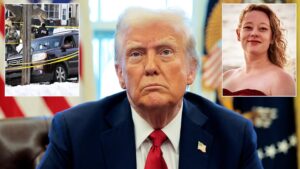
A Minneapolis tragedy that captured national attention
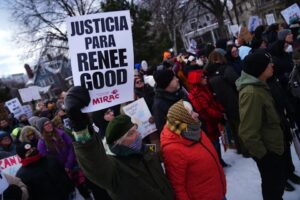
The death of Renee Nicole Good sent shockwaves through Minneapolis and communities across the United States.
The incident occurred amid increased federal immigration enforcement operations in Minnesota, where tensions surrounding immigration policies had already been growing.
Good, an American citizen, was fatally shot by ICE officer Jonathan Ross.
Federal officials maintained that the officer acted in self-defense. However, Minneapolis officials challenged that explanation, raising serious questions about whether deadly force was justified.
Video recordings of the encounter became central to the public debate, with officials and commentators offering conflicting interpretations of what happened.
The tragedy prompted discussions about law enforcement training, officer safety, constitutional rights and the responsibility federal agencies have toward the communities in which they operate.
For Good’s family, however, the controversy was about something far more personal than government policy.
They had lost a daughter, a mother, a partner and someone who had played an important role in their everyday lives.
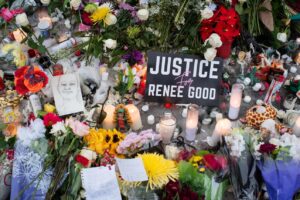
Who was Renee Nicole Good?
Long before her name appeared in national headlines, Renee Good was a mother, writer and university graduate with a passion for creativity.
She had recently made Minneapolis her home and was raising her family while building a life in Minnesota.
Good had a background in English and enjoyed writing poetry. In December 2020, she graduated from Old Dominion University with an English degree.
Following her death, the university publicly acknowledged the loss of one of its graduates.
Family members remembered Good for her personality, humor and affection for those around her.
Her former father-in-law, Tim Macklin Sr., also recalled her patience and dedication as a parent.
For her three children, the consequences of the tragedy were especially profound.
Her youngest child had already experienced the death of his biological father in 2023. Losing his mother represented another devastating change in his young life.
These details offered a more personal understanding of the woman whose death had become the subject of an intense national controversy.
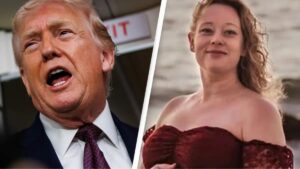
Donald Trump faces a difficult question on national television
On January 13, 2026, President Donald Trump sat down for an interview with CBS Evening News anchor Tony Dokoupil.
During the conversation, Dokoupil brought up the Minneapolis shooting and explained that he had been communicating with Renee Good’s father, Timothy Ganger.
The journalist described Ganger as a supporter of the president who was nevertheless devastated by his daughter’s death and the administration’s characterization of her.
Following the shooting, administration officials, including Homeland Security Secretary Kristi Noem, had described Good as a domestic terrorist.
The characterization became a major point of disagreement between federal officials and critics of the immigration enforcement operation.
Dokoupil’s question shifted the discussion away from political arguments and toward the experience of a father mourning his daughter.
He asked Trump what message he would offer Ganger.
The president’s response combined an expression of sympathy with a continued defense of his administration’s law enforcement approach.

Trump’s unexpected message to Renee Good’s father
Rather than immediately returning to the broader immigration debate, Trump initially addressed the grieving father.
“I want to say to the father that I love all of our people,” Trump said.
The president indicated that his concern extended to Americans regardless of their political allegiance.
He also suggested that Good may have been a “solid, wonderful person” in ordinary circumstances.
The acknowledgment stood out because administration officials had previously concentrated on allegations concerning her conduct during the encounter.
Trump did not, however, abandon his earlier defense of the ICE officer.
He continued to criticize Good’s actions and argued that federal immigration officers perform demanding duties under challenging circumstances.
His comments therefore reflected two distinct positions: recognition of the family’s personal loss and continued support for the federal officers responsible for implementing immigration policy.
The distinction is important. Expressing sympathy for a grieving family does not necessarily mean accepting legal responsibility or reversing an administration’s interpretation of an incident.
Nor was the television interview confirmation that Trump had personally contacted Good’s father.
Why the president’s response attracted attention
The exchange was notable partly because it involved a family member whom the interviewer identified as politically supportive of Trump.
Public debates about immigration enforcement often become divided along political lines.
However, the circumstances surrounding Good’s death demonstrated how government policies and law enforcement decisions can affect families with different political perspectives.
A person may support stronger immigration enforcement while also expecting a thorough examination of a fatal encounter involving federal officers.
Similarly, someone may recognize the dangers faced by law enforcement personnel while questioning whether a particular use of force was necessary.
These positions are not inherently contradictory.
The interview also highlighted the importance of how government officials communicate following a fatal incident.
Public statements can influence how a victim is perceived, particularly when they are issued before all the evidence has been independently examined.
For families experiencing a sudden loss, such statements can become another painful element of an already difficult situation.
Renee Good’s former father-in-law shares his perspective
Another member of Good’s extended family offered his own perspective during an interview with CNN’s Erin Burnett on January 13.
Tim Macklin Sr., the father of Good’s late former husband, spoke about the tragedy and openly identified himself as a Trump supporter.
Despite differences in personal beliefs, Macklin remembered Good as an affectionate and cheerful individual who cared deeply about her children.
He described the circumstances as difficult for everyone involved and was reluctant to assign personal blame.
His comments also reflected his religious faith and his desire to see greater compassion during a period of intense public disagreement.
Macklin’s perspective was particularly personal because his grandson had lost both biological parents.
The interview served as a reminder that relatives experiencing the same loss may have different opinions about the circumstances surrounding a death.
It also showed that political disagreement does not necessarily erase affection, shared memories or family connections.
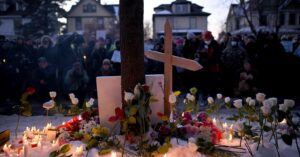
The growing debate over immigration enforcement and public safety
The Minneapolis shooting intensified an existing national conversation about the responsibilities of federal immigration agencies.
Supporters of stronger immigration enforcement argue that ICE officers have an important role in protecting communities, enforcing federal immigration laws and addressing public safety concerns.
They emphasize that officers sometimes face dangerous and unpredictable situations requiring difficult decisions.
Critics, meanwhile, argue that federal operations must be subject to meaningful oversight and that the use of deadly force deserves careful independent scrutiny.
They also raise concerns about the potential risks that large enforcement operations create for residents and surrounding communities.
The disagreement following Good’s death involved several important public policy questions:
How should federal officers be trained to manage confrontations? What safeguards should govern the use of deadly force? How should evidence be shared between federal and local authorities?
These questions extend beyond immigration policy itself.
They involve public confidence in government institutions, the protection of individual rights and the standards expected of law enforcement agencies throughout the United States.
Legal accountability and the search for answers
On January 14, the Associated Press reported that Good’s family had retained a law firm to examine the circumstances of her death.
The firm had previously represented George Floyd’s family.
The family’s decision reflected its determination to obtain answers through a separate legal inquiry.
At the time, the Department of Justice said it did not see grounds to initiate a federal criminal civil rights investigation into the shooting.
The family disputed the federal government’s account, creating a significant disagreement over the interpretation of the available evidence.
In cases involving deadly force, questions of legal responsibility depend on evidence, applicable laws, investigative findings and the specific circumstances of the encounter.
Statements by political leaders or relatives do not independently establish whether an officer acted lawfully.
That distinction is essential to understanding the case fairly.
The January interviews captured the controversy at an early stage rather than establishing a final legal outcome.
Remembering Renee Good beyond the political controversy
Trump’s televised message to Renee Good’s father became a significant moment in the national discussion surrounding her death.
It introduced a personal dimension into a debate dominated by immigration policy, political disagreements and competing accounts of the fatal encounter.
His remarks acknowledged the possibility that Good was a caring person while maintaining support for federal law enforcement.
For her relatives, however, the most lasting consequences of the tragedy were never political.
They were the absence of a daughter, the loss experienced by three children and the memories of a woman whose life extended far beyond the incident that brought her national attention.
The circumstances surrounding her death raised difficult questions about public safety, accountability and how Americans respond to tragedy during periods of political division.
Those questions deserve careful consideration, reliable evidence and respectful discussion.
Whatever political views people hold, Renee Good’s story remains a reminder that behind every national controversy are real individuals, grieving families and communities affected by the decisions of others.