
Image: AI-generated editorial illustration of Jeffrey Epstein. Not an authentic mugshot or archival photograph.
More than seven years after Jeffrey Epstein was found dead inside a federal jail in Manhattan, a new forensic interpretation has revived the debate about his final hours. The financier died on August 10, 2019, while awaiting trial on federal sex-trafficking charges. His death was officially ruled a suicide by hanging, but the circumstances and the failures of prison staff have continued to fuel questions.
The latest challenge comes from forensic medicine specialist Dr. Michael Freeman, who reviewed material associated with Epstein’s autopsy and argued that some injuries could be consistent with homicide. The theory has drawn fresh attention to the marks on Epstein’s neck, fractures documented during the examination and the quality of the available evidence. This is a disputed expert interpretation, not proof that Epstein was murdered. The New York City Office of Chief Medical Examiner has stood by its suicide determination, and federal reviews have supported it.
Who was Jeffrey Epstein, and what happened in 2019?

Image: AI-generated courtroom illustration, not a contemporaneous courtroom sketch.
Epstein was a financier who became notorious for sexually abusing and exploiting underage girls. His relationships with prominent figures in business, politics and entertainment drew attention, but association alone does not establish involvement in any offense. In 2008, he pleaded guilty to state prostitution-related offenses in Florida under a controversial arrangement that attracted criticism for its treatment of victims and its unusually favorable terms.
Federal prosecutors arrested Epstein in July 2019 and charged him with sex trafficking involving minors. He pleaded not guilty and was detained at the Metropolitan Correctional Center in New York City. He was found unresponsive in his cell on August 10, 2019, and was pronounced dead. His death ended the federal prosecution before the charges could be tested in court, depriving survivors of the possibility of a verdict in that case.
What does forensic expert Michael Freeman claim?
Freeman has questioned whether the physical findings recorded at Epstein’s autopsy are adequately explained by suicidal hanging. Reporting on his review describes concerns involving the placement and appearance of neck marks, injuries elsewhere on the body and the possibility of a struggle. He has also considered biomechanical explanations for how neck compression might have occurred.
In Freeman’s interpretation, some evidence could be more consistent with an assault or ligature strangulation than the officially described hanging. That conclusion is significant as a challenge to the prevailing account, but several questions remain unanswered. The analysis has not identified a perpetrator, established a reliable scenario for unauthorized entry into the cell or demonstrated that another person was present when Epstein died.
Forensic analysis often requires experts to weigh several plausible mechanisms against the entire record. A possible explanation is not necessarily the most likely explanation, and a challenge to one piece of evidence does not automatically overturn other findings.
Why are the autopsy photographs and neck injuries important?
Marks left by a ligature can provide information about the direction and distribution of pressure on the neck. Forensic pathologists may examine the orientation of the marks, the underlying tissue injuries, and whether the observed pattern fits the reported scene. The exact interpretation can be complicated by body position, the ligature material and the duration of compression.
Part of the controversy concerns fractures involving neck structures including the hyoid bone and thyroid cartilage. Such fractures can occur in strangulation, but they are not exclusive to homicide. They can also occur in suicidal hanging, particularly depending on a person’s age and anatomy. That is why fractures alone cannot establish the manner of death.
The original medical examiner assessed the injury patterns in the context of the overall autopsy and concluded that hanging was consistent with the evidence. Freeman’s analysis disputes elements of that interpretation. A definitive medical judgment would require a careful review of the actual photographs, pathology documentation, scene evidence and the limitations of the available records rather than a single dramatic finding.
Other forensic experts have challenged the suicide ruling
Freeman is not the first specialist to question the conclusion. Dr. Michael Baden, a forensic pathologist who observed the autopsy on behalf of Epstein’s brother, publicly argued in 2019 that the combination of fractures raised the possibility of homicidal strangulation. His comments helped place the neck injuries at the center of debate.
The medical examiner disagreed and continued to classify the death as suicide. Competing expert assessments can occur when evidence permits more than one interpretation or when the analysts give different weight to specific observations. The relevant question is not how many experts express doubt, but whether the complete evidence reliably supports an alternative conclusion.
What went wrong at the Manhattan jail?
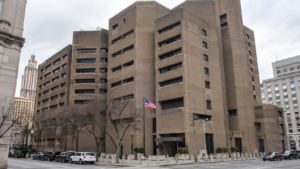
The 2023 Department of Justice Office of Inspector General report documented serious operational failures at the jail. Staff failed to perform required checks, monitoring records were falsified, and problems with the surveillance-camera system meant some recordings were unavailable. Those deficiencies undermined confidence in the institution’s handling of a prisoner whose safety required close supervision.
The failures are not merely minor paperwork issues. They affected the reliability of the timeline of Epstein’s final hours and raised legitimate questions about accountability at the federal facility. Nevertheless, evidence of negligence or falsified logs is not itself evidence that a homicide occurred. The inspector general found serious failures while reporting no evidence that contradicted the FBI’s determination of no criminal act associated with the death.
What did the FBI and Justice Department conclude?

Federal authorities have repeatedly supported the suicide finding. A July 2025 Justice Department and FBI memorandum reiterated that position following a review of relevant materials, including surveillance from the prison’s Special Housing Unit. Investigators said available video did not show anyone entering the relevant tier during the period they examined.
That finding does not mean that every moment inside the cell was captured on video. A camera monitoring a common area is not equivalent to a continuous interior recording. The video evidence must therefore be considered alongside staff accounts, physical findings and medical conclusions. But the limits of a camera view are also not proof that another person entered the cell.
The official position remains that Epstein died by suicide. No criminal proceeding has established that another person killed him.
Why is the medical examiner’s response so important?
The New York City Office of Chief Medical Examiner has continued to stand by its original ruling despite the public challenges from independent experts. The dispute highlights the distinction between an expert hypothesis and an official determination based on a completed medicolegal investigation.
A new interpretation may deserve scrutiny, especially when it identifies questions that can be tested against original records. Peer review, independent replication and access to complete source material can all help assess whether an argument is well supported. Yet it would be misleading to present a fresh expert opinion as a confirmed reversal of the official finding.
Why does the case still attract attention in 2026?
Epstein’s death remains controversial because it combined a notorious criminal prosecution, powerful social connections and documented institutional failures. Survivors were left without a federal trial on the 2019 charges, while the public learned of extraordinary lapses inside a facility responsible for keeping him safe.
The case also demonstrates how easily confirmed facts and speculation can become entangled. Confirmed staff misconduct should be reported as confirmed misconduct. An expert’s homicide theory should be attributed to that expert. Claims that a particular person arranged a killing would require independent, credible evidence and cannot be inferred from acquaintance with Epstein.
For readers trying to evaluate the latest coverage, that separation is essential. Scrutiny and skepticism are valuable, but so is a consistent standard of proof.
Could the new findings prompt another investigation?
A new forensic analysis may encourage specialists, journalists or officials to review the evidence again. Whether authorities conduct further investigative work would depend on the existence of substantial new facts, demonstrable flaws in the previous review or other relevant developments.
Any rigorous reassessment would need to consider the complete autopsy record, preserved scene material, security-camera limitations, statements from correctional staff and alternative physical mechanisms. It should test both suicide and homicide explanations rather than treating either as a predetermined answer.
Nothing in the reported disagreement, by itself, establishes that the official classification has changed.
Frequently asked questions
Was Jeffrey Epstein’s death officially ruled a suicide?
Yes. The New York City medical examiner ruled that Epstein died by suicide through hanging in August 2019. Federal reviews have supported that conclusion.
Who is Michael Freeman?
Dr. Michael Freeman is a forensic medicine specialist who has publicly challenged aspects of the medical interpretation of Epstein’s injuries and argued that homicide should be considered.
Do fractured neck bones prove strangulation?
No. Neck fractures may be found in both hanging and homicidal strangulation. Their meaning depends on the overall pattern of injuries and case circumstances.
Did jail employees violate procedures?
Yes. A federal inspector general investigation documented failures to monitor Epstein properly and other serious problems in jail operations, including falsified records.
Has anyone been proved to have murdered Epstein?
No. There is no established finding that he was murdered, and the official ruling remains suicide.
Bottom line
The latest forensic claims have renewed questions about Jeffrey Epstein’s death, particularly the injuries recorded at autopsy and the gaps created by failures at the Manhattan jail. Those questions deserve accurate and careful coverage. But the claim that Epstein was murdered remains unproven. The medical examiner and federal investigators continue to support suicide as the manner of death. Any future change would require persuasive evidence, not speculation alone.