The U.S.-Iran Diplomatic Crisis
This is the most critical geopolitical story today. President Trump has officially called Iran’s response to a proposed peace plan “unacceptable,” which has led to a spike in global oil prices and increased volatility in the Middle East.
Will this stalemate lead to a resumption of full-scale war, or is it a high-stakes negotiation tactic ahead of the Trump-Xi summit?
The answer carries immediate consequences for American drivers and U.S. forces deployed across the region.
A Fragile Ceasefire Under Strain
The current crisis stems from a 10-week conflict that erupted in late February 2026 after U.S. and Israeli strikes on Iran. A U.S.-brokered ceasefire took effect in mid-April, but violations have persisted, particularly Israeli operations against Hezbollah in Lebanon and Iranian threats to close the Strait of Hormuz.
On May 8, the United States presented a one-page, 14-point memorandum of understanding aimed at reopening the vital waterway while creating a framework for talks on Iran’s nuclear program. Key elements reportedly included a long-term moratorium on uranium enrichment, the transfer of Iran’s highly enriched uranium stockpile, and the dismantling of key nuclear facilities.
Iran responded through Pakistani mediators on May 10. Tehran described its counteroffer as “generous and responsible,” demanding an end to fighting on all fronts (including Lebanon), the lifting of U.S. sanctions and the naval blockade, recognition of Iranian sovereignty over the Strait of Hormuz, and guarantees against future attacks. Iran offered a shorter enrichment moratorium and resisted full dismantlement of its facilities.
Trump’s Blunt Rejection
Hours later, President Trump posted on Truth Social: “I have just read the response from Iran’s so-called ‘Representatives.’ I don’t like it — TOTALLY UNACCEPTABLE.”
The terse dismissal has frozen diplomatic momentum and raised fears that the fragile pause in hostilities could collapse.
Oil Markets Feel the Shock
The immediate economic fallout has been swift. Brent crude jumped as much as 4% to above $105 a barrel before settling around $103, while West Texas Intermediate also climbed.
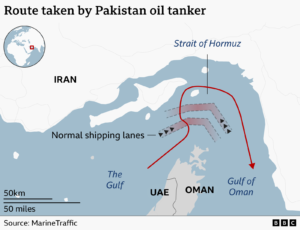
The Strait of Hormuz — through which roughly 20% of global oil and liquefied natural gas normally flows — remains effectively paralyzed. Only a trickle of tankers has transited in recent days. OPEC output has fallen to its lowest level in more than two decades.
In the United States, gasoline prices have risen sharply, adding pressure on household budgets and becoming a political liability for the administration less than six months before midterm elections.
High Stakes for U.S. Military Posture
The standoff directly affects American military posture abroad. The U.S. Navy has maintained a blockade of Iranian ports since mid-April, turning away dozens of vessels. Washington is seeking broader international support for safe passage operations, but key allies have conditioned participation on a comprehensive peace agreement.
Any resumption of major hostilities risks drawing in additional U.S. forces, raising the prospect of wider regional war involving Iran’s proxy networks.
The Trump-Xi Summit Looms
The timing is especially delicate. President Trump is scheduled to arrive in Beijing later this week for his first state visit to China in nearly a decade. Iran is expected to feature prominently on the agenda alongside trade, Taiwan, artificial intelligence, and nuclear issues.
Analysts are divided on whether Tehran’s hard-line response and Trump’s rejection represent genuine impasse or calculated posturing. Some view the moves as an attempt to improve bargaining positions before the summit; others warn that miscalculation could trigger escalation neither side fully desires.
Iran has signaled openness to diplomacy when “room” exists but has also vowed it will “never bow” and will retaliate against any new strikes.
What Comes Next?
The coming days will test whether this is the prelude to renewed conflict or the difficult final stretch of a high-stakes negotiation. Global energy markets, U.S. gasoline prices, and the safety of American personnel in the Middle East all hang in the balance.
For now, the world watches a dangerous diplomatic chess match whose next moves could determine whether the region slides back into open war — or finds a narrow path to de-escalation ahead of the Trump-Xi encounter in Beijing.