President Donald Trump has surprised political observers by expressing a willingness to meet with Democratic Senator-elect Abdul El-Sayed to discuss healthcare reform, potentially opening the door to an unexpected bipartisan agreement.
For months, President Donald Trump and Michigan Democrat Abdul El-Sayed appeared to be among the most unlikely political partners in Washington.
Their disagreements dominated portions of the 2026 midterm election campaign, with both men exchanging sharp criticism over their political positions and vision for America’s future.
However, a remarkable development following the election has introduced a new possibility.
Trump has indicated that he intends to meet with El-Sayed to explore healthcare reform, including a proposal the incoming Democratic senator has suggested calling “TrumpCare.”
The unexpected development comes at a time when millions of Americans are concerned about rising health insurance premiums, prescription drug expenses, hospital bills, and the overall cost of living.
While no formal healthcare agreement has been reached, the president’s willingness to engage with a former political opponent has raised an important question: Could two politicians with dramatically different political beliefs find common ground on one of America’s most pressing financial challenges?
Donald Trump makes a surprising offer following the midterm elections

In an Oval Office interview with the New York Post on November 24, President Trump acknowledged that he was open to discussing healthcare policy with El-Sayed.
The president offered unusually positive remarks about the Michigan Democrat and suggested that a compromise might be possible.
“He’s a smart guy,” Trump said, indicating that he expected to meet with the senator-elect.
The comments represented a significant change in tone from the confrontational language that characterized their relationship during the election campaign.
Rather than immediately dismissing El-Sayed’s healthcare ambitions, Trump appeared willing to explore whether Republicans and Democrats could identify areas of agreement.
That does not mean the president has accepted the traditional Medicare for All proposal. Nor does it mean Americans should expect immediate changes to their health insurance coverage.
Nevertheless, the possibility of direct negotiations is noteworthy, particularly given the political history between the two men.
With Democrats preparing to take control of both chambers of Congress, the Trump administration faces a different legislative environment heading into 2027.
Finding areas where bipartisan cooperation is possible could become increasingly important for the White House and congressional leaders.
Who is Abdul El-Sayed, the Democrat attracting Trump’s attention?
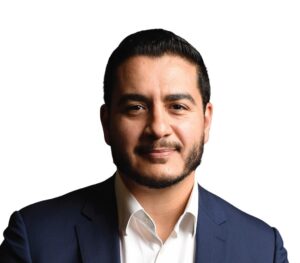
Abdul El-Sayed emerged as one of the most closely watched Democratic candidates during the 2026 midterm elections.
The Michigan politician defeated Republican candidate and former congressman Mike Rogers in the race for an open United States Senate seat.
His victory also places him on course to make history as the first Muslim member of the US Senate.
Unlike many politicians whose professional backgrounds are primarily in law or business, El-Sayed brings extensive experience in public health and government administration.
He earned a medical degree from Columbia University and a doctorate in public health from the University of Oxford, where he studied as a Rhodes Scholar.
He previously led Detroit’s health department and later worked in public health administration in Wayne County.
Those experiences have helped shape his political priorities, particularly his interest in expanding healthcare access and reducing the financial pressures associated with medical treatment.
Throughout his Senate campaign, El-Sayed emphasized issues affecting working families, including healthcare affordability, economic security, and the influence of money in American politics.
His approach has positioned him among the progressive Democrats advocating for significant changes to the country’s healthcare system.
From bitter political rivalry to potential cooperation

The possibility of cooperation is particularly striking because of the hostile relationship Trump and El-Sayed developed during the Senate campaign.
Before the election, Trump repeatedly criticized El-Sayed’s political ideology and religious background. Some of his remarks included inflammatory and unsupported accusations about the Democratic candidate.
El-Sayed responded by challenging the president’s rhetoric and criticizing his record.
Their public disagreements reflected the intense political divisions surrounding the midterm elections.
Yet governing often creates different incentives than campaigning.
Candidates must persuade voters during an election. Once elected, lawmakers must determine how to advance legislation, negotiate competing priorities, and deliver results.
El-Sayed’s willingness to engage with Trump suggests that he sees healthcare as an issue worth discussing even with political opponents.
For voters frustrated by partisan divisions, the prospect of cooperation may be encouraging. However, others may question whether the substantial ideological differences between the two politicians can be overcome.
The answer will depend less on their public statements and more on whether they can eventually agree on specific policy details.
What is TrumpCare, and why is El-Sayed promoting it?


At the center of the unexpected political conversation is an idea that El-Sayed has promoted under the name TrumpCare.
The Democrat has long supported expanding publicly financed healthcare coverage, a goal frequently associated with Medicare for All.
However, El-Sayed has suggested that he would be willing to attach Trump’s name to healthcare legislation if doing so helped secure the president’s cooperation.
His proposal gained additional attention after Trump shared a social media post featuring the TrumpCare concept.
During an appearance on NBC’s Meet the Press on November 22, El-Sayed expressed openness to working with the administration on healthcare affordability.
For El-Sayed, the proposed name appears to be less important than the substance of the legislation.
There is also an important distinction between the different healthcare models being discussed.
Traditional single-payer Medicare for All proposals generally envision a government-financed insurance system covering the population.
A public insurance option, by contrast, can operate alongside existing private health insurance plans.
El-Sayed has indicated openness to an approach that guarantees access to public coverage while allowing private insurance to remain available.
Exactly what a negotiated TrumpCare proposal might contain remains uncertain.
The name is currently part of a political discussion, not the official title of an enacted federal healthcare program.
Why rising healthcare costs remain a major concern for Americans


The political conversation comes against the backdrop of enormous healthcare spending in the United States.
According to the Centers for Medicare & Medicaid Services, national healthcare expenditure reached approximately $5.3 trillion in 2024.
That represented around $15,474 per person and 18% of the country’s gross domestic product.
These figures illustrate the scale of the financial challenge facing policymakers.
For many households, however, the problem is more personal than national statistics suggest.
Monthly insurance premiums can consume a substantial portion of a family’s income. Deductibles and copayments can make treatment expensive even for people who have health insurance.
Unexpected medical emergencies may introduce additional financial pressure, while individuals managing chronic illnesses can face recurring prescription and treatment costs.
Retirees may also need to balance healthcare expenses against fixed incomes and long-term savings.
A successful healthcare reform package could potentially address some of these concerns, depending on how it is designed.
However, expanding government-backed insurance would also require difficult decisions about taxation, federal expenditure, provider payments, and the future role of private insurers.
The challenge is not simply expanding coverage. It is creating a system that remains financially sustainable while ensuring patients receive appropriate medical care.
What could healthcare reform mean for families and retirees?
The potential consequences of a bipartisan healthcare agreement would vary considerably depending on the final legislation.
Working families might benefit from additional insurance options or reduced out-of-pocket expenses.
People who are self-employed or who work for small businesses could gain access to alternative coverage if a new public insurance plan were made available to them.
Older Americans approaching retirement might also find new opportunities to obtain health coverage before becoming eligible for traditional Medicare.
However, none of these potential benefits has been guaranteed.
Lawmakers would need to establish eligibility requirements, insurance benefits, funding arrangements, and rules governing the participation of healthcare providers.
They would also need to determine whether existing Medicare beneficiaries would experience any changes.
Until a formal bill is introduced and approved, Americans should continue making healthcare and financial decisions based on their existing insurance coverage rather than political proposals.
Could Republicans and Democrats actually reach an agreement?
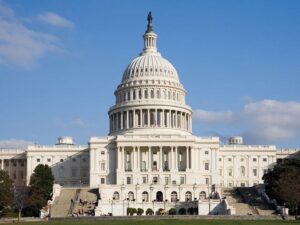
Despite Trump’s unexpected willingness to meet with El-Sayed, substantial obstacles remain.
Republicans have traditionally raised concerns about expanding federal control over health insurance, increasing government spending, and limiting private-sector competition.
Supporters of publicly financed healthcare argue that broader coverage could improve access, simplify parts of the insurance system, and reduce financial barriers to treatment.
Both sides will need to address questions about how reform would affect taxpayers, employers, medical professionals, insurers, and patients.
The Congressional Budget Office has previously highlighted the complexity of transitioning the United States toward a single-payer healthcare model.
Such a transition could substantially increase direct government healthcare spending, even as other forms of private healthcare expenditure change.
A less comprehensive public insurance option could present a different set of financial and administrative challenges.
Even with support from congressional Democrats, major legislation would require sufficient votes and agreement on its final wording.
Trump has also indicated that he remains prepared to veto legislation he opposes.
Consequently, the president’s willingness to meet should be viewed as an opportunity for discussion rather than evidence that a healthcare agreement is imminent.
What happens next between Trump and El-Sayed?
As of November 25, 2026, the proposed discussions remain in their preliminary stages.
Although Trump has expressed his intention to meet with El-Sayed, the precise arrangements and potential outcomes remain uncertain.
The coming months could provide greater clarity about whether the two politicians share enough common ground to advance healthcare legislation.
Observers will be watching for a confirmed meeting date, a detailed policy proposal, responses from congressional Republicans and Democrats, and an assessment of the financial implications.
Another important question is whether any agreement would focus on comprehensive Medicare for All legislation or a more limited expansion of public health insurance.
The difference could have major implications for American households and the broader healthcare industry.
An unexpected opportunity in American politics
Donald Trump’s willingness to engage with Abdul El-Sayed represents an unusual development following a deeply contentious election campaign.
The two politicians remain divided on numerous issues, but healthcare affordability has created a potential opening for dialogue.
For millions of Americans, the ultimate measure of success will not be the name attached to a healthcare program or which political party receives credit.
It will be whether they can afford health insurance, access necessary medical treatment, and protect their families from overwhelming healthcare expenses.
Whether Trump and El-Sayed can transform their unexpected conversation into meaningful legislation remains to be seen.
For now, their willingness to explore cooperation offers a reminder that even significant political disagreements do not necessarily eliminate every possibility of bipartisan action.
What do you think about Trump’s unexpected offer? Should Republicans and Democrats work together on healthcare reform despite their political differences? Share your thoughts in the comments.