Jorge Garcia’s weight loss has attracted attention for years, but the most meaningful part of his story is not a dramatic number on a scale. It is the conversation his experiences have opened about health, daily habits, personal choice, and the pressure placed on people whose bodies are constantly in the public eye.
Millions of viewers remember Garcia as Hugo “Hurley” Reyes, the funny, compassionate survivor on ABC’s Lost. Long after the show’s finale, interest in the actor has extended beyond his television career to questions about what he eats, whether he exercises, and how his appearance has changed. Some websites even claim to know the exact amount of weight he lost. Yet the public record supports fewer specifics than many headlines suggest.
Here is a closer look at Garcia’s journey, what has actually been reported, and the evidence-based healthy lifestyle lessons that readers can apply to their own lives—without treating one celebrity’s experience as a universal formula.

Image: Jorge Garcia photographed in 2014 at a Lost reunion event. Photo by Dominick D, CC BY-SA 2.0. This image does not document Garcia’s personal eating or exercise habits unless explicitly stated.

1. From Lost Fan Favorite to a Recognizable Hollywood Actor
Jorge Garcia became internationally recognizable through Lost, which aired from 2004 to 2010. His portrayal of Hurley gave the mystery series one of its most relatable characters. Hurley brought comedy to tense situations, but the role gradually developed into something more substantial: a character defined by empathy, loyalty, and unexpected leadership.
That appeal mattered. Audiences connected with Garcia’s performance, not simply his appearance. After Lost, he appeared in other television and film projects, including Alcatraz and Hawaii Five-0, where he played Jerry Ortega. His career is a reminder that a performer’s talent and personality are more interesting than a single physical characteristic. For background on his acting career, see CBS News’ profile of Garcia.
As his fame increased, so did public curiosity about his personal life. Discussions of his weight often followed him from one role to the next—sometimes with more assumptions than verified facts.

Image: Jorge Garcia appearing at Comic-Con in 2006. Photo by Ewen Roberts, CC BY 2.0. This image does not document Garcia’s personal eating or exercise habits unless explicitly stated.

2. When Garcia Began Talking About Health and Personal Responsibility
One of the clearest early accounts comes from the period when Lost was being filmed in Hawaii. In a 2005 interview cited by Newsner’s original article, Garcia discussed taking more responsibility for himself and said the Hawaiian setting encouraged outdoor activity. This was an unusually practical observation: a change of environment can make a healthier habit feel more natural.
A March 2006 Maxim interview has also been cited in later reporting. In it, Garcia reportedly said he had lost more than 30 pounds and was making more deliberate choices about looking after himself. That is a historical report about that period, not a verified statement of his current weight or lifelong weight change.
It is tempting to frame this as one dramatic turning point. Real lifestyle changes, however, are rarely neat. Schedules change, motivation fluctuates, and the conditions that help someone move more or eat differently may not last forever. Garcia’s public comments offer a more realistic starting point: focus on what you can influence today instead of chasing an overnight transformation.
3. Did Jorge Garcia Lose 100 Pounds? Separating Facts From Rumors
Search for “how much weight did Jorge Garcia lose?” and you will encounter conflicting figures. Some entertainment and lifestyle sites repeat claims that he reached approximately 400 pounds or lost around 100 pounds. Newsner itself describes those figures while referencing other secondary outlets. But repeated numbers are not the same as measurements independently confirmed by Garcia or documented in a reliable, detailed interview.
The distinction is important: there is reporting about weight changes during the Lost years, including the historical figure of more than 30 pounds, but a precise and current total is not established by the sources reviewed for this article. Likewise, there is no solid basis here to state that he underwent weight-loss surgery, used a particular medication, followed a named commercial diet, or had a specific medical diagnosis.
Photographs across different years cannot settle those questions. Lighting, clothing, camera angles, and the passage of time change how anyone looks. Nor is a person’s health status something that can be diagnosed by looking at them. A respectful account of Garcia’s lifestyle therefore avoids unverified before-and-after claims and centers on choices, wellbeing, and his work.
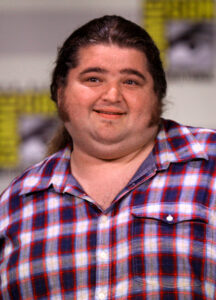
Image: Jorge Garcia at San Diego Comic-Con in 2011. Photo by Gage Skidmore, CC BY-SA 3.0. This image does not document Garcia’s personal eating or exercise habits unless explicitly stated.

4. Healthier Eating: What Readers Can Learn Without Inventing a Celebrity Diet
The source article associates Garcia’s efforts with changes in food choices, including more fruits and vegetables. Other websites have attached detailed low-carbohydrate or high-protein regimens to his name, but a publicly verified daily meal plan is not available. Readers should not confuse a general description with an official “Jorge Garcia diet.”
What is well supported is the value of eating patterns that are balanced and realistic. The US National Institute of Diabetes and Digestive and Kidney Diseases recommends choosing a variety of vegetables, fruits, whole grains, and protein-rich foods, while developing habits that a person can maintain. Those guidelines can be adapted to culture, preferences, budget, and individual medical needs.
A manageable approach might involve preparing an easy breakfast with fruit and protein, adding vegetables to lunch, replacing some refined grains with whole grains, or keeping satisfying snacks available. These are examples for readers, not claims about Garcia’s personal menu. Restrictive diets may sound exciting in headlines, but lasting change generally depends on consistency, enough nourishment, and an approach that fits ordinary life.
The goal is not to label foods as morally “good” or “bad.” It is to build flexibility into daily meals so that nutrition supports energy, enjoyment, and health rather than becoming another source of stress. Read NIDDK’s adult healthy-living guidance.

Image: A colorful salad bowl illustrates balanced, varied meals. Photo by Ella Olsson, CC BY 2.0. This image does not document Garcia’s personal eating or exercise habits unless explicitly stated.

5. Finding Movement That Fits Everyday Life
Garcia’s comments about outdoor activity in Hawaii highlight an idea often overlooked by transformation stories: surroundings and enjoyment can influence whether a person stays active. Activity does not have to begin with an intense gym program. Walking, cycling, swimming, dancing, and other movements can all contribute to health when they are appropriate for the individual.
According to the CDC’s physical activity guidance, most adults should aim for at least 150 minutes of moderate-intensity aerobic activity each week, along with two days of muscle-strengthening activity. Those are broad public-health recommendations, not a schedule attributed to Garcia. Someone who is new to exercise can begin more gently and increase gradually as appropriate.
For many people, the first sustainable step is modest: a short stroll after dinner, a pleasant weekend walk, standing up more often during the workday, or inviting a friend to join an activity. Choosing movement that feels feasible makes it easier to repeat. Health improvements can matter even when the scale barely moves, and a clinician can help adapt activity for an injury, disability, or chronic condition.

Image: People taking a walk in a city park. Photo by Janesmith321, CC0 1.0. This image does not document Garcia’s personal eating or exercise habits unless explicitly stated.

6. Sleep, Stress, and a Healthier Relationship With Progress
Celebrity coverage often presents health as a contest of willpower. In reality, weight management and wellbeing are influenced by more than food and exercise alone. Sleep, stress, medication, medical conditions, work schedules, social support, and access to healthy options all play roles. The CDC’s guidance on healthy weight explicitly includes sleep and stress management alongside nutrition and physical activity.
That perspective can reduce the pressure to get everything perfect. A stressful week might disrupt routines. A period of poor sleep can make planning meals or finding motivation harder. The practical response is not self-criticism, but attention to the parts of the routine that can be made easier—such as preparing tomorrow’s breakfast, taking breaks, or protecting a consistent bedtime.
Tracking progress can also mean noticing improved stamina, better sleep, a steadier mood, or greater ease with everyday activities. These outcomes are personally meaningful even when they do not produce a striking “transformation” photograph.

Image: A notebook and laptop illustrate tracking personal health goals. Photo by Shixart1985 / Nenad Stojković, CC BY 2.0. This image does not document Garcia’s personal eating or exercise habits unless explicitly stated.

7. Why Sustainable Goals Beat Dramatic Promises
Online searches for celebrity transformations often lead to expensive supplements, rapid weight-loss challenges, and supposedly secret plans. Garcia’s story is more useful when it leads readers away from shortcuts and toward habits they can actually live with.
For people who are medically advised to lose weight, the CDC notes that gradual, steady weight loss—often about one to two pounds per week—is more likely to be maintained than faster loss. That is general guidance, not a target suitable for every reader. Some people need a different plan, and others may benefit from focusing on health measures that have little to do with body weight.
Consider setting goals around behaviors rather than an arbitrary deadline: eating vegetables with one additional meal each day, building a regular walking routine, making time to sleep, or scheduling a conversation with a registered dietitian. A goal should be specific enough to act on, yet adaptable when life changes. If a habit slips, restarting is not failure; it is part of learning what is sustainable.
The most useful health plan is seldom the most dramatic one. It is the one that respects your needs, supports your wellbeing, and can continue beyond the excitement of the first few weeks.

Image: A variety of fresh fruits and vegetables on a market stand. Photo by Emeraldhorticulture, CC BY-SA 3.0. This image does not document Garcia’s personal eating or exercise habits unless explicitly stated.

8. Life Beyond the Headlines: Privacy, Career, and Personal Identity
Despite persistent interest in his weight, Garcia has never built his entire public identity around a detailed fitness program. His work as an actor remains the strongest and most verifiable part of his public story. He has also shared glimpses of life beyond television through social media, though occasional posts should not be interpreted as a comprehensive medical or dietary record.
This matters in a media environment where celebrities are routinely described as “inspiring” only when they become smaller. Inspiration can also come from humor, artistic commitment, kindness, creativity, and the decision to set boundaries around one’s private life. People are entitled to dignity and privacy at every size.
For audiences who admired Hurley’s humanity on Lost, this is perhaps the strongest reason Garcia’s story still resonates: a person’s worth cannot be reduced to a number on a scale.
9. Five Practical Takeaways From the Conversation Around Garcia’s Health
Start with one change you can repeat. A manageable habit has a better chance of becoming routine than a complete overnight overhaul. Identify one improvement that fits your schedule, resources, and preferences.
Make your environment work for you. Garcia noted the appeal of outdoor activity in Hawaii. You might identify an inviting local walking route, prepare convenient meal ingredients, or arrange support from a friend.
Treat food as nourishment, not punishment. Balanced meals and flexible patterns are generally more helpful than trying to reproduce an unverified celebrity menu. Professional guidance is valuable for specific nutrition or medical needs.
Pay attention to wellbeing beyond appearance. Energy, movement, sleep, mood, and ability to take part in daily activities are useful signs of progress. Appearance alone says little about someone’s health.
Be skeptical of viral transformation claims. Ask whether a headline points to a direct interview, an authoritative medical source, or simply another website repeating a number. Healthy curiosity and fact-checking can protect both readers and the people being discussed.
Frequently Asked Questions About Jorge Garcia’s Weight Loss
How much weight did Jorge Garcia lose?
Reports about the Lost era refer to Garcia losing more than 30 pounds around 2006. Claims of a 100-pound total circulate online, but the material reviewed does not establish that figure as a directly verified, lifetime result. His current weight should not be inferred from photographs.
Did Jorge Garcia have weight-loss surgery?
There is no reliable confirmation in the sources reviewed that Garcia underwent bariatric surgery. It would be inaccurate to state either that he had surgery or that he definitely never did without trustworthy first-hand information.
What diet did Jorge Garcia follow?
Secondary reports describe healthier food choices, sometimes mentioning vegetables and plant-based meals. However, there is no verified day-by-day Garcia diet plan, calorie target, or prescribed eating schedule for readers to copy.
Did Jorge Garcia exercise to improve his health?
He spoke in 2005 about Hawaii being conducive to outdoor activity. That is evidence of his attitude toward activity at the time; it does not verify a specific weekly workout routine or current exercise schedule.
What is Jorge Garcia best known for?
He is best known for playing Hugo “Hurley” Reyes on Lost. His other screen work includes Alcatraz and Hawaii Five-0, where he portrayed Jerry Ortega.
What is the biggest lesson from his story?
That health should be approached with patience and reliable information. There is no need to exaggerate one person’s weight change to find value in a discussion of practical habits, personal agency, and respect for privacy.
Final Thoughts: A Healthier Lifestyle Is Bigger Than a Before-and-After Photo
Jorge Garcia’s journey has been discussed for years, but an accurate account does not require an impressive-sounding number or a supposed secret diet. It requires recognizing what the actor has publicly shared, being careful with unverified claims, and drawing useful lessons from reputable health guidance.
For readers pursuing better wellbeing, the takeaway is straightforward: build sustainable habits, choose movement you enjoy, eat in ways that nourish you, prioritize rest, and seek personalized advice when necessary. The story worth remembering is not a perfect transformation; it is the possibility of making thoughtful choices over time.
Health information in this article is general education, not individualized medical advice. Consult a qualified professional about personal health or weight-management concerns.