Christian Brueckner had spent years as a name on a case file. In June 2025, sitting in a visiting room at Sehnde Prison near Hanover, he became a voice. The German man named as the prime suspect in the disappearance of Madeleine McCann spoke to a journalist from behind bars — and refused, on lawyers’ advice, to say a single direct word about the missing child at the centre of the world’s most watched unsolved case.
What he did talk about was release, fame, steak, beer, and disappearance of a different kind: his own.
He has still never been charged over Madeleine. That fact sits under every sentence that follows.

The child who vanished from apartment 5A
Madeleine McCann was three years old on the evening of 3 May 2007. Her family was on holiday at the Ocean Club in Praia da Luz, on Portugal’s Algarve. While her parents, Kate and Gerry McCann, dined nearby with friends, she disappeared from the holiday apartment where she had been sleeping with her younger twin siblings. She has not been seen since.
The case became a global investigation: Portuguese police first, then Britain’s Metropolitan Police through Operation Grange, then German prosecutors who, in 2020, publicly identified a suspect. Nearly two decades on, there is still no body, no charge in the Madeleine file, and no ending for her parents.

Who the suspect is — and what he is, and is not, convicted of
Christian Brueckner is a German national who lived as a drifter on the Algarve in the mid-2000s. German prosecutors named him the prime suspect in Madeleine’s disappearance in 2020. They have pointed to mobile-phone data placing him in the Praia da Luz area that night and to other material they have declined to set out in full in public. Braunschweig prosecutor Hans Christian Wolters has said in interviews that he believes Madeleine is dead and that Brueckner killed her. That is a prosecutor’s conclusion. It is not a verdict.
Brueckner denies any involvement.
The sentence that actually kept him in prison was separate. He was serving seven years in Germany for the 2005 rape of a 72-year-old American woman in Praia da Luz — the same resort town. He has always denied that conviction too. In a later German trial over other alleged sex offences in Portugal, including claims brought by Irish holiday representative Hazel Behan, he was acquitted. Prosecutors have appealed or sought further action in parts of that litigation; the Madeleine case has remained a suspect file without an indictment.
By early June 2025 the clock on the rape sentence was visible to everyone. If investigators did not produce something new, he was due out in September.
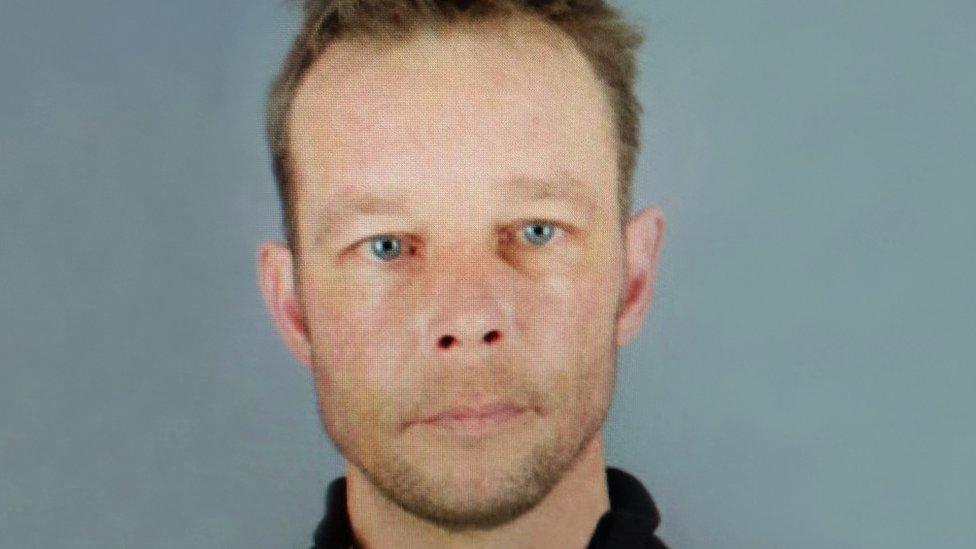
The prison interview: a prepared man who knew what not to say
German journalist Ulrich Oppold was given a visiting permit that Brueckner himself had arranged. After security checks, Oppold was taken into a visiting room with relatives of other inmates. The prisoner who greeted him was then 48, held in a single cell with a thin yellow curtain, a narrow bed, a small table and a blue cloth. Staff at Sehnde described him as reclusive. He told the reporter he passed the time reading, drawing and watching television.
Oppold’s impression, later reported by British papers that picked up the interview, was of a man who had rehearsed.
“Christian B. seemed intelligent to me, perhaps a little distant, and I think he had prepared himself very well for our conversation. He knew exactly what he wanted to say and, in particular, what he didn’t want to say.”
On Madeleine, the line was absolute. After speaking to his lawyers, Brueckner would not answer direct questions about the girl. He has repeated the same denial for years: he had nothing to do with what happened to her.
What he wanted to talk about was the rape sentence and the way the world now saw him.
“The fact that I have been in prison for many years for something that I cannot have committed and that therefore, through the participation of the media, half the world considers me a cruel rapist.”
He also described an assault inside the jail. Another inmate, he said, had broken at least one of his ribs. After that, he claimed, he stayed in the cell around the clock.
“I don’t go out. Not even for food.”
Oppold said the man in front of him seemed confident and “serene,” and that he came away with the feeling he was looking at someone “not aware of any guilt.” That is a journalist’s reading of a performance, not proof of innocence or guilt. It is also why the interview travelled: a suspect in a child-disappearance case, speaking calmly about dinner plans while a search team was assembling hundreds of miles away.
“As well-known as a colourful dog”
The line that defined the interview was about what would happen if the cell door opened.
Brueckner said that if he were released he would have to go into hiding. He compared his own recognisability to a German expression — “I’m as well-known as a colourful dog” — and spoke of leaving for a country without an extradition treaty. His lawyer Philipp Marquort had already indicated that the client had discussed living abroad. Other reports around the same period said plastic surgery had been mentioned as a possibility. In the room with Oppold, Brueckner reduced the fantasy of freedom to something smaller and more ordinary.
He was looking forward, he said, to “a steak and beer.”
To the McCann family, and to officers who have spent years on the file, those sentences landed as something other than a menu. A suspect who has refused to help British police was describing a plan to become unreachable.
The search that ran in parallel
While the interview was being prepared and published, German and Portuguese investigators opened a fresh search near land associated with Brueckner’s old life on the Algarve — miles from the Ocean Club apartment. About 30 officers from Germany’s BKA, working with Portuguese counterparts, spent several days on a job described as the first major fieldwork in more than two years. Roads were closed. Radar was brought in. The ground of interest was not a single hole in the sand. It was wells, underground tanks and ruins across roughly 21 private plots, about 120 acres in all.
The hope, stated bluntly in contemporary coverage, was evidence strong enough to support a charge before the September release date. Without a charge or a new warrant, German prosecutors had already signalled there was no separate legal hook to keep him inside on the Madeleine file.
The search ended. Officers left. No public announcement of a breakthrough followed. Later reporting described the June 2025 operation, like earlier digs at sites including the Arade reservoir, as leaving investigators empty-handed in terms of a charge.

Why he could talk from a cell and still not be in the dock
German criminal procedure is part of the explanation. Circumstantial and inferential material that British or Portuguese officers might want to test in an interview does not automatically become an indictment in Braunschweig. Wolters has said there is evidence. He has also, at key moments, been unable or unwilling to put that evidence into a charging document that would survive court. The Met sent an international request to interview Brueckner before release. He refused. There was no mechanism to force the conversation.
That is the uncomfortable shape of the case in 2025: a suspect identified with unusual public certainty, a family still waiting, and a legal file that never quite closed the distance between belief and proof.
Cellmate testimony has been offered in other proceedings — claims that Brueckner spoke in prison about taking a child during a break-in in Portugal. Those accounts are allegations inside other trials, contested like every other piece of this story. They have not produced a Madeleine indictment.
What happened after the interview
The source article was written as a race against a September door. The door opened.
On 17 September 2025, Brueckner left Sehnde Prison in a black Audi with his lawyer and a police escort. He had completed the rape sentence. Conditions on release included an electronic ankle tag for years, contact with probation, a registered address and the surrender of his passport. A psychiatric assessment reported around that time described a high risk of further offending. He was still not charged over Madeleine. The Met still listed him as a suspect. So did German and Portuguese investigators.
Days later he travelled to confront the prosecutor’s office in Braunschweig and asked, in his telling, for help “to get my life back.” Wolters did not meet him. Brueckner later told Sky News the media hunt was the prosecutor’s fault. His lawyers have argued that the public accusation made ordinary rehabilitation impossible.
In September 2026, a German court lifted the condition that required him to remain living in Germany. Other restrictions — the tag, probation, the surrendered passport in the earlier package of conditions — were reported as still in force when that ruling was announced. He remains uncharged in the Madeleine investigation. He continues to deny involvement.
Kate and Gerry McCann have not treated any of this as closure. On the anniversaries that keep arriving, they have said they will not give up. Operation Grange has continued on a reduced budget. The official missing-person appeal is still live.

What the silence, and the speech, actually changed
Brueckner’s prison interview did not produce a confession. It was designed not to. The useful facts in it are narrower and colder than the headline.
He confirmed he would not discuss Madeleine. He framed himself as a victim of media and of a rape conviction he rejects. He said prison had become a locked-in existence after an assault. He said fame made a quiet life in Germany impossible. He talked about hiding, about a country that would not send him back, about a steak and a beer. Investigators, in the same week, were still walking ruined ground in the Algarve looking for something that would make those plans irrelevant.
None of that settles the case. A prime suspect is not a convicted abductor. A prosecutor’s televised certainty is not a jury’s verdict. A man can be a convicted rapist in one file and an uncharged suspect in another. All of those things are true of Christian Brueckner at once.
Madeleine McCann would be in her early twenties now. The last verified images of her are of a toddler in a burgundy top, taken in the days before she vanished from a white-washed apartment block above a Portuguese resort. The man German prosecutors say is responsible for that night used his first substantial prison interview to talk about dinner and about vanishing.
The investigation is still open. He has still not been charged. The questions he refused to answer in Sehnde are the same questions the case has asked since 3 May 2007.
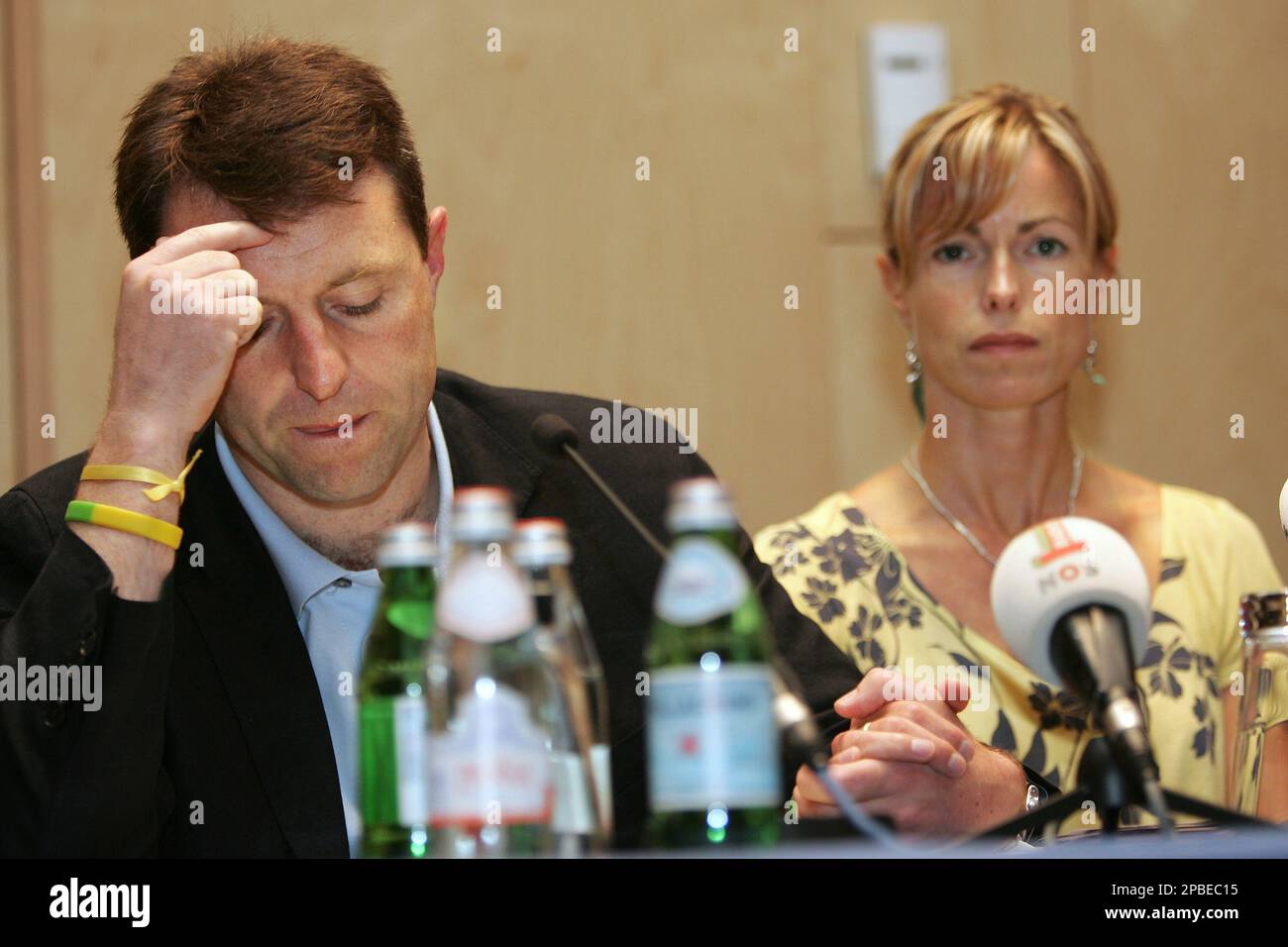
Christian Brueckner has not been charged in connection with Madeleine McCann’s disappearance and denies any involvement. He was convicted in Germany of the 2005 rape of an elderly woman in Praia da Luz, a conviction he also denies.