President Donald Trump has spent more than a year turning a brief dementia-screening exam into a political talking point. What began as a December 2025 boast that he had “aced” a third cognitive test has since grown into a fourth publicly claimed perfect score, a late-night White House medical memo, and a running argument over what those scores actually mean.
The story is no longer only about one Truth Social post. It is about how the oldest person ever sworn in as U.S. president wants the public to read his health file — and how doctors keep saying the test he is celebrating was never designed to prove “extreme intelligence.”
From three tests to four
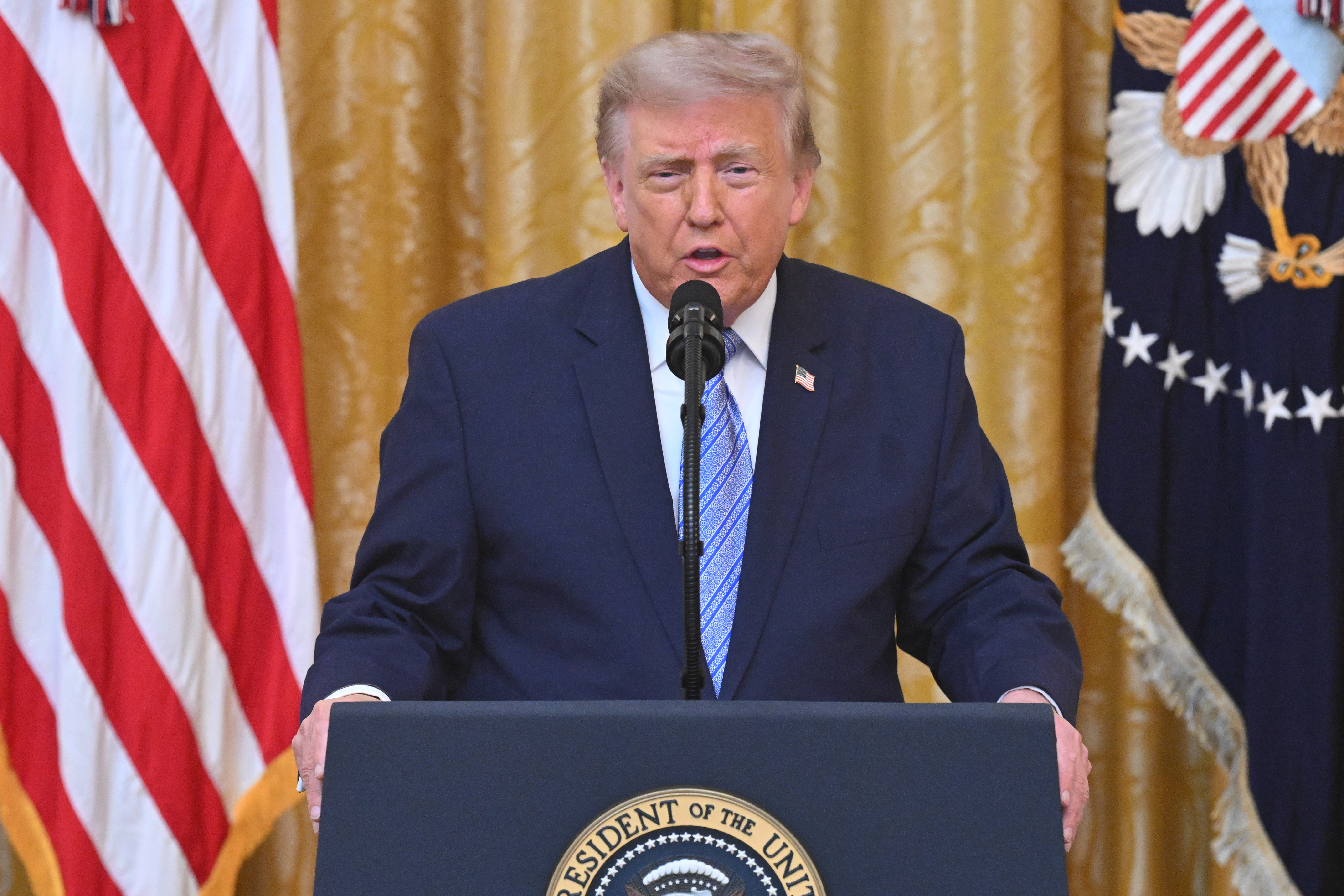
In December 2025, Trump used Truth Social to answer mounting questions about his stamina, travel schedule, and an MRI he had undergone earlier that year. He said no president had worked harder, that Walter Reed doctors had given him “PERFECT Marks,” and that he had taken “what is known as a Cognitive Examination” on three separate occasions — “the last one being recently.” He added that he “ACED all three of them in front of large numbers of doctors and experts.”
“I will know when I am ‘slowing up,’ but it’s not now,” he wrote.
That post is the piece Newsner originally reported. The update is that the pattern did not stop there.
After a May 26, 2026, exam at Walter Reed National Military Medical Center, Trump went further. In a May 31 Truth Social post he said the physical results were “extremely good,” that he scored “a perfect 30 out of 30, considered ‘extreme intelligence,’” and that this was his fourth such test — “all PERFECT or, 120 correct answers out of 120 questions asked.” He then demanded that every future presidential and vice-presidential candidate be forced to take the same exam.
He turned 80 on June 14, 2026. The boasts have continued in speeches and later posts, including a July claim that he had “just finished” another perfect physical and requested another cognitive test. The White House said he was referring back to the May visit.
What the White House doctor actually wrote
Navy Capt. Sean Barbabella, the physician to the president, released a memo after the May exam. It is more measured than Trump’s social-media version.
Barbabella wrote that Trump “remains in excellent health, demonstrating strong cardiac, pulmonary, neurological, and overall physical function,” and that he is “fully fit to carry out all duties of the Commander-in-Chief and Head of State.” The memo said a comprehensive neurological exam showed normal mental status, intact cranial nerves, normal motor strength, sensation, reflexes, gait and balance. It also recorded a 30/30 score on the Montreal Cognitive Assessment, described as “within normal limits.”
The same memo listed details Trump did not put in all-caps:
- Age 79 at the time of the exam, height 6-foot-3, weight 238 pounds — 14 pounds heavier than the April 2025 physical.
- Blood pressure 105/71 mmHg and resting heart rate 73.
- Slight lower-leg swelling, improved from the prior year.
- Hand bruising described as common and benign, tied to frequent handshaking plus low-dose aspirin.
- Preventive counseling on diet, activity, aspirin, and continued weight loss.
- Consultations with 22 specialty providers.
- Scarring on the right ear from the July 2024 assassination attempt.
The White House had already disclosed a diagnosis of chronic venous insufficiency, a common condition in which vein valves fail to return blood efficiently from the legs. That explanation followed public photos of swollen ankles. Trump has said compression socks were uncomfortable.
In short: the official medical summary is “excellent health” plus a normal dementia screen, plus weight gain, vein disease, bruising, and a recommendation to move more and eat better.

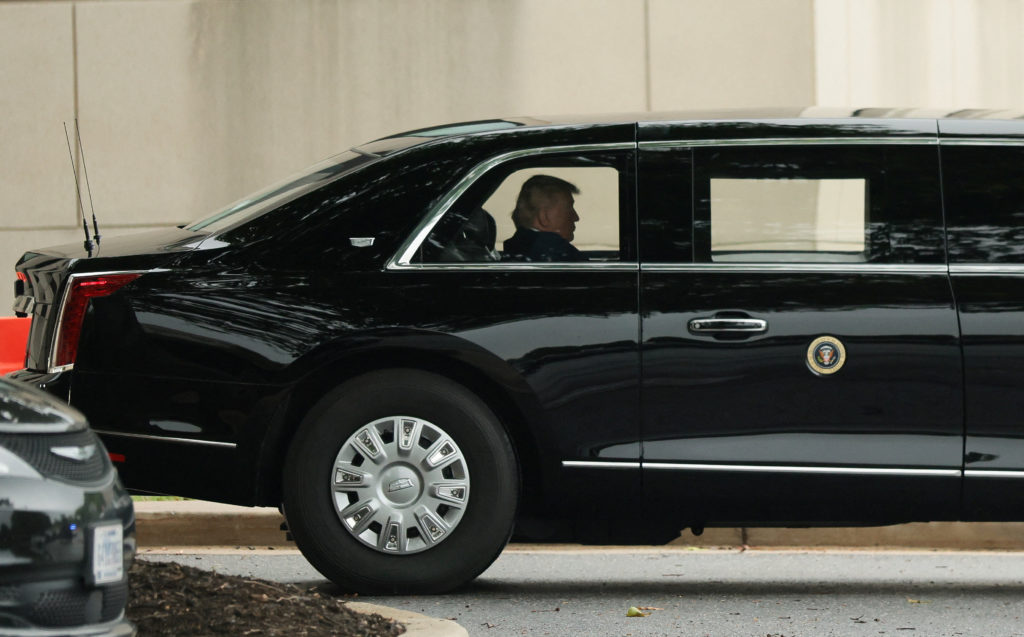
Walter Reed is where these exams have been staged. Trump has visited repeatedly during his second term, and he has sometimes complained that extra imaging only gave critics “ammunition.” After an earlier scan he told interviewers he was not even sure which part of the body had been imaged. That remark, more than the score itself, is what first widened the health debate.
The test he keeps bragging about is not an IQ test
Medical experts have been unusually consistent on one point: the exam Trump is describing is almost certainly the Montreal Cognitive Assessment, or MoCA, a roughly 10-minute screen created by neurologist Ziad Nasreddine to catch mild cognitive impairment and early dementia. It is scored out of 30. A result of 26 to 30 is considered normal. A 30/30 means no impairment was detected on that brief tool. It does not mean “genius.”
Nasreddine has said the test measures attention, concentration, language, memory, abstract thinking and calculation. “Cognitive function is correlated with IQ,” he told fact-checkers. “But the test was not designed to detect the genius level of cognitive performance. It’s meant to reassure that cognitive functions are normal.”
Typical MoCA tasks include drawing a clock set to a specific time, copying a simple cube, naming animals, repeating a short word list later, tapping when you hear a certain letter, subtracting 7 from 100 several times, and stating the date and place. Trump has sometimes described “very tough mathematical equations” and a “person, woman, man, camera, TV” sequence. The MoCA’s creator has said that five-word string is not on the official test. The sequence Trump made famous in 2020 was his own recollection of a memory item, not a measure of executive leadership.
PolitiFact rated the “extreme intelligence” claim False. CNN medical analyst Dr. Jonathan Reiner put it more bluntly after the fourth disclosed screen: a score of 26 or higher is normal cognitive performance, “not extreme intelligence,” and “none of the questions are high difficulty.” Repeating the same family of items, he added, makes the exercise even less informative. There are alternate MoCA versions precisely because practice effects are a known problem.
Neurologist Dr. Vin Gupta has made the same distinction: the MoCA is “a screening tool at a very high level to detect early signs of cognitive decline or dementia.” It is “not something that assesses the ability to do the world’s hardest job.”
That gap — between a normal screen and a claim of rare brilliance — is why the boasts keep backfiring with clinicians even when the raw score is good.
Why critics say the frequency matters more than the 30
A single perfect MoCA is unremarkable for a high-functioning adult. Four publicly advertised perfect scores are what now draws comment.
In September 2026, psychiatrist Dr. Henry David Abraham, a Tufts emeritus professor and co-recipient of the 1985 Nobel Peace Prize as part of International Physicians for the Prevention of Nuclear War, told The i Paper he was less worried by the published scores than by how often the test is being given. “You give a MoCA for a rapid screen,” he said. “If you are doing two, three, four, you’re not doing a rapid screen. You’re looking for a trend.”
Abraham’s concern was command authority, not word recall. He pointed to Trump’s conduct around recent military strikes and to social-media imagery, including an AI-generated picture of the president at a red button amid explosions. That is opinion from one specialist, not a diagnosis. It does show how the testing story has moved from “did he pass?” to “why is the White House still administering this tool?”
Psychologist Dr. John Gartner, a former Johns Hopkins professor, was already making a harsher case when Newsner first published. On The Daily Beast Podcast in late 2025 he argued that Trump’s verbal slips, memory lapses and what he called psychomotor signs — difficulty with a salute, a wide-based gait, facial droop on one side — were “clinical signs of dementia,” possibly layered on a long-standing personality pattern. “When people develop dementia, they become the worst versions of themselves,” Gartner said.
Those comments are not a substitute for a full neurological workup. Distant clinicians cannot examine the president. They also cannot be dismissed as a sideshow when the White House itself keeps putting cognitive testing in the news.
A group of medical specialists later entered a statement in the Congressional Record describing “objectively observable signs of serious medical concern,” including disorganized speech, factual confusion and episodes of apparent somnolence. That letter is advocacy, not a chart review. It is part of the record of how polarized the health debate has become.
The political frame Trump wants — and the one he cannot control
Trump’s strategy is familiar. In 2020 and 2024 he attacked Joe Biden as too old and mentally unfit. Biden left office at 82 after a disastrous debate and a party revolt over acuity. Trump then became the oldest president ever inaugurated and now uses the same vocabulary of “tests” against Democrats, the New York Times, and individual members of Congress. He has told reporters they would be “incapable” of passing the exam he aced.
The political logic is simple: if the test is hard, a perfect score is a trophy. If the test is a dementia screen, a perfect score is the expected result for someone who is still working a full presidential day — and repeating it starts to look like reassurance theater.
That is why fact-checkers keep returning to the same sentence. A 30/30 MoCA is good news in the narrow sense that it did not flag impairment on a short tool. It is not a substitute for neuropsychological testing, imaging interpretation, medication review, or an independent release of the underlying records. Trump has invited the comparison to other presidents by saying none of them would take the exam. Most presidents also did not campaign on the exam.

What the public file now shows
Put the original Newsner item and the later reporting on one timeline:
2018: First disclosed MoCA during the first term. Then-White House physician Ronny Jackson reported 30/30.
2025: Trump says he took the test again, then a third time, and “aced” all three. An MRI and reduced public travel feed speculation. Gartner and others go on the record.
May 2026: Third physical of the second term at Walter Reed. Barbabella memo: excellent health, 30/30 MoCA, 238 pounds, improved but still present leg swelling, hand bruising, diet and exercise counseling. Trump calls the score proof of “extreme intelligence” and a fourth perfect test.
Summer–fall 2026: He keeps citing the results. Medical writers and a Nobel-affiliated psychiatrist focus on repetition, not the number 30.
Visible issues that are not cognitive — venous insufficiency, bruising, weight, and occasional public moments that look like fatigue — remain in the same file. The White House explanation for each is ordinary: age, aspirin, handshakes, a common vein condition. Critics say the explanations arrive late and incomplete. Both things can be true at once: a president can pass a screening test and still owe the country a fuller accounting than slogans.
The honest bottom line
Trump is telling the truth in one limited way. He has taken a widely used cognitive screen more often than any modern president has publicly admitted, and his physician says he scored a perfect 30. That is not nothing. For an 80-year-old commander-in-chief, a normal MoCA is better than an abnormal one.
He is not telling the medical truth when he treats that screen as a high-difficulty intelligence exam that “few people would be able to do very well.” The man who invented the test has said otherwise. So have cardiologists, neurologists and fact-checkers who reviewed the claim.
Health fears around this presidency will not be settled by another 30/30. They will be settled, if at all, by whether the White House releases enough primary information — full physicals, imaging summaries, independent specialists — for the public to judge capacity the same way it was asked to judge Biden. Until then, the president will keep bragging about a dementia test. Doctors will keep answering that passing it is the floor, not the ceiling.