Former First Lady Jill Biden has opened up about a persistent symptom she noticed in her husband long before his May 2025 diagnosis of aggressive prostate cancer. The detail, shared in recent interviews and her memoir, has drawn widespread attention to how a seemingly ordinary age-related issue went largely unaddressed during his time in the White House—and how her insistence on a second opinion ultimately led to the discovery that the cancer had already spread.
On SiriusXM’s Let’s Talk Off Camera with Kelly Ripa, Jill Biden described watching Joe, now 83, get up to use the bathroom as many as seven times a night. She raised the concern with the White House medical team while he was still president. “I thought it was addressed,” she said. When the pattern continued after the couple left the White House in January 2025, she pushed harder. “But when it continued when we got out of the White House, I said, ‘Joe, we’ve got to go up to Jeff in Philly – something’s wrong.’” He listened.


From Common Symptom to Stage IV Diagnosis
In her memoir View from the East Wing, Jill Biden expanded on the episode. In the year before they left office, Joe began waking repeatedly at night. She recognized the symptom as common in men his age and usually benign. Preferring that he discuss urological issues with male physicians rather than with her, she alerted one of the doctors: “He was up seven times last night. I’m worried about him.” She trusted the issue would be examined. As far as she could tell, it persisted. “I never imagined that the cause of this very common symptom of age would turn out to be cancer.”
After leaving the White House, the symptoms continued. Jill encouraged him to see a urologist at Thomas Jefferson University Hospital in Philadelphia. At the first examination the doctor noted something was there and ordered further testing. A biopsy followed on May 15, 2025. The same day, the couple received the call: Joe had prostate cancer. Additional tests confirmed it was Stage IV and had already metastasized to his bones. The diagnosis carried a Gleason score of 9 (Grade Group 5), an aggressive form, though it appeared hormone-sensitive.
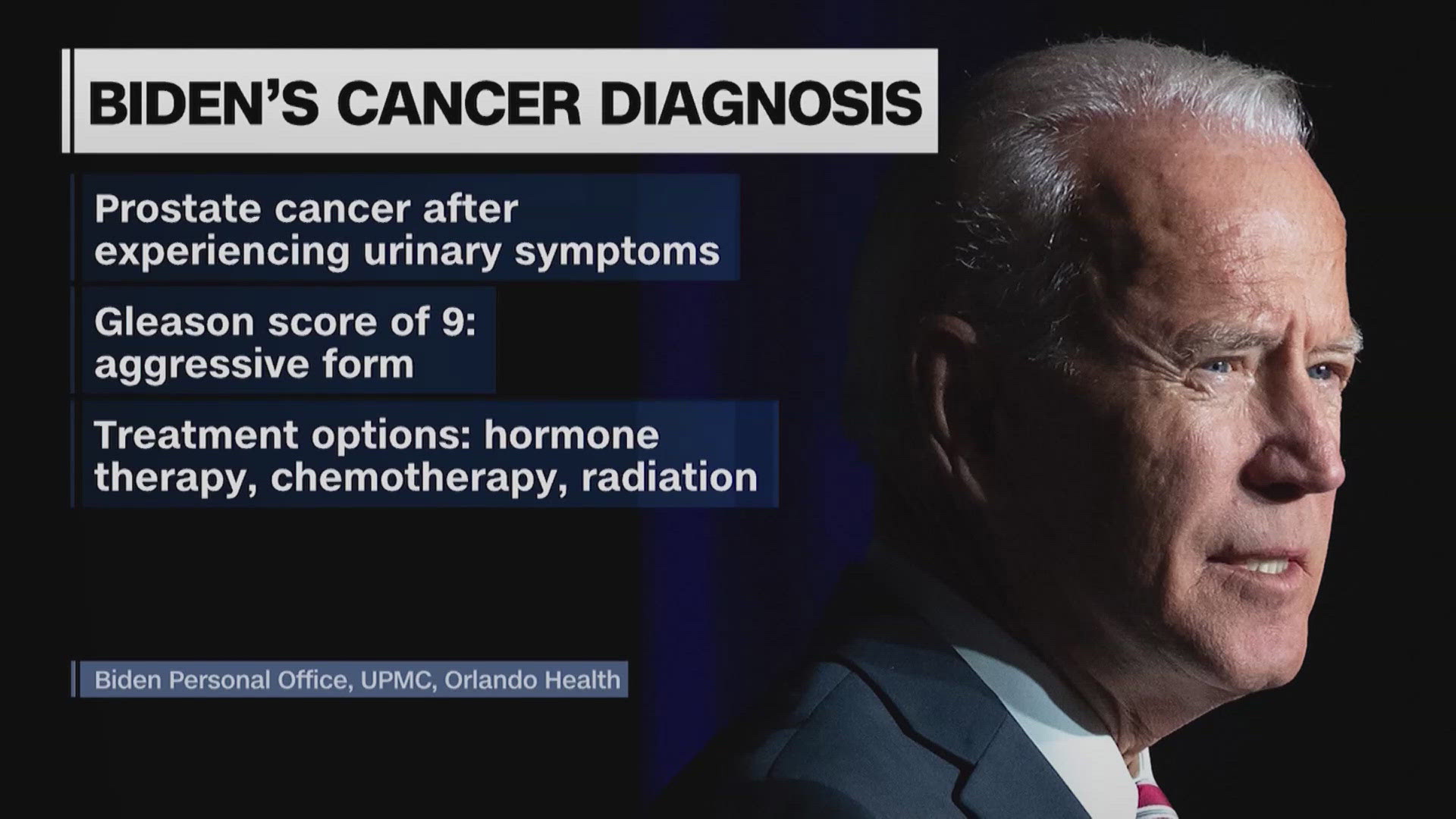

In a separate interview with CBS Sunday Morning and later appearances promoting her book, Jill called the news “shocking.” She noted the extensive medical care available to a sitting president, including regular physicals and a fully staffed 24-hour medical presence in the residence. “I do feel we had amazing care in the White House, but somehow that was missed.” She added that doctors had followed American Urological Association guidance, which generally does not recommend routine prostate-specific antigen (PSA) blood screening for men over 70 because the disease is often slow-growing. Biden’s last reported PSA test was in 2014.
Living With It Every Day
Because the cancer had time to spread, it is no longer considered curable in the conventional sense. Joe Biden will live with it for the rest of his life. Management involves regular testing and medication every three months, along with earlier courses of radiation and hormone therapy. Jill has described the reality in plain terms: the disease is “constant” and “daily,” and “challenging.” At the same time, she has said he is “doing okay,” maintains a schedule that includes travel and public appearances, and has slowed down but remains active.
Reports from mid-2026 indicate the treatment appears to be helping, though it has left him more limited in his post-presidency activities, focusing on a tighter circle of family and longtime aides. Biden himself has said the treatment is going well and has spoken of feeling supported by public well-wishes.
The Bidens’ family history with cancer adds weight to the moment. Their son Beau died of glioblastoma in 2015. Jill herself has had basal cell carcinoma lesions removed. Joe has spoken publicly about the diagnosis with the line that has become familiar to many families touched by the disease: “Cancer touches us all… Jill and I have learned that we are strongest in the broken places.”

Understanding Nocturia and Prostate Issues
Frequent nighttime urination—known medically as nocturia—is extremely common in older men. Getting up two or more times a night can stem from benign prostatic hyperplasia (BPH, or enlarged prostate), which affects a large percentage of men over 50 and most men over 70. Other causes include overactive bladder, medications, fluid intake habits, sleep apnea, diabetes, or heart conditions.
The prostate sits just below the bladder and surrounds the urethra. When it enlarges (whether from benign growth or a tumor), it can press on the bladder and urethra, leading to:
- Needing to urinate more often, especially at night
- Difficulty starting or a weak stream
- Feeling that the bladder hasn’t fully emptied
- Urgency or dribbling
These symptoms overlap heavily between BPH and prostate cancer. Early-stage prostate cancer often causes no symptoms at all. When urinary changes appear, they more commonly signal advanced disease or coincidental BPH.


Key symptoms of prostate cancer that should prompt a doctor visit include:
- Frequent or urgent need to urinate, particularly at night
- Weak or interrupted urine flow
- Difficulty starting or stopping urination
- Feeling of incomplete emptying
- Blood in urine or semen
- Pain or burning during urination
- Persistent pain in the back, hips, or pelvis
- Unexplained weight loss or fatigue (more common with advanced disease)
Most men with these symptoms do not have cancer—BPH is far more common. But persistence or worsening, especially rapid change, warrants evaluation.
Why Screening Guidelines Matter
The American Urological Association and U.S. Preventive Services Task Force generally advise against routine PSA screening for average-risk men over 70 (or those with limited life expectancy). The rationale: prostate cancer is often slow-growing in older men, and screening can lead to overdiagnosis, unnecessary biopsies, and treatments whose side effects (incontinence, sexual dysfunction) may outweigh benefits when competing health risks are high.
Shared decision-making is emphasized. Men in excellent health with longer life expectancy, higher risk (family history, Black ancestry, certain genetic factors), or new/worsening symptoms may still benefit from discussion and testing. Biden’s case illustrates both the guidelines in action and their limitations when an aggressive form develops.
A Story That Resonates Beyond One Family
Frequent nighttime urination is common in older men and is often linked to benign prostatic hyperplasia or other non-cancerous causes. In this case it was the signal that prompted further investigation once the couple left the structured medical environment of the White House. Jill’s account does not allege deliberate concealment; it describes a symptom she reported, an assumption that it had been handled, continued symptoms after leaving office, and a wife’s determination to get a specialist involved.
The episode underscores both the limits of even the most comprehensive medical access and the value of paying attention to changes that feel ordinary. For the Bidens, the result was a late-stage diagnosis that changed the shape of their post-presidency life. For readers, it is a reminder that sometimes the most ordinary nighttime pattern is the one worth insisting on examining more closely.
Practical takeaways for men and families:
- Track urinary patterns, especially new or increasing nighttime trips.
- Discuss any persistent changes with a primary care doctor or urologist—do not assume “just aging.”
- Review personal risk factors (age, family history, race, overall health) when deciding on PSA testing.
- Remember that hormone-sensitive metastatic prostate cancer can often be managed for years with modern therapies, improving quality of life and longevity.
- Support systems matter: Jill’s advocacy highlights the role spouses and loved ones play in noticing what patients may minimize.
Prostate cancer remains the second most common cancer in American men (after skin cancer), with about 1 in 8 men diagnosed in their lifetime. Early detection of aggressive forms still offers the best outcomes. The Bidens’ experience is a human story of resilience amid a common but serious disease—one that continues to affect millions of families.