In the early 20th century, before modern medicine and social safety nets, one English mother faced an impossible choice. Her name was Mary Ann Bevan, and her story is both heartbreaking and quietly heroic.
Born Mary Ann Webster on December 20, 1874, in Plaistow, East London, she grew up as the youngest of eight children in a working-class family. As a young woman she was considered attractive — delicate features, dark hair, and a bright future. She trained as a nurse and began her career in 1894. In 1902 she married Thomas Bevan. The couple had four children (two sons and two daughters) and, by all accounts, a happy life together.
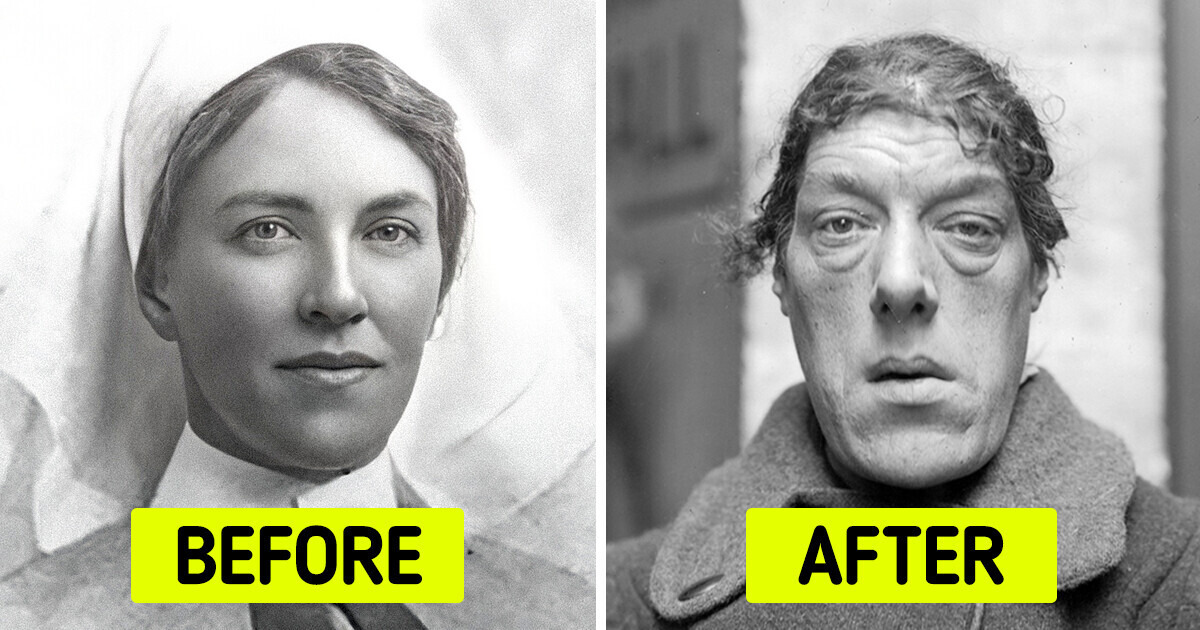
A Disease No One Understood
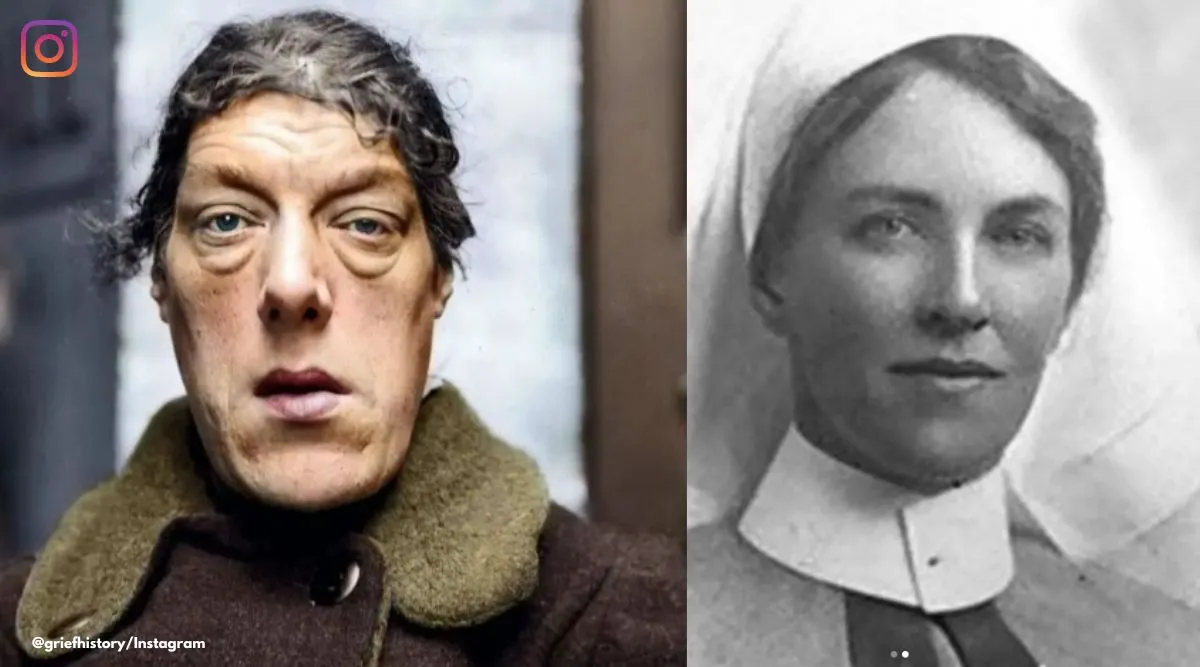
Around the age of 32 (approximately 1906), Mary Ann began noticing strange changes in her body. Her hands and feet grew larger. Her face slowly transformed — her jaw became heavier, her brow more prominent, her features more pronounced and masculine. She developed severe headaches and progressive vision problems. She was developing acromegaly, a rare disorder caused by excess growth hormone from the pituitary gland. At the time, the condition was poorly understood and essentially untreatable.
The physical changes were gradual but relentless. The once-pretty young nurse became increasingly unrecognizable. Comments and stares followed her. Still, as long as her husband was alive, she had emotional and financial support.
In 1914, Thomas died suddenly. Mary Ann was left a widow with four young children and a face that made finding ordinary work nearly impossible. Employers turned her away. Nursing jobs vanished. Bills piled up. She was desperate.
The Ad That Changed Everything
One day she saw a newspaper advertisement that read something like this:
“Wanted: Ugliest woman. Nothing repulsive, maimed or disfigured. Good pay guaranteed…”
The man behind the ad was an agent connected to the American circus circuit. Mary Ann sent a photograph. She entered an “Ugliest Woman” (or “Homeliest Woman”) contest and won against roughly 250 competitors. The victory led to an offer of steady pay, travel expenses, and the chance to earn extra money from selling postcards of herself.
She hesitated. The idea of putting herself on public display horrified her. She was shy and hated the thought of being separated from her children. But the alternative was watching her family go hungry. She accepted.
![Mary Ann Bevan, after developing acromegaly, toured the sideshow circuit as "the ugliest woman in the world", 4th November 1919 [Colorized] : r/interestingasfuck](https://wl-brightside.cf.tsp.li/resize/728x/jpg/348/e46/be165e55d8b02abbde0b769ea8.jpg)

From London Nurse to Coney Island Star
In 1920, Mary Ann crossed the Atlantic. By the time she arrived in New York, newspapers were already calling her “The Ugliest Woman on Earth.” She became a major attraction at Coney Island’s Dreamland Circus Sideshow under showman Samuel W. Gumpertz. Crowds lined up to stare. She was sometimes dressed in ways that heightened the spectacle. People laughed. They pointed. She smiled through it and sold postcards of her own face.
She later appeared with the Ringling Brothers Circus, where she continued performing while also working as a nurse when possible. Critics existed even then. Renowned neurosurgeon Harvey Cushing, who treated patients with similar conditions, publicly condemned the exploitation and mockery. In 1927, after Time magazine made light of her appearance, Cushing wrote a sharp letter of protest: “Being a physician, I do not like to feel that Time can be frivolous over the tragedies of disease.”


Mary Ann endured it all for one reason: her children. The money she earned allowed her to send her four children to boarding school in England and secure their futures. Contemporary accounts note that she managed to provide substantial support — enough that her children received an education far beyond what a widowed working-class mother in early 20th-century London could normally offer.
A Mother’s Final Wish
Mary Ann Bevan died of natural causes on December 26, 1933, just six days after her 59th birthday. Her last request was simple and deeply human: she wanted to be buried in England. Her children honored that wish. She was laid to rest at Brockley and Ladywell Cemeteries in South London.
Why Her Story Still Matters
Mary Ann Bevan’s life is not a tale of freak-show novelty. It is the story of a woman who lost her husband, her looks, her career, and nearly her dignity — yet refused to let her children suffer. In an era with almost no social support for widows or people with visible disabilities, she chose the only path available to keep her family afloat.
Today we look back at the sideshows of the early 20th century with discomfort, and rightly so. The exploitation was real. The stares and laughter were cruel. But inside that uncomfortable history stands a mother who sacrificed everything — including the way the world saw her — so her children could have a better chance.
In the early 2000s her image even appeared on a Hallmark greeting card in the UK, prompting renewed criticism that led the company to withdraw it. The reaction showed how far public understanding of medical conditions like acromegaly has come — and how much her story still resonates.
Mary Ann Bevan’s love was neither fascinating nor tragic in the end. It was simply extraordinary.