For many cancer patients, ringing a hospital bell represents one of the most emotional moments of their lives. It marks the completion of treatment, celebrates an important milestone and offers hope for the future.
But for Kate Middleton, the Princess of Wales, that moment never came in the traditional way.
In her deeply personal new documentary, Heal, the future queen has revealed that she never rang the ceremonial bell after completing her cancer treatment.
The revelation came during a conversation with her younger brother, James Middleton, whose touching response offered a different perspective on what it means to celebrate recovery.
Nearly two years after announcing that her cancer was in remission, Catherine is opening up about the physical and emotional challenges of serious illness, the importance of family support and the complicated journey of rebuilding life after treatment.
Her experience also highlights something that countless cancer survivors understand: finishing treatment does not necessarily mean the healing process is over.
Kate Middleton Shares a Personal Detail About Her Cancer Treatment
The Princess of Wales has gradually shared more about her experience since publicly announcing her cancer diagnosis in March 2024.
However, her latest documentary offers an especially personal glimpse into how she has approached recovery.
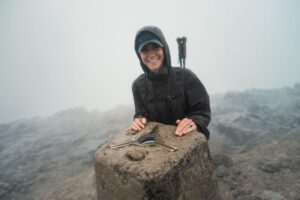
The 30-minute film follows Catherine as she undertakes Britain’s National Three Peaks Challenge, a demanding adventure involving the highest mountains in Scotland, England and Wales.
During the journey, Kate and her younger brother James discuss a familiar tradition at cancer treatment centers.
James mentions the ceremonial bell that patients may ring after finishing treatment at the Royal Marsden Hospital.
Kate responds with a simple admission.
“Yeah, but I didn’t ring the bell.”
Her words reveal a previously little-known detail about her experience at the hospital where she received cancer treatment.
James then suggests that completing the mountain challenge could represent her own version of ringing the bell.
The exchange, reported by Newsner, captures the deeply individual nature of recovery and the different ways people choose to recognize important milestones.
Why Didn’t Kate Middleton Ring the Bell After Cancer Treatment?

While the revelation naturally raises questions, the publicly released documentary footage has not established exactly why Kate did not participate in the tradition.
It would therefore be inaccurate to suggest that she avoided the ceremony for a specific medical or emotional reason.
What her conversation with James does demonstrate, however, is that meaningful milestones can take many different forms.
For some cancer patients, ringing a bell surrounded by loved ones and medical professionals is a powerful celebration.
Others may prefer a private moment of reflection, time with their families or a personally meaningful experience away from the hospital.
According to the MD Anderson Cancer Center, the widely recognized bell-ringing tradition is believed to have originated at its facilities in Houston, Texas, in 1996.
It has since become an important ritual at numerous cancer treatment centers.
However, not every patient has the same experience, and not everyone reaches a point where treatment can permanently end.
For Catherine, climbing mountains appears to have become another way of recognizing how far she has come.
Her decision not to ring the bell does not diminish the significance of completing chemotherapy or the progress she has made since her diagnosis.
A Look Back at Kate Middleton’s Cancer Diagnosis

The Princess of Wales’s health became a matter of international concern in January 2024 when Kensington Palace announced that she had undergone planned abdominal surgery.
Initially, the palace provided limited information while Catherine concentrated on her recovery.
Then, in March 2024, she released a personal video message confirming that cancer had been discovered following her operation and that she had begun a course of preventive chemotherapy.
The announcement marked a difficult period for Catherine, Prince William and their three children, Prince George, Princess Charlotte and Prince Louis.
As a mother of young children, Catherine also faced the challenge of discussing a serious illness with her family while managing intense public interest.
In September 2024, she announced that she had completed chemotherapy.
A further milestone followed in January 2025, when the princess publicly confirmed that her cancer was in remission.
The type of cancer she was diagnosed with has not been publicly disclosed.
Although the announcement of remission brought encouraging news, Catherine’s subsequent comments have emphasized that returning to everyday life following cancer treatment can be a gradual and complicated process.
James Middleton Offers His Sister a Different Way to Celebrate Recovery

One of the most personal aspects of Heal is the appearance of Catherine’s younger brother, James Middleton.
Rather than focusing exclusively on royal responsibilities or public appearances, the documentary allows viewers to see a conversation between siblings about an intensely personal subject.
James’s suggestion that the mountain climb could serve as Catherine’s alternative to the hospital bell gives the challenge a deeper symbolic meaning.
A demanding physical achievement can represent a new chapter for someone who has experienced serious illness.
But equally meaningful milestones might involve returning to a favorite hobby, enjoying a family outing or simply regaining confidence in everyday activities.
Recovery cannot be measured by a single ceremony or accomplishment.
The exchange between Kate and James also illustrates how family members can help loved ones recognize progress in ways that feel meaningful to them.
Sometimes, support comes not from offering solutions but from listening, acknowledging someone’s experience and recognizing how much they have already accomplished.
Kate Middleton Takes on an Extraordinary Mountain Challenge
In June 2026, the Princess of Wales completed the National Three Peaks Challenge in support of the Royal Marsden Cancer Charity.
The challenge involves climbing Ben Nevis in Scotland, Scafell Pike in England and Yr Wyddfa, also known as Snowdon, in Wales, within 24 hours.
It requires considerable physical endurance, preparation and determination.
For Catherine, the achievement came after a period in which her health had forced her to step away from many of her usual public responsibilities.
The Royal Family’s official Court Circular confirmed that she completed the challenge on June 28, 2026.
Through the documentary, the mountain journey provides a setting for reflections on illness, uncertainty and the process of moving forward.
It also draws attention to the importance Catherine places on spending time outdoors.
Nature can provide opportunities for relaxation, reflection and physical activity, although the appropriate level of activity differs from person to person, particularly during cancer recovery.
The princess’s achievement should not be interpreted as a standard that other cancer survivors are expected to meet.
Every recovery follows its own timeline, and meaningful progress can look very different depending on an individual’s health and circumstances.
Why Cancer Recovery Continues Long After Chemotherapy
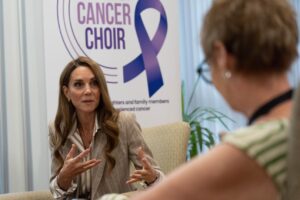
One of the most important messages emerging from Catherine’s recent public comments is that completing cancer treatment does not automatically restore someone’s previous quality of life.
During a visit to Colchester Hospital in July 2025, the Princess of Wales discussed the challenges of adjusting to life after treatment.
She acknowledged the difference between finishing medical treatment and feeling ready to resume normal responsibilities.
That distinction is important.
According to the National Cancer Institute, some survivors continue experiencing physical difficulties and emotional concerns after their initial treatment ends.
These may include fatigue, anxiety about the future, difficulties returning to work and changes in relationships or everyday routines.
Follow-up appointments and continued support can also remain important parts of cancer survivorship.
Remission is an encouraging medical milestone, but it is not necessarily the same as a permanent cure.
Catherine’s openness helps bring attention to this often-overlooked stage of the cancer experience.
It also provides an opportunity for families and friends to better understand why someone may still need patience, compassion and practical assistance even after receiving positive medical news.
Kate Middleton Turns Her Personal Experience Into Support for Others
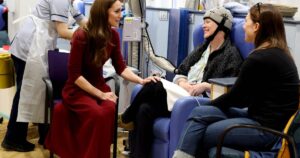
Catherine’s connection to the Royal Marsden Hospital extends beyond her own treatment.
In January 2025, she returned to the specialist cancer hospital to meet patients and healthcare professionals.
The visit also marked the announcement that she had joined Prince William as a joint patron of the Royal Marsden NHS Foundation Trust.
Her involvement has helped draw attention to the importance of comprehensive cancer support.
The Royal Marsden Cancer Charity is working to improve access to care that considers the wider needs of people affected by cancer.
Such support may address emotional wellbeing, physical rehabilitation, social challenges and quality of life alongside conventional medical treatment.
The documentary’s distribution proceeds have been directed to the charity to help support people living with and beyond cancer.
By sharing aspects of her own experience, Catherine is using her public platform to highlight challenges that affect patients and families around the world.
When and Where to Watch Kate Middleton’s New Documentary, Heal
Royal followers and viewers interested in Catherine’s recovery will soon be able to watch the documentary.
Heal is scheduled to premiere in the United Kingdom on Sunday, November 29, 2026, on BBC One at 6:40 p.m. GMT, with availability on BBC iPlayer from midday.
International broadcasts have also been announced.
- United States: November 30, 2026, through NBCUniversal.
- Australia: December 1, 2026, on Channel 9.
- Canada: December 7, 2026, through CTV and Noovo.
The documentary combines Catherine’s mountain challenge with personal reflections on serious illness, human connection and the search for hope during uncertain times.
Its broader purpose is to encourage conversations about cancer survivorship and the importance of supporting patients beyond their immediate medical needs.
For royal followers, the film also offers an opportunity to understand a more personal side of the Princess of Wales.
An Important Reminder That Everyone Heals Differently

Kate Middleton’s revelation that she did not ring the bell after cancer treatment may seem like a small detail.
Yet it raises a much larger question about how people recognize recovery after experiencing a life-changing illness.
Some celebrate publicly. Others prefer privacy. Some set new goals, while others find comfort in ordinary moments with the people they love.
None of these approaches is inherently more meaningful than another.
Catherine’s mountain challenge represents her own experience, rather than a prescribed path for other patients.
As the Princess of Wales continues sharing her perspective, her story serves as a reminder that medical recovery and emotional healing do not always happen at the same pace.
There is no single ceremony that defines courage, no universal timetable for recovery and no requirement to celebrate an important milestone in a particular way.
For some people, hope can be found at the summit of a mountain. For others, it may be found in a quiet afternoon at home.
Both can be equally significant.
What do you think about James Middleton’s touching response to his sister? Do you believe everyone should be encouraged to celebrate their recovery in their own way? Share your thoughts in the comments and share this story with someone who may find comfort in its message.