Donald Trump Jr. has sparked fresh discussion after publicly defending British comedian and actor Russell Brand, who was sentenced to 10 years and six months in prison following his conviction for rape and sexual assault.
The comments came just one day after Brand received his sentence at Southwark Crown Court in London, bringing renewed attention to a criminal case that has attracted international headlines.
Speaking on his online show Triggered on Tuesday, November 10, 2026, the eldest son of U.S. President Donald Trump questioned the circumstances surrounding Brand’s prosecution, suggesting the comedian may have been treated differently because of his Christian faith and increasingly conservative political views.
His remarks also raised questions about the British criminal justice system, the handling of historic sexual assault allegations, and whether Brand’s political transformation influenced how his case was perceived.
However, the court’s findings tell a clear legal story: Brand was convicted by a jury following a four-week trial involving allegations from several women.
Here is what Donald Trump Jr. said, what happened during Russell Brand’s trial, and what the prison sentence could mean for his future.
1. What Did Donald Trump Jr. Say About Russell Brand?
Donald Trump Jr. discussed Brand’s conviction during the November 10 episode of his Rumble program, Triggered.
Rather than focusing primarily on the court’s findings, Trump Jr. questioned why accusations concerning events from many years earlier had resulted in a lengthy prison sentence.
He suggested that Brand’s increasing involvement with Christianity and conservative political commentary may have contributed to the attention surrounding the case.
Trump Jr. also pointed to Brand’s previous celebrity status and marriage to singer Katy Perry, arguing that the comedian had enjoyed mainstream fame long before the criminal proceedings.
According to Newsner’s reporting, Trump Jr. claimed that “no one seemed to have a problem” during Brand’s earlier years in the entertainment industry.
He questioned the evidence used in the prosecution, including the absence of DNA evidence and contemporaneous police reports, and described what he believed was unequal treatment under Britain’s justice system.
Trump Jr. characterized that alleged inequality as a “two-tier” system and suggested the sentence was disproportionately severe compared with punishments imposed in other criminal cases.
Those statements represent Trump Jr.’s interpretation of the case. They do not establish that prosecutors or jurors acted for political or religious reasons.
The comments have nevertheless added a political dimension to a case that was already receiving significant public attention.

2. Russell Brand’s Rape Conviction: What the Jury Decided
Russell Brand, 51, was found guilty on November 5, 2026, following a four-week trial at Southwark Crown Court.
According to the Metropolitan Police and Crown Prosecution Service, jurors convicted Brand of one count of rape and three counts of sexual assault involving four women.
The offences occurred between 2004 and 2009, a period during which Brand was developing his career as a prominent British television presenter, radio personality, comedian, and actor.
The jury also acquitted him of two additional rape charges and one charge of attempted indecent assault.
Throughout the criminal proceedings, Brand maintained that his sexual encounters had been consensual. He pleaded not guilty to the charges.
The mixed verdicts are an important part of the legal record. They show that the jury reached guilty verdicts on four charges while declining to convict him on three others.
The case had received widespread attention since September 2023, when investigations by The Times, The Sunday Times, and Channel 4’s Dispatches brought serious allegations against Brand into public view.
Those reports contributed to increased scrutiny and a subsequent police investigation.
Following the trial, the Metropolitan Police confirmed that investigators had examined extensive evidence and spoken to more than 100 witnesses.
The final verdict resulted from the criminal proceedings, not from a public vote or a decision by media organizations.
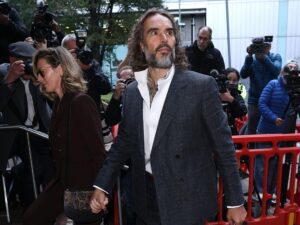
3. Judge Sentences Russell Brand to More Than 10 Years in Prison
On November 9, 2026, Judge Joel Bennathan sentenced Russell Brand to a total of 10 years and six months in prison.
The sentence followed the convictions involving four women and offences committed over several years.
During his sentencing remarks, the judge criticized Brand’s conduct and the role that celebrity and influence had played in his offending.
He described Brand as a “sexual predator” and emphasized that fame does not excuse sexual violence or remove a person’s responsibility to respect consent.
The judge also considered the impact of the offences on the women involved.
Victim impact statements presented during the proceedings described emotional suffering, difficulties with trust, and consequences that had continued for many years.
The court’s comments reflected the seriousness of the offences established by the jury’s verdicts.
Brand’s celebrity status was an important element of the case because prosecutors argued that his growing public profile helped create opportunities to exploit women.
According to the Crown Prosecution Service, the sentence concerned four offences against four women committed between 2004 and 2009.
The agency also stressed that the passage of time does not diminish the importance of consent or prevent offenders from being held accountable.
The sentence is one of the most consequential developments in Brand’s career, ending years of public speculation about whether the allegations would lead to criminal convictions.

4. Why Donald Trump Jr. Linked the Case to Christianity and Conservative Politics
One of the most striking aspects of Trump Jr.’s response was his suggestion that Brand’s religious and political beliefs were relevant to the prosecution.
In recent years, Brand has undergone a highly publicized personal and political transformation.
Once known for his provocative comedy, celebrity lifestyle, and anti-establishment commentary, he increasingly began discussing Christianity, spirituality, cultural issues, and conservative political arguments.
In 2024, Brand publicly announced that he had been baptized as part of his embrace of Christianity.
He also developed closer connections with right-leaning political personalities in the United States, including supporters of President Donald Trump.
These changes helped Brand establish a new audience outside traditional British entertainment media.
Trump Jr. appeared to suggest that Brand’s transformation made him a target for influential institutions.
But there is an important difference between identifying Brand’s political associations and proving that those associations influenced his prosecution.
The allegations became public in September 2023, before Brand’s widely reported baptism in 2024.
The criminal case proceeded through the British justice system, where jurors heard evidence and returned their verdicts.
No substantiated evidence presented in the available reporting establishes that Brand was convicted because of his religious beliefs or political affiliations.
His faith remains part of his public story, but the convictions were for sexual offences rather than political speech.

5. Why Katy Perry Was Mentioned in Trump Jr.’s Comments
Donald Trump Jr. also referred to Russell Brand’s former marriage to American pop star Katy Perry.
The reference was intended to highlight the period when Brand was a major entertainment figure appearing in Hollywood productions, television programs, and celebrity news coverage.
Brand and Perry married in October 2010 and separated in 2011.
Their relationship attracted significant international attention, making Brand a familiar name to audiences beyond the United Kingdom.
Trump Jr. suggested that the absence of a widely known criminal case during those years raised questions about why Brand faced prosecution much later.
However, that argument does not change the dates of the offences for which Brand was convicted.
The four proven offences occurred between 2004 and 2009, before his marriage to Perry.
The fact that a person is publicly successful, married, or admired during a particular period does not establish whether an offence occurred in earlier years.
Likewise, accusations becoming public many years later does not automatically make them unreliable.
Perry was not a complainant in the criminal case covered by these convictions, and her former marriage to Brand should not be mistaken for evidence about the allegations.
Her name entered the discussion because Trump Jr. used the relationship as a reference point for Brand’s celebrity career.
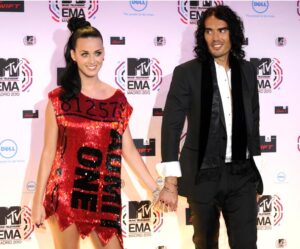
6. Can Someone Be Convicted Without DNA Evidence or an Immediate Police Report?
Another major question raised by Trump Jr. concerned the evidence used in the trial.
He questioned how allegations involving events from many years earlier could result in a conviction without the kind of forensic evidence often associated with criminal investigations.
Under the law of England and Wales, however, DNA evidence is not required in every rape prosecution.
The Crown Prosecution Service’s guidance on rape cases explains that testimony can itself constitute evidence. A jury may consider witness accounts alongside other relevant material when deciding whether a criminal charge has been proved.
Investigators may examine communications, historical records, witness recollections, and the circumstances surrounding an alleged offence.
The absence of forensic material does not automatically invalidate a prosecution.
There is also no general time limit for prosecuting rape in England and Wales.
That legal framework allows investigations into offences that may have happened decades before a formal police complaint.
Historical investigations can present genuine difficulties, particularly when records are unavailable or memories have faded. Those issues must be considered by investigators, lawyers, judges, and jurors.
In Brand’s case, the jury spent several weeks hearing testimony and legal arguments before reaching its verdicts.
The fact that Brand was acquitted on three counts and convicted on four is central to understanding the outcome.
Arguments about the age of the allegations or lack of DNA evidence must therefore be distinguished from the actual verdicts reached in court.
7. Russell Brand’s Political Connections Before His Conviction
Brand’s more recent political associations help explain why Trump Jr. chose to comment publicly on his case.
The comedian had increasingly appeared in spaces associated with American conservative politics, alternative media, and criticism of established institutions.
He attended the 2024 Republican National Convention in Milwaukee and appeared in conversations with prominent conservative personalities.
Brand also became involved in public discussions about health, government authority, religion, and freedom of expression.
For supporters, his transformation represented a move toward independent political and spiritual beliefs.
For critics, it raised questions about the relationship between celebrity influence, online political movements, and accountability.
His association with conservative figures attracted particular attention after the criminal allegations became widely known.
However, personal relationships and political alliances do not alter the legal findings of a criminal jury.
The central issue in Brand’s trial was whether the prosecution had proved the specific offences charged against him.
The verdicts must be understood within that legal context, regardless of the political debate that followed.
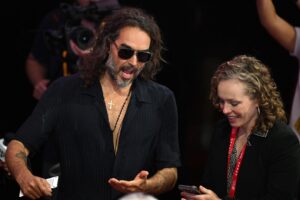
8. How Long Will Russell Brand Actually Spend in Prison?
Although Brand received a sentence of 10 years and six months, the time he is expected to spend physically in prison may be shorter.
Under the applicable sentencing rules, he is expected to serve approximately two-thirds of the sentence in custody before release on licence.
That amounts to roughly seven years, assuming the sentence remains unchanged.
This does not mean the remaining portion of the sentence disappears.
A person released on licence remains subject to supervision and conditions imposed under the criminal justice system. Breaching those conditions can have serious consequences, including a return to prison.
The precise release date may depend on the sentence’s administration, any applicable custody credit, and future legal developments.
The Metropolitan Police also confirmed that Brand will remain on the sex offenders’ register for life.
At the time of writing, authorities have also reported further investigations involving separate allegations against Brand. Those allegations are distinct from the four offences for which he has been convicted and must not be presented as additional proven crimes.
For now, the sentence represents a substantial period of imprisonment following the jury’s verdict.
9. What Police and Prosecutors Said After the Verdict
While Trump Jr.’s remarks focused on perceived political bias and sentencing fairness, the Metropolitan Police highlighted the experiences of the women who reported Brand’s offending.
Investigators praised their courage in participating in an emotionally difficult and highly publicized criminal investigation.
The women had to discuss deeply personal events while knowing that the proceedings would attract extensive media attention.
Police emphasized that the investigation centered on the allegations and evidence rather than Brand’s celebrity status.
The Crown Prosecution Service similarly recognized the long-term consequences experienced by the victims.
Its November 9 statement stressed the importance of ensuring that influential public figures are not placed beyond the reach of the criminal law.
These official responses provide an important counterpoint to the political debate surrounding Trump Jr.’s comments.
For investigators and prosecutors, the legal proceedings concerned criminal accountability and the experiences of those harmed.
The reporting also raises a broader issue: the difficulties that survivors of sexual violence can face when deciding whether to report offences involving powerful or famous individuals.
10. What Happens Next for Russell Brand?
Russell Brand’s conviction and prison sentence have created major consequences for his career, public image, and future.
The comedian, once best known for his television appearances, comedy performances, and Hollywood roles, is now serving a sentence for serious sexual offences.
His previous denials and the acquittals on three separate charges remain part of the legal record, but they do not undo the four convictions.
Meanwhile, Donald Trump Jr.’s public defense has brought the case into a wider conversation about politics, religious identity, historical prosecutions, and confidence in criminal justice institutions.
It is possible to scrutinize a legal system, question sentencing policy, and debate evidentiary standards while still accurately acknowledging what a jury has determined.
The distinction matters particularly in a high-profile case where statements made by influential personalities can shape public opinion.
As additional information emerges, the most important questions will concern any further legal proceedings, confirmed developments involving the existing sentence, and the continued work of investigators.
For now, the essential facts remain unchanged: Russell Brand was convicted of rape and three sexual assaults, sentenced to 10 years and six months in prison, and subsequently defended publicly by Donald Trump Jr.
The political argument may continue, but it is separate from the verdict already reached in court.
Frequently Asked Questions
What did Donald Trump Jr. say about Russell Brand?
On November 10, 2026, Donald Trump Jr. suggested that Brand had been treated unfairly after adopting Christianity and expressing conservative political views. He questioned the evidence and criticized what he described as unequal justice in Britain.
What was Russell Brand convicted of?
On November 5, 2026, Brand was convicted of one count of rape and three counts of sexual assault involving four women. He was acquitted of three other charges.
How long was Russell Brand sentenced to prison?
On November 9, 2026, Southwark Crown Court sentenced Brand to 10 years and six months in prison. He is expected to serve approximately two-thirds of that sentence in custody under applicable release rules.
Did Russell Brand’s political views cause his conviction?
There is no substantiated evidence in the available court or official reporting that Brand was convicted because of his political views or Christian beliefs. The convictions followed a criminal trial involving evidence heard by a jury.
Was Katy Perry involved in Russell Brand’s criminal case?
Katy Perry was not among the complainants in the four offences for which Brand was convicted. Donald Trump Jr. mentioned her because she was previously married to Brand during his years of mainstream celebrity fame.