A remarkable moment from a 2007 university graduation has returned to the spotlight following Abdul El-Sayed’s historic Michigan Senate election victory. What Bill Clinton told the young graduate nearly two decades ago has taken on an entirely new meaning.
Sometimes, history reveals its most remarkable connections years after they happen.
In 2007, former President Bill Clinton attended a commencement ceremony at the University of Michigan, where a young student named Abdul El-Sayed delivered a graduation speech. Clinton was so impressed by the student’s message that he publicly praised him before thousands of graduates and their families.
At the time, El-Sayed was preparing for a career in medicine. Becoming a United States senator seemed like a distant, almost unimaginable possibility.
But nearly 20 years later, that same student has made American political history.
On November 3, 2026, El-Sayed defeated Republican Mike Rogers in Michigan’s closely watched U.S. Senate election, becoming the first Muslim elected to the Senate.
Now, archival footage of Clinton’s unexpected praise is circulating online, giving viewers a fascinating glimpse into a moment that preceded El-Sayed’s political career.
And the story becomes even more surprising when you discover what Clinton reportedly told him privately after the graduation ceremony.
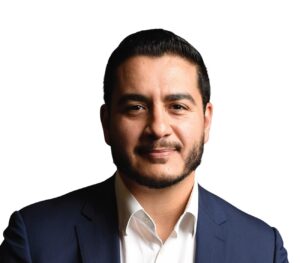
A Remarkable Graduation Speech in 2007
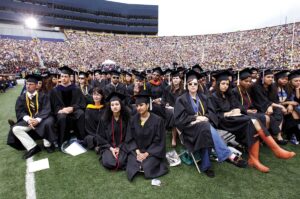
The story begins at the University of Michigan’s 2007 spring commencement ceremony.
Thousands of graduates gathered at Michigan Stadium to celebrate the completion of their studies. Among the speakers was Abdul El-Sayed, a graduating senior who had earned recognition for his academic achievements and leadership.
Clinton, who served as the 42nd president of the United States from 1993 to 2001, was the ceremony’s featured commencement speaker.
Although the former president was undoubtedly one of the event’s biggest attractions, the young student who spoke before him made a lasting impression.
El-Sayed’s remarks emphasized community, personal growth, and the importance of finding common ground despite differences in background and belief.
His message was particularly meaningful during a period when discussions about religious identity, international conflict, and divisions between cultures were prominent in American public life.
The speech also drew attention from University of Michigan officials.
In the university’s 2007 financial report, then-President Mary Sue Coleman highlighted El-Sayed’s address as an example of the institution’s values and the positive transformation students experience through education.
What may have seemed like an ordinary graduation day was actually the beginning of a story that would be remembered nearly two decades later.
What Bill Clinton Said About Abdul El-Sayed
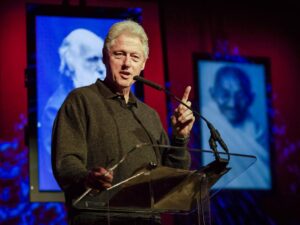
After listening to El-Sayed’s graduation remarks, Clinton took the stage and made an unexpected decision.
Rather than moving directly into his prepared address, he paused to acknowledge the student speaker.
Clinton praised the message of understanding that El-Sayed had delivered, particularly its challenge to the idea that people from different religions and cultures were destined to remain divided.
Then came the words that would resurface in 2026:
“I just wish every person in the world could have heard you speak today.”
It was an extraordinary compliment from a former American president to a young college graduate.
The praise was not simply about El-Sayed’s speaking ability. Clinton appeared particularly moved by the substance of his message and its emphasis on reaching across religious differences.
For El-Sayed, the moment was undoubtedly memorable. But what makes it especially interesting today is how closely those themes would later connect with his political career.
Years afterward, when identity and religious freedom became major subjects of discussion during his Senate campaign, Clinton’s remarks seemed newly relevant.
The original video documents Clinton’s public admiration. However, it does not mean the former president specifically predicted the outcome of a Senate election almost 20 years in the future.
Instead, it shows that Clinton recognized El-Sayed’s communication skills and message long before he became a nationally recognized political figure.
The Private Conversation That Makes the Story Even More Fascinating
As remarkable as the public compliment was, El-Sayed later revealed that something equally surprising happened after the ceremony.
During an October 2026 appearance on The Weekly Show with Jon Stewart, he recalled a private conversation with Clinton.
According to El-Sayed, the former president approached him after his graduation speech and questioned why he was planning to pursue medical school.
El-Sayed was surprised by the question. Medicine was the career he had been preparing for, and politics was not something he believed was realistically accessible to someone with his background.
Clinton, however, reportedly saw another possibility.
As El-Sayed remembered the exchange, Clinton told him he had a particular talent for communicating and suggested that he might consider seeking public office someday.
The young graduate did not share that confidence.
El-Sayed explained that his name, Muslim identity, and experiences growing up had shaped his expectations of what was possible in American politics.
He had difficulty imagining himself becoming an elected official, much less a United States senator.
According to his recollection, Clinton listened, thought about his response, laughed, and ended the conversation.
For El-Sayed, the encounter became one of those unusual life experiences that stayed with him long after graduation.
For viewers watching the footage in 2026, the exchange is especially striking because the young man who questioned whether he belonged in politics ultimately achieved one of the country’s most significant elected positions.
From a Promising Student to a Public Health Leader
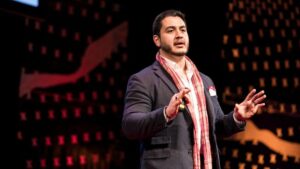
Before entering electoral politics, El-Sayed followed through on his original ambition to work in medicine and public health.
Born and raised in southeast Michigan, he grew up in a family with Egyptian immigrant roots.
His academic achievements eventually took him beyond Michigan to some of the world’s most prestigious universities.
He became a Rhodes Scholar at the University of Oxford, where he earned a doctorate in public health. He also completed his medical degree at Columbia University.
Those accomplishments helped establish the professional foundation for a career focused on healthcare, public service, and the systems that influence community well-being.
Instead of pursuing only an individual clinical career, El-Sayed moved toward addressing health challenges on a broader scale.
He became executive director of the Detroit Health Department in 2015, helping lead public health initiatives in a city facing significant economic and healthcare challenges.
His work involved issues such as childhood health, environmental risks, and access to essential public services.
Later, from 2023 to 2025, he served as director of Wayne County’s Department of Health, Human, and Veterans Services.
These positions gave him practical experience with public administration, healthcare programs, budgets, and the challenges facing working families.
They also helped shape the policies that would eventually become central to his Senate campaign.
El-Sayed’s career had begun with a desire to help people through medicine. Over time, he increasingly focused on how government decisions could influence the health of entire communities.
His First Major Political Campaign Ended in Defeat
Although Clinton had suggested a possible political future in 2007, El-Sayed did not achieve electoral success immediately.
His first major statewide campaign came in 2018, when he sought the Democratic nomination for governor of Michigan.
He entered the race as a progressive candidate, emphasizing healthcare reform and economic issues.
However, he lost the Democratic primary to Gretchen Whitmer, who went on to win the governorship.
For some candidates, such a defeat might have marked the end of their political ambitions.
El-Sayed instead continued working on public policy, healthcare advocacy, and public service.
That period helped him develop a broader political profile and communicate his ideas to audiences beyond Michigan.
His experience also demonstrated an important reality about political careers: early recognition does not automatically translate into immediate victory.
Building a successful campaign can require years of public engagement, organizational development, and experience.
By the time the 2026 election approached, El-Sayed was considerably more established than the student Clinton had met in 2007.
Abdul El-Sayed Makes History in the 2026 Michigan Senate Election
The most significant chapter in this story arrived on November 3, 2026.
Michigan voters went to the polls to choose a successor to retiring Democratic Senator Gary Peters.
The contest featured El-Sayed, the Democratic nominee, against Republican Mike Rogers, a former member of Congress.
The race attracted national attention because Michigan is a politically competitive state and the outcome mattered to the balance of power in the Senate.
According to election-night reporting, El-Sayed received approximately 52.5% of the vote, compared with roughly 45.5% for Rogers. Those figures were preliminary and subject to final certification.
The victory made El-Sayed the first Muslim elected to the United States Senate.
It was a significant milestone for representation in American politics, particularly given the challenges and criticism he had faced during the campaign.
El-Sayed’s background and faith became subjects of political attacks, while the candidates also debated economic policy, healthcare, and the country’s direction.
Rogers emphasized issues such as national security, immigration, manufacturing, and the cost of living.
El-Sayed campaigned on a progressive platform emphasizing affordable healthcare, reducing corporate influence in politics, and providing economic relief to working families.
His victory represented both a personal achievement and an important development within the Democratic Party.
As of November 9, 2026, El-Sayed is senator-elect, meaning he has won the election but has not yet begun serving his Senate term.
Barack Obama Also Supported El-Sayed’s Senate Campaign
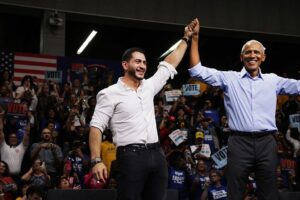
Bill Clinton was not the only former president to recognize El-Sayed’s political potential.
Nearly two decades after the 2007 commencement ceremony, former President Barack Obama publicly supported his campaign.
On October 24, 2026, Obama appeared at a Detroit rally to encourage voters to support El-Sayed and other Democratic candidates.
The event brought significant national attention to the Michigan Senate race.
Obama emphasized healthcare affordability and political change, reinforcing the campaign’s message about reducing economic pressure on families.
His appearance was particularly notable because El-Sayed had emerged from a competitive Democratic primary.
The former president’s support helped bring additional visibility to a campaign that was already attracting attention from progressive activists and national political observers.
The contrast between the two presidential connections is remarkable.
In 2007, Clinton praised El-Sayed as a student whose message deserved a wider audience.
In 2026, Obama stood behind him as a candidate seeking one of the highest offices in the country.
Together, those moments show how El-Sayed’s public role evolved over nearly two decades.
Why the Resurfaced Video Is Capturing Attention
Old videos circulate online every day, but some suddenly become relevant because of events happening years later.
The Clinton-El-Sayed footage is one of those examples.
The archival clip began attracting renewed attention around the November 2026 midterm elections, when journalist Yashar Ali shared the footage on X before Election Day.
Its timing made the story especially compelling.
Viewers could watch a former president compliment a then-unknown graduate and immediately connect that moment with the graduate’s election victory 19 years later.
There are several reasons the footage resonates.
First, it shows an unexpected connection between two people who met long before one became a nationally prominent political leader.
Second, it captures a younger El-Sayed at a very different stage of life, before his medical career, public health leadership, and election campaigns.
Third, Clinton’s comments about overcoming religious divisions remain relevant to the questions of identity and belonging that shaped the Senate race.
Most importantly, the story challenges the assumption that successful careers always follow a predictable path.
The student who believed politics was not a realistic option for someone like him ultimately won a statewide election in one of America’s most closely watched political environments.
That contrast gives the archival footage its emotional power.
What Happens Next for Abdul El-Sayed?
Winning an election and governing effectively are two very different challenges.
After securing his place as Michigan’s next senator, El-Sayed will have to translate his campaign proposals into legislative priorities.
Healthcare will likely remain central to his political identity.
Throughout his career, he has advocated for expanding access to medical care and reducing the financial burden of healthcare on American families.
He has also supported Medicare for All, a proposal that would significantly change how healthcare coverage is financed in the United States.
Supporters argue that universal coverage could improve access and reduce financial insecurity associated with medical treatment.
Critics question the costs, financing requirements, and disruption involved in replacing existing insurance arrangements.
Any major healthcare legislation would require significant congressional support and face difficult negotiations.
El-Sayed will also confront broader debates over federal spending, economic affordability, and the influence of wealthy donors in elections.
His ability to build relationships across political and ideological lines will help determine how effectively he advances his priorities.
For now, however, the resurfaced video offers an opportunity to reflect on the unexpected path that brought him to this moment.
A Powerful Reminder That Potential Can Take Years to Become Reality
When Bill Clinton praised Abdul El-Sayed at the University of Michigan in 2007, neither man could have known exactly how the following 19 years would unfold.
El-Sayed still had medical training to complete, public health agencies to lead, an unsuccessful gubernatorial campaign to experience, and an enormously competitive Senate race to win.
Clinton’s words were not a precise prediction of the future.
They were recognition of a young person’s talent and a message that impressed an experienced political leader.
Yet the contrast between that graduation ceremony and the 2026 election makes the moment feel extraordinary.
A student who once doubted whether someone with his name and background could seek public office has now become the first Muslim elected to the United States Senate.
And thanks to a resurfaced video, millions of people can revisit a moment when a former president recognized something special about him.
Sometimes, the significance of a few encouraging words becomes clearer only after many years.
Watch the original footage: Bill Clinton praises Abdul El-Sayed during the 2007 University of Michigan commencement ceremony.
Frequently Asked Questions
What did Bill Clinton say about Abdul El-Sayed in 2007?
Clinton publicly complimented El-Sayed after his University of Michigan graduation speech, expressing admiration for his message about understanding across religious and cultural differences.
Did Bill Clinton predict Abdul El-Sayed would become a senator?
Not specifically. According to El-Sayed’s recollection, Clinton suggested that his communication skills could make him suitable for public office someday. He did not predict a particular election or office.
Who won the Michigan Senate election in 2026?
Democrat Abdul El-Sayed defeated Republican Mike Rogers in the November 3, 2026 election, becoming the first Muslim elected to the U.S. Senate.
What is Abdul El-Sayed’s educational background?
El-Sayed graduated from the University of Michigan, became a Rhodes Scholar at Oxford University, earned a doctorate in public health, and completed a medical degree at Columbia University.
Why is the Bill Clinton video resurfacing now?
The footage gained attention around the November 2026 midterm elections because Clinton’s praise from 2007 offered a striking contrast with El-Sayed’s later political success.