Updated: November 9, 2026 | U.S. Politics & Constitutional Law
Official 2025 presidential portrait of Donald Trump. Credit: Daniel Torok, public domain. Image details.jpg).
The 2026 midterm elections have transformed Washington, giving Democrats a path to control both chambers of Congress and opening the door to an extraordinary debate: Could lawmakers use a little-known provision of the 25th Amendment to challenge President Donald Trump’s ability to remain in power?
The possibility sounds dramatic, but the legal answer is more complicated than the headlines suggest. The Constitution permits Congress to create a body that helps determine whether a president is unable to carry out the duties of the office. That mechanism has never been used. It also comes with major safeguards, including a decisive role for the vice president and, if the president objects, a demanding congressional vote.
Democrats’ election victories make a renewed effort to establish such a commission more politically plausible. They do not, by themselves, give Democrats the power to remove Trump. Here is what the process would actually involve, why a 2026 proposal matters, and what could happen next.
Why the 2026 Midterm Results Changed the Conversation

The U.S. Capitol, where the new Congress will convene in January 2027. Credit: Carol M. Highsmith / Library of Congress; no known publication restrictions. Image details.
On November 3, 2026, Democrats won control of the U.S. House of Representatives and Senate, according to projections reported by the Associated Press. The party flipped a number of Republican-held seats, including surprising Senate contests in Texas, South Carolina, Kansas and Iowa. The result reshaped the outlook for the second half of Trump’s term.
A congressional majority brings practical powers: Democrats can chair committees, hold hearings, seek records, investigate executive actions and move their own legislation through both chambers. Those powers could place the White House under greater scrutiny, even when a president retains the ability to veto bills.
There is an important timing detail. The newly elected Congress does not take office until January 3, 2027. Until then, the existing congressional membership and leadership remain in place. The election result is a political turning point, not an immediate constitutional transfer of authority.
The same distinction applies to the 25th Amendment. A Democratic majority could consider legislation creating a presidential-capacity commission. But considering, passing and actually using that legislation are three very different steps.
What Is Section 4 of the 25th Amendment?
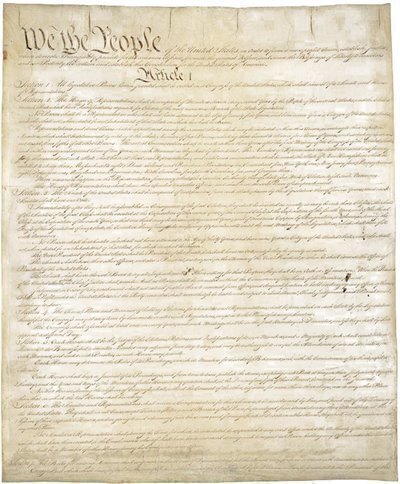
The U.S. Constitution: the 25th Amendment was ratified in 1967. Credit: National Archives / National Constitution Center. Image details.
The 25th Amendment was ratified on February 10, 1967, to clarify presidential succession and the handling of presidential inability. Some of its provisions have been used during medical procedures or changes in office. Section 4, however, has never been invoked.
Section 4 addresses a particularly sensitive situation: the president cannot perform the powers and duties of the office but does not voluntarily transfer those powers. It allows the vice president and a majority of the principal officers of executive departments, commonly called the Cabinet, to send a written declaration of presidential inability to congressional leaders.
Once that declaration is submitted, the vice president immediately assumes the powers and duties of the presidency as acting president. The elected president does not automatically lose the office permanently. This is a mechanism for preserving continuity of government during incapacity, not a general tool for punishing unpopular policies or political disagreement.
The key phrase in the amendment is an alternative to the Cabinet: a majority of “such other body as Congress may by law provide.” That language creates an option for Congress to establish a separate body to participate in the determination. It is the overlooked constitutional provision behind the latest discussion.
The Little-Known Commission Congress Could Establish
In theory, Congress could enact a law establishing an independent commission to examine whether a president is physically or mentally capable of fulfilling the job. The commission would serve as an alternative to the Cabinet in the Section 4 process, potentially including medical specialists and former public officials.
That would not allow members of Congress or commissioners to act alone. Vice President JD Vance would still have to agree with a majority of the commission before the initial constitutional declaration could transfer presidential powers. If the vice president refused, the proposed commission could not independently activate Section 4.
Creating the body would also require ordinary federal lawmaking. Legislation would have to pass the House and Senate and be signed by the president, or become law despite a veto through the constitutionally required override process. That is an especially difficult hurdle when the law concerns the powers of the sitting president.
Supporters argue that a standing commission could add outside medical expertise and reduce reliance on political appointees close to the president. Critics could argue that the mechanism risks politicizing questions of medical capacity and creating an alternative pressure point against an elected leader. Both concerns would be central to any serious debate about the commission’s structure and independence.
Jamie Raskin’s 2026 Proposal Is Already on the Table
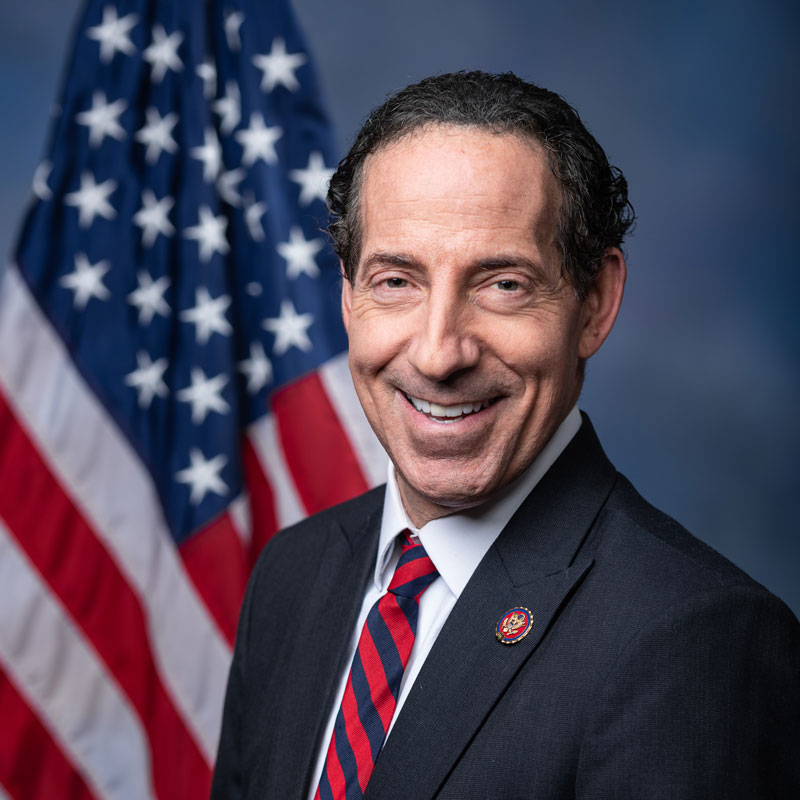
Rep. Jamie Raskin introduced H.R. 8275 in April 2026. Credit: U.S. House Judiciary Committee. Image details.
The idea is not merely a leftover from Trump’s first term. In October 2020, Rep. Jamie Raskin and then-House Speaker Nancy Pelosi promoted legislation for a presidential-capacity commission. That effort did not become law.

Nancy Pelosi joined Raskin in highlighting the commission idea in 2020. Official U.S. House portrait. Image details.jpg).
More importantly, Raskin introduced a new version on April 14, 2026: H.R. 8275, the Commission on Presidential Capacity to Discharge the Powers and Duties of the Office Act. Government legislative records show that it was referred to House committees. The latest action listed in the records reviewed was the April 14 referral, with no House or Senate floor vote recorded.
The 2026 bill calls for a 17-member commission. Under its text, congressional leaders would appoint eight physicians, including psychiatrists, and eight former senior executive-branch officials; those 16 members would select a chair. The proposal also outlines an examination-and-report process if Congress directs the commission to act.
Raskin and other Democratic lawmakers have promoted the bill in the context of concerns they have raised about Trump’s judgment and conduct. The White House has rejected such attacks, and none of the political criticisms cited by supporters constitutes a medical determination of incapacity.
The bill’s introduction is a verifiable fact. Its passage or use is not. Moreover, H.R. 8275 belongs to the current 119th Congress. If it is not enacted before that Congress ends, supporters would generally need to introduce a new bill in the 120th Congress rather than assume the pending measure carries forward automatically.
Why JD Vance Would Be Central to Any Attempt

Vice President JD Vance would be required to participate in a Section 4 declaration. Official portrait, public domain. Image details.

For all the focus on House and Senate election results, the vice president remains the central constitutional gatekeeper. Section 4 does not authorize an opposition party to remove a president through a simple congressional vote.
If a qualifying declaration were submitted by Vance and either a majority of the Cabinet or an authorized commission, Vance would immediately become acting president. If Trump did not contest the finding, the arrangement could continue under the amendment’s rules.
But Trump would be allowed to issue his own written declaration stating that no inability exists. At that point, the vice president and the relevant majority would have four days to dispute his claim. If they did, Congress would decide whether the president was unable to serve.
Congress must convene within 48 hours if it is not in session, and the amendment establishes a 21-day window for the decision. To keep the vice president exercising presidential powers against the president’s objection, two-thirds of both the House and Senate would have to agree that the president is unable to discharge the duties of office. If that supermajority is not reached, the president resumes those powers.
This system deliberately makes involuntary transfer difficult. It combines executive-branch participation, written declarations, a chance for the president to respond and an exceptionally high congressional threshold.
Why a Democratic Majority Would Not Be Enough

The White House. Photo: Rob Young / Wikimedia Commons, CC BY 2.0. Image details.jpg).
Control of both chambers means Democrats can set a legislative agenda, but the party’s majority does not erase the president’s veto or the constitutional requirements of Section 4.
First, any commission must be established by law. Trump could veto the bill. Overriding that veto would require two-thirds support in each chamber, a much higher bar than passing legislation by a simple majority.
Second, even a functioning commission would not replace the vice president. Vance’s participation is essential to a Section 4 declaration.
Third, the president could contest the determination. At that stage, continuation of the acting presidency would require two-thirds majorities in both chambers—meaning substantial support beyond Democrats’ new majority.
Finally, the amendment concerns an inability to exercise presidential powers. It is not interchangeable with impeachment. Impeachment addresses alleged misconduct: the House may impeach by majority vote, while conviction and removal in the Senate require a two-thirds vote of senators present. Section 4 addresses incapacity: it can temporarily transfer powers to an acting president without permanently removing the president from office.
Confusing these pathways may make a headline sound more decisive than the Constitution permits.
What About Questions Concerning Trump’s Health?
Trump’s health, age and public appearances have generated political commentary, as happens with other presidents. But viral clips, speculation about speech patterns and interpretations of photographs are not reliable substitutes for a clinical evaluation or a formal finding of inability.
A commission proposal is about establishing a process for assessing capacity; the proposal itself is not evidence that a president is medically unable to serve. Nor does disagreement with military decisions, economic policy or public statements automatically satisfy Section 4’s standard.
This distinction matters for the credibility of any public discussion. Questions about presidential fitness can legitimately receive scrutiny, but statements about an individual’s medical condition should be tied to reliable evidence rather than guesses. A constitutional system that protects continuity of government also needs safeguards against turning clinical judgments into partisan weapons.
What Democrats Could Do in January 2027
When the new Congress convenes, Democratic lawmakers could introduce or revive commission legislation, schedule hearings, question legal experts and physicians, and investigate how presidential-capacity procedures might work in practice. They could also pursue more conventional oversight of the administration through committees, subpoenas and budget negotiations.
Whether Democratic leadership will prioritize a Section 4 commission is an open question. It could be politically divisive and difficult to enact, particularly if lawmakers conclude that oversight or legislative negotiations offer more practical results. The president, meanwhile, can resist legislation through the veto power and defend his ability to serve.
The 2026 election results therefore create an opening for a debate that once seemed unlikely to advance. They do not mean that Section 4 has been invoked, that a presidential-capacity commission exists, or that Trump is about to leave office.
Frequently Asked Questions
Can Democrats remove Trump under the 25th Amendment by themselves?
No. Section 4 requires the vice president to act with a majority of the Cabinet or a congressionally established alternative body. If the president disputes the determination, two-thirds of both chambers must support keeping the vice president as acting president.
Has Section 4 of the 25th Amendment ever been used?
No. Other parts of the amendment have been used, but Section 4’s involuntary presidential-inability procedure has never been invoked.
Is there already a bill to create a presidential-capacity commission?
Yes. Rep. Jamie Raskin introduced H.R. 8275 in April 2026. The legislative records reviewed list it as referred to committees, not enacted into law.
Would JD Vance become president permanently?
Not automatically. Under Section 4, the vice president assumes the role of acting president, exercising presidential powers while the constitutional process operates. That is different from the permanent succession addressed elsewhere in the amendment.
When could the new Democratic Congress consider the proposal?
The incoming Congress begins on January 3, 2027. Lawmakers could then consider new commission legislation, but it would still have to pass the normal lawmaking hurdles.
The Bottom Line
Democrats’ 2026 midterm victories have revived attention to one of the Constitution’s most extraordinary safeguards. Section 4 of the 25th Amendment allows for the involuntary transfer of presidential powers when the president is unable to perform the job, and Congress has authority to create a body that could participate in that process.
Yet the distinction between being able to propose a commission and being able to displace a president is enormous. A commission would have to become law, the vice president would have to participate, and a president who contested the declaration would be protected by a two-thirds congressional threshold. Until those conditions are met, the story is about a possible constitutional process—not an accomplished removal.
Sources: Original Newsner report; Associated Press election coverage; National Archives: 25th Amendment; Rep. Raskin’s April 2026 announcement; H.R. 8275 legislative record; Bipartisan Policy Center explainer.