Prince Harry once imagined becoming a fun, supportive uncle to Prince George. But according to his memoir, Spare, the reality of living close to Prince William and Kate Middleton left him feeling unexpectedly distant from the family he hoped to see regularly.
Behind the grandeur of Kensington Palace, Prince Harry says a quieter family disappointment was unfolding—one that began long before the more public tensions between the Duke of Sussex and his older brother, Prince William.
When Prince George was born in July 2013, the occasion marked a joyful milestone for the British royal family. William and Kate were beginning a new chapter as parents, and Harry had become an uncle for the first time.
For Harry, however, the happiness came with expectations that he later suggested were never fully realized.
In his bestselling memoir Spare, released in January 2023, Harry described hoping to spend more time with his brother, sister-in-law, and newborn nephew after moving into a cottage on the Kensington Palace estate.
Instead, he recalled waiting for invitations that did not arrive during that period.
His account offers a glimpse into the emotional complexities of royal family relationships, raising questions about how two brothers who once shared so much gradually developed increasingly separate lives.
1. Prince George’s Birth Was a Joyful Moment for the Royal Family
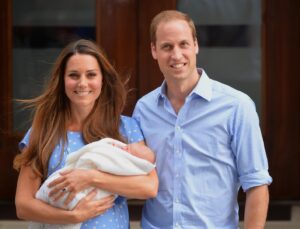
Image 1: William and Kate with newborn Prince George outside St Mary’s Hospital, 23 July 2013. Credit: Christopher Neve, CC BY-SA 2.0. Source and license.

On July 22, 2013, Catherine, then the Duchess of Cambridge, gave birth to Prince George Alexander Louis at St. Mary’s Hospital in London.
The birth attracted worldwide attention because George was not simply another royal baby. As William’s first child, he would occupy a significant position in the British line of succession.
The following day, William and Kate appeared outside the hospital’s Lindo Wing, proudly introducing their newborn son to photographers and well-wishers.
For Prince Harry, the arrival brought a new and exciting family role.
Harry was known for his playful public personality, and many royal followers expected him to become the fun-loving uncle who would bring laughter and adventure to his nephew’s childhood.
At the time, the Duke seemed equally enthusiastic.
Speaking to reporters shortly after George’s birth, Harry expressed his happiness at welcoming another family member. He also joked about charging his brother expensive babysitting fees.
The comments painted the picture of an affectionate uncle looking forward to building a close relationship with the next generation.
Yet Harry’s later recollections suggest that even joyful family milestones could reveal differences between expectation and reality.
2. Harry Had Big Plans for His Role as Prince George’s Uncle
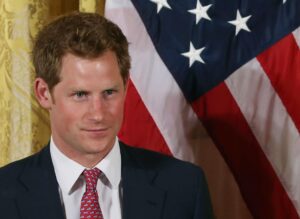
Image 2: Prince Harry on a visit to Washington, D.C., 9 May 2013. Credit: Glyn Lowe, CC BY 2.0. Source and license.

Becoming an uncle was something Harry appeared to embrace wholeheartedly.
During a charity event in July 2013, he told journalists that he wanted to help ensure Prince George enjoyed a happy childhood while being protected from harm.
His comments were affectionate and lighthearted, reflecting the excitement surrounding the arrival of a new family member.
Years later, in Spare, Harry described imagining the activities he might share with George as the boy grew older.
He hoped to introduce his nephew to sports, games, and aspects of the adventurous life he had enjoyed himself.
For a royal child destined to grow up under extraordinary public scrutiny, Harry believed he could offer something valuable: the perspective of someone who understood the pressures of growing up within the monarchy without being its direct heir.
Harry had experienced intense media attention throughout his childhood, adolescence, military service, and adulthood.
He knew that royal privilege often came with unusually limited privacy.
This shared experience, he hoped, could eventually become the foundation of a meaningful uncle-nephew relationship.
However, being part of the same famous family did not necessarily mean opportunities for ordinary family visits would be easy to arrange.
3. Harry Moved Close to William and Kate at Kensington Palace

Image 3: Kensington Palace in London (photographed 2018). Credit: Alicank, CC BY-SA 4.0. Source and license.

One of the most revealing details in Harry’s account concerns the royal residences at Kensington Palace.
After Prince George was born, William and Kate settled into their larger home at the palace, known as Apartment 1A.
Harry, meanwhile, moved into Nottingham Cottage, a comparatively modest residence on the same estate.
Although the two households were physically close, Harry later suggested that emotional closeness did not automatically follow.
According to Spare, he was delighted by the prospect of living near his brother’s growing family.
He imagined spontaneous visits, relaxed conversations, and opportunities to play with his young nephew.
Unlike official royal appearances, these moments would have happened away from television cameras and public expectations.
The arrangement appeared ideal.
Harry could maintain his own home and independent commitments while remaining only a short walk from William and Kate.
He expected their proximity to make family time natural and frequent.
But the situation developed differently from what he had anticipated.
4. The Invitations Harry Expected Never Arrived, He Claims
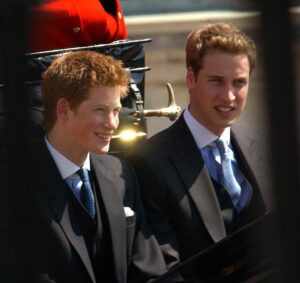
Image 4: Prince William and Prince Harry photographed together in June 2009. Credit: Staszek99, CC BY-SA 4.0. Source and license.

The emotional heart of Harry’s account is his description of waiting for William and Kate to invite him into their home.
In Spare, he recalled being close enough to notice activity around the Cambridge household, including the movement of staff and the baby’s pram.
He expected to be welcomed over for casual visits.
However, according to Harry, days passed without the invitations he had imagined.
He summarized his disappointment by writing that “day after day it didn’t happen.”
The experience apparently left him wondering whether he had misunderstood his place in the couple’s increasingly independent family life.
Harry considered several possible explanations.
William and Kate were new parents, with demanding responsibilities and a newborn requiring constant attention.
Their lives were also changing as William prepared for a growing public role within the monarchy.
Nevertheless, Harry’s account suggests that the lack of informal invitations carried an emotional significance beyond scheduling difficulties.
He had expected an extension of the closeness he once shared with his brother.
Instead, he felt as though a new boundary had appeared.
Importantly, Harry’s recollection describes his experience during a particular period. It does not demonstrate that William and Kate permanently refused to include him in every family gathering.
Nor does the absence of invitations, as Harry remembered it, establish why the couple did not invite him over more often.
Their private reasons have not been independently established.
5. Could Parenthood Have Changed William and Kate’s Priorities?
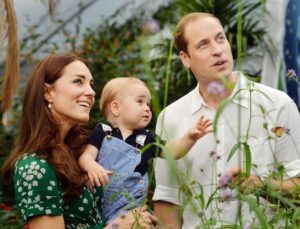
Image 5: William, Kate and young Prince George during a Natural History Museum visit, 2014. Credit: Trustees of the Natural History Museum, Open Government Licence v3.0. Source and license.

Becoming parents often transforms family routines, priorities, and expectations.
For William and Kate, the arrival of Prince George brought responsibilities that were both personal and constitutional.
They were adapting to the everyday demands of caring for a baby while also preparing for the responsibilities associated with raising a future monarch.
Privacy would understandably have been an important consideration.
The couple faced constant media interest, and even seemingly ordinary family moments could become subjects of international headlines.
From this perspective, fewer spontaneous visitors would not necessarily indicate hostility or deliberate exclusion.
At the same time, Harry’s disappointment illustrates how differently relatives can experience the same transition.
A new parent may view uninterrupted time at home as a necessity, while a sibling who has previously enjoyed frequent contact may interpret reduced interaction as emotional distance.
Both experiences can exist without either automatically proving that someone acted with malicious intent.
There is no verified public account establishing William and Kate’s motivations for the missed invitations Harry described.
That uncertainty matters because royal relationships often become subjects of speculation, particularly when only one participant has publicly explained a private disagreement.
Harry’s feelings are part of the historical record through his memoir, but they should not be confused with an independently confirmed explanation of William and Kate’s intentions.
6. Why the ‘Heir and Spare’ Dynamic Matters
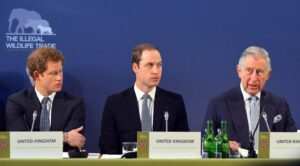
Image 6: Harry, William and their father Charles at a wildlife-trade conference in 2014. Credit: UK Foreign and Commonwealth Office, Open Government Licence v1.0. Source and license.

The differences between Prince William and Prince Harry extend beyond their personalities.
As King Charles III’s eldest son, William was raised with the expectation that he would eventually become king.
Harry, as the younger brother, followed a different path.
The title of his memoir, Spare, refers to the traditional distinction between the person expected to inherit the throne and the younger sibling positioned behind the heir in the royal succession.
In the book, Harry discusses how that difference shaped his sense of identity.
William’s marriage to Catherine in 2011 and the birth of Prince George in 2013 represented important steps in the development of the future king’s immediate family.
For Harry, those same milestones may also have reinforced the reality that William’s priorities were changing.
Before marriage and parenthood, the brothers had shared many public experiences, family commitments, and personal challenges.
As William developed his own household, however, Harry increasingly had to establish an independent life.
The arrival of George also changed Harry’s place in the line of succession, moving him one position farther from the throne.
Although succession rules do not determine personal affection, the institution’s emphasis on the direct royal line can influence how family roles are publicly perceived.
This makes Harry’s recollection of feeling overlooked especially revealing.
His disappointment was not necessarily about royal titles, residences, or ceremonies. It concerned his hopes for an ordinary family relationship.
7. The Brothers Still Shared Public Royal Duties
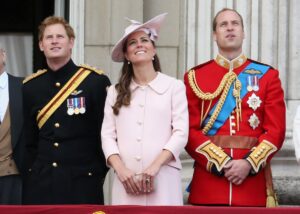
Image 7: William, Kate and Harry at Trooping the Colour in June 2013 (not the Heads Together launch). Credit: Carfax2, CC BY-SA 3.0. Source and license.

Despite Harry’s description of feeling excluded from informal family life, the brothers continued appearing together at royal engagements.
William, Kate, and Harry worked jointly on initiatives that attracted considerable public support.
One particularly prominent example was Heads Together, a mental health campaign launched in 2016.
The initiative brought the three royals together to encourage more open conversations about emotional well-being.
Their public partnership demonstrated that Harry’s account of disappointment at home should not be interpreted as evidence that all contact or cooperation had ceased.
The distinction between public working relationships and private family intimacy is important.
Royal relatives may attend ceremonies, collaborate on charitable campaigns, and appear together in photographs even when their personal relationships are more complicated.
Public appearances alone cannot establish whether family members are emotionally close.
Equally, a private disagreement does not mean that every later interaction was unhappy or unsuccessful.
The contrasting images of public unity and private frustration help explain why the royal family story has continued to attract such widespread attention.
8. Prince George Was Not Completely Absent From Harry’s Life
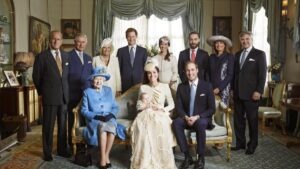
Image 8: Historical illustration of the Chapel Royal, St James’s Palace, where George was christened; this does not show the 2013 christening. Credit: Thomas Hosmer Shepherd, Public domain. Source and license.

An important part of understanding Harry’s claim is recognizing the family occasions he did attend.
Prince George was christened on October 23, 2013, at the Chapel Royal in St James’s Palace.
Harry attended the ceremony, alongside other senior members of the royal family and relatives from Catherine’s side.
Official photographs released afterward showed Harry included in the wider family gathering.
The christening demonstrates that Harry was not excluded from every important event involving his nephew.
Earlier that year, he had also publicly confirmed that he had already met baby George.
These details provide useful context for interpreting the more dramatic headlines surrounding his memoir.
Harry’s central complaint was about the informal closeness he had hoped to experience while living near William and Kate.
There is a meaningful difference between not receiving the casual invitations he expected and never being allowed to see his nephew.
The available evidence supports the former as Harry’s personal account, not the latter as a blanket factual conclusion.
9. How Spare Brought Earlier Family Disappointments Into Public View
Image 9: Prince Harry at the Invictus Games in April 2022, an archival image (not his book cover). Credit: Defense Flash News, CC BY 3.0. Source and license.

When Spare was released in January 2023, it became a major publishing and media event.
The memoir examined Harry’s childhood, the death of Princess Diana, his military experiences, his marriage to Meghan Markle, and his changing relationship with the royal family.
His recollections of life near William and Kate were part of a much larger account of feeling misunderstood and increasingly isolated within the institution.
The book also described more serious disagreements between Harry and William in later years.
These claims generated international debate over whether the memoir represented a necessary opportunity for Harry to explain his experiences or risked widening the divisions within his family.
Supporters of Harry’s decision to publish emphasized his right to share his perspective.
Critics questioned whether private family matters should have been discussed so publicly.
William and Catherine have not provided a comparable public account directly addressing the particular missed invitations Harry described.
That leaves readers with Harry’s recollection, contemporary evidence of family interactions, and a limited understanding of what happened behind closed doors.
10. What This Reveals About the Challenges of Royal Family Relationships
The story of Harry’s hoped-for visits to William and Kate is striking partly because of how ordinary the underlying situation appears.
Many families experience changes in closeness when siblings marry, move into separate homes, or become parents.
A brother who once enjoyed regular contact may feel less included when a new family routine develops.
Unspoken expectations can gradually become sources of disappointment.
In the case of the British royal family, those familiar challenges take place within an environment shaped by tradition, official responsibilities, security arrangements, and intense public attention.
Harry’s recollections demonstrate how easily proximity can be mistaken for connection.
Living near someone does not guarantee frequent visits, shared experiences, or emotional understanding.
His story also underscores the importance of distinguishing private feelings from established facts.
Readers can recognize Harry’s disappointment without assuming that William or Kate deliberately intended to hurt him.
Ultimately, the episode offers a personal perspective on a changing relationship that would later become one of the most widely discussed family disagreements in modern royal history.
Frequently Asked Questions
Did Prince Harry say William and Kate never invited him over?
Harry wrote in Spare that after moving near William and Kate at Kensington Palace, he expected regular invitations to their home but was disappointed when they did not arrive during the period he described.
Did Prince Harry meet Prince George after he was born?
Yes. Harry publicly discussed meeting his newborn nephew in July 2013 and joked about his future babysitting responsibilities.
Where did Prince Harry live near William and Kate?
Harry lived at Nottingham Cottage on the Kensington Palace estate, while William and Kate lived in Apartment 1A.
Was Prince Harry invited to Prince George’s christening?
Yes. Harry attended Prince George’s christening on October 23, 2013, and appeared in official family photographs afterward.
Why did Prince Harry and Prince William grow apart?
Harry has described multiple tensions involving their royal roles, personal relationships, media coverage, and disagreements over the years. The full causes of their estrangement cannot be reduced to a single incident.
Did William and Kate respond to Harry’s account of the missed invitations?
No detailed, publicly verified response from William and Kate specifically explaining the invitations described in Spare is established in the reporting cited here.
Final Thoughts: A Family Bond Harry Hoped Would Grow Stronger
Prince Harry’s account of his relationship with William and Kate after Prince George’s birth offers a revealing glimpse into the personal expectations behind royal life.
What Harry imagined as a new chapter of family closeness instead became, in his telling, an experience marked by disappointment.
He had hoped to spend time with his nephew, enjoy spontaneous visits, and remain an active part of his brother’s expanding family.
The reality, he recalled, was more distant.
Yet the story is not evidence of complete exclusion, nor does it establish the intentions of William and Kate.
Rather, it highlights a familiar truth: even within one of the world’s most famous families, love, expectations, personal boundaries, and communication can become complicated.
And sometimes, the greatest disappointments are not about grand royal ceremonies but the ordinary family moments someone had hoped would happen.