Mary Trump has made striking claims about her uncle’s emotional well-being, suggesting that his fear of humiliation may explain some of his public behavior. The White House, however, has strongly rejected her assessment.
Donald Trump has spent decades cultivating an image of confidence, strength and success. From his years as a real estate businessman and television personality to his return to the White House, the president has frequently emphasized his achievements and portrayed himself as a formidable negotiator.
But according to his niece, Mary Trump, there is one experience that may unsettle him more than almost anything else: public humiliation.
In comments published on June 21, 2026, the psychologist and bestselling author offered a critical assessment of her uncle’s emotional state. Speaking with journalist Steven Beschloss, she argued that the president was struggling with psychological pressures and described what she believed to be a worsening pattern in his behavior.
Her remarks followed the G7 summit in France, where Trump’s public appearances had become a subject of renewed scrutiny.
The comments quickly attracted media attention, but they also raised important questions about the distinction between personal observations, political criticism and medical evidence.
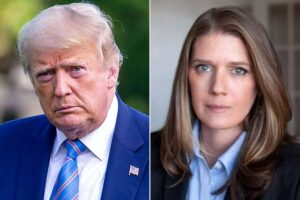
Mary Trump Claims Donald Trump’s Biggest Fear Is Humiliation
One of Mary Trump’s most memorable comments focused on what she believes drives her uncle’s behavior.
During her conversation with Beschloss, she claimed that humiliation occupies a particularly important place in his psychology.
“Nothing terrifies Donald more than humiliation,” she said.
According to Mary, the president’s desire to avoid embarrassment helps explain his reactions to criticism and public challenges. She suggested that he is especially sensitive to situations in which his authority, reputation or image of success appears to be questioned.
Her interpretation connects Trump’s public persona with a constant need for approval and recognition.
For decades, Trump has presented himself as a winner, whether discussing business agreements, election results or international negotiations. His political communication has often emphasized dominance, personal loyalty and victories over opponents.
Mary believes that this approach may also make criticism particularly difficult for him to accept.
However, her explanation remains a personal psychological interpretation. It should not be treated as an independently established account of what the president actually fears.
The distinction matters because public figures can project confidence, respond forcefully to criticism or seek recognition for many different reasons.
What Does Mary Trump Mean by a ‘Downward Spiral’?
Mary Trump’s comments went beyond the issue of humiliation.
When asked about Trump’s appearance and behavior at the G7 summit, she said that she believed his overall condition was deteriorating.
She described him as being in a “downward spiral,” suggesting that the pressure of maintaining his public image could be becoming increasingly difficult.
In Mary’s view, her uncle expends considerable emotional energy protecting his reputation and attempting to sustain a sense of personal importance.
She argued that even significant displays of power or public recognition cannot necessarily resolve the insecurity she believes lies underneath.
These claims reflect themes that Mary has discussed for years in her books, interviews and political commentary.
Importantly, her use of the expression “downward spiral” does not establish a diagnosis of a neurological condition, a psychiatric disorder or any particular medical illness.
A person’s psychological condition cannot reliably be determined from selected public appearances or short video clips alone.
Nevertheless, Mary’s remarks gained attention because they came from someone who combines a professional background in psychology with a personal connection to the president.

Who Is Mary Trump, and Why Does Her Opinion Attract Attention?
Mary Lea Trump is a psychologist, author and political commentator. She is the daughter of Fred Trump Jr., Donald Trump’s older brother.
Her relationship with the wider Trump family has been marked by longstanding disagreements, including disputes over family matters and her uncle’s political leadership.
She became particularly well known in 2020 after publishing Too Much and Never Enough: How My Family Created the World’s Most Dangerous Man.
The book explored her experiences within the Trump family and offered her perspective on how family relationships may have influenced Donald Trump’s personality and approach to power.
Since then, Mary has become a prominent critic of her uncle, frequently commenting on his leadership, public statements and behavior.
Her family connection gives her a perspective that outside commentators do not share. At the same time, her public opposition to Donald Trump is relevant context when evaluating her conclusions.
A family relationship does not automatically make someone’s interpretation correct, just as a political disagreement does not automatically make it invalid.
For readers, the essential question is which claims are supported by observable facts and which remain opinions about a person’s private emotional life.
Trump’s Appearance at the 2026 G7 Summit Raised New Questions
Mary’s comments emerged shortly after the G7 summit held in Évian-les-Bains, France, from June 15 to June 17, 2026.
The international gathering brought together leaders from major industrialized democracies to discuss global economic stability, international security and pressing geopolitical challenges.
During her interview, journalist Steven Beschloss questioned whether Trump appeared unusually diminished during the event.
Mary agreed with the general direction of his assessment and connected the appearance to her broader concerns about her uncle.
But reactions to political appearances can vary dramatically.
Some viewers may interpret a moment of hesitation or an unusual expression as evidence of fatigue. Others may regard the same footage as ordinary behavior during a demanding diplomatic schedule.
The distinction is especially important when evaluating the health of an elected leader.
International summits involve extensive travel, lengthy meetings, intense negotiations and significant public attention. A single photograph or brief recording provides limited information about someone’s health.
Although Mary’s comments were direct, they did not include an independent medical examination establishing that Trump had experienced the deterioration she described.
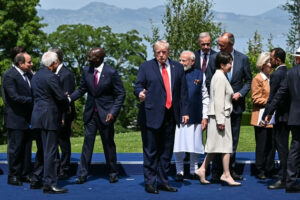
The White House Responds to Mary Trump’s Allegations
Mary Trump’s statements prompted a sharp response from the White House.
White House Communications Director Steven Cheung rejected her assessment, dismissing her credibility and accusing her of using attacks on the president to remain relevant.
In comments reported by LADbible, Cheung described Mary as a “stone cold loser” and challenged the legitimacy of her criticism.
The response highlighted the deeply adversarial relationship between the president and his niece.
Rather than accepting Mary’s description of Trump’s emotional state, the administration portrayed her statements as politically motivated attacks.
The exchange reflects a larger pattern in American politics, where personal relationships, political loyalties and disagreements over leadership frequently overlap.
For supporters of Trump, Mary’s longstanding criticism may make her statements less persuasive. For critics, her family background may make her perspective especially interesting.
Neither reaction, by itself, establishes the accuracy of her claims.
A fair assessment requires considering the original statements, the White House’s response and independently verifiable evidence.
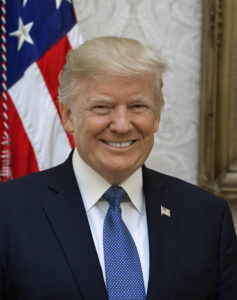
What Does Donald Trump’s Official Medical Report Actually Say?
Questions about presidential health carry unusual importance because of the responsibilities associated with the office.
Donald Trump turned 80 on June 14, 2026, making his age a subject of continuing public discussion.
However, the official medical information released shortly before Mary’s comments presented a substantially different picture from her assessment.
According to a memorandum dated May 29, 2026, White House physician Dr. Sean Barbabella reported that Trump underwent an annual medical examination at Walter Reed National Military Medical Center on May 26.
The report said the evaluation included neurological assessments, laboratory testing, cardiovascular examinations and consultations with specialists.
It also reported that Trump received a score of 30 out of 30 on the Montreal Cognitive Assessment, commonly called the MoCA.
The MoCA is a screening tool used to evaluate several areas of cognitive functioning, including attention, memory, language and orientation.
A perfect score indicates strong performance on that particular screening assessment. However, the test is not designed to establish every aspect of a person’s psychological well-being or rule out every possible medical condition.
The physician’s memorandum described the president as being in excellent health and fit to perform his official responsibilities.
This is an important part of the story because it provides documented medical findings that differ from Mary’s personal observations.
It is also important not to overinterpret either source.
Mary’s claims do not amount to a clinical diagnosis, while the public medical memorandum offers a summary of the assessment rather than unrestricted access to the president’s complete medical history.
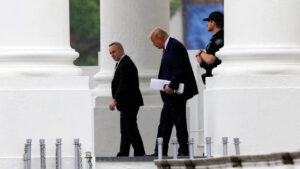
A Confusing Father’s Day Post Added to the Public Conversation
Another incident that attracted attention around the time of Mary’s comments involved a social media post shared before Father’s Day in June 2026.
Trump posted a photograph of a woman alongside a message referring to a “great daughter.”
Because the woman did not appear to be either of his daughters, Ivanka Trump or Tiffany Trump, some social media users questioned the meaning of the message.
Reports identified the woman as possibly Margo Catsimatidis, whose husband, John Catsimatidis, is a businessman and Trump supporter.
One interpretation suggested that the message may have referred to the Catsimatidis family’s daughter rather than Trump’s own children.
The post was subsequently removed, and the uncertainty surrounding its intended meaning generated online discussion.
Yet an ambiguous social media post is not evidence of a cognitive disorder.
Messages can be miscaptioned, posted without sufficient context, misunderstood or managed by other people.
Although the incident received attention amid broader questions about Trump’s health, it would be misleading to present it as proof of the decline alleged by Mary Trump.
Why Presidential Health and Mental Fitness Receive So Much Scrutiny
Public interest in the health of American presidents is not new.
The president is responsible for major national security decisions, foreign policy negotiations and the leadership of the federal executive branch.
As a result, questions about physical stamina, decision-making and cognitive performance can carry political consequences.
The subject becomes especially prominent when a president is older, highly visible and frequently involved in contentious public exchanges.
Political opponents may highlight verbal mistakes or unusual behavior as signs of concern, while supporters may point to policy achievements, lengthy public appearances and medical reports as evidence of continued capability.
But those political arguments often combine different types of information.
Medical health, psychological characteristics, leadership style and political judgment are related subjects, yet they are not interchangeable.
An unpopular decision does not demonstrate mental impairment. An aggressive public response does not prove a psychiatric disorder. Equally, the absence of a diagnosed condition does not automatically resolve concerns about a leader’s judgment.
Responsible reporting should distinguish documented medical information from political rhetoric and subjective observations.
That approach is particularly important when the allegations involve a public figure’s mental or cognitive health.
The Long-Running Divide Between Mary Trump and Her Uncle
Mary Trump’s latest criticism is part of a much longer and highly public disagreement.
Her 2020 memoir brought family dynamics into the national political conversation and challenged the image of success and strength associated with Donald Trump.
Over the years, she has repeatedly argued that his public actions can be understood through the pressures and relationships she describes from their family history.
The president and his representatives have consistently rejected attacks on his character and leadership.
The disagreement is therefore more than an isolated dispute over one interview. It reflects opposing interpretations of Trump’s personality, accomplishments and conduct in public office.
Mary sees patterns that she believes point toward insecurity and emotional strain. The White House rejects her conclusions and maintains that the president remains capable of carrying out his responsibilities.
For an audience attempting to understand the controversy, both positions deserve to be identified accurately rather than blended into a single unqualified narrative.
What Mary Trump’s Claims Mean — and What Remains Unproven
The most significant element of Mary’s June 2026 interview was not a new medical finding.
Instead, it was her contention that fear of public embarrassment plays a central role in Donald Trump’s behavior.
She linked that interpretation to her concerns about his psychological condition and the demands of maintaining a powerful public image.
The White House strongly disputed her claims, and the physician’s report released in May presented positive findings about the president’s health and cognitive screening.
At present, Mary’s comments should be understood as a critical personal assessment, not as verified evidence of a diagnosed decline.
The public can evaluate Trump’s decisions, speeches, leadership and conduct without treating speculation about his health as established medical fact.
That distinction allows readers to take the controversy seriously without arriving at conclusions that the available evidence does not support.
Frequently Asked Questions
What does Mary Trump say Donald Trump fears most?
Mary Trump believes her uncle is especially afraid of humiliation and public embarrassment. She presented that assessment during a June 2026 conversation with journalist Steven Beschloss.
Did Mary Trump say Donald Trump is in a downward spiral?
Yes. She used that expression when discussing her concerns about his psychological condition and public behavior. Her statement was an opinion, not a verified medical diagnosis.
Who is Mary Trump?
Mary Trump is a psychologist, author and Donald Trump’s niece. She is the daughter of his late older brother, Fred Trump Jr., and wrote the bestselling 2020 memoir Too Much and Never Enough.
What did the White House say about her comments?
White House Communications Director Steven Cheung strongly rejected Mary’s claims and challenged her credibility.
Did Donald Trump pass a cognitive screening test?
According to the May 29, 2026, physician’s memorandum, Trump scored 30 out of 30 on the Montreal Cognitive Assessment during his annual medical evaluation.
Is there confirmed medical evidence supporting Mary Trump’s allegation?
The public reporting surrounding this particular interview does not establish a diagnosed mental or cognitive decline. Mary’s statements and the physician’s report offer different kinds of information and should not be presented as equivalent medical evidence.
Final Thoughts
Mary Trump’s comments have renewed attention on her contentious relationship with President Donald Trump and the psychological explanations she offers for his public behavior.
Her central claim — that humiliation is among his greatest fears — is a striking interpretation of a leader who has spent much of his career emphasizing confidence and success.
But her warnings about a possible downward spiral remain disputed, and publicly available medical information does not independently establish the decline she alleges.
Ultimately, the story illustrates the importance of separating provocative political commentary from documented health information, particularly when the subject is the president of the United States.