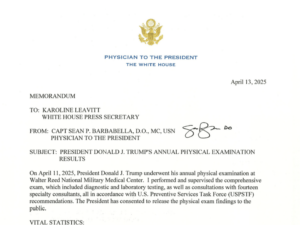
Trump’s White House physician has repeatedly affirmed the president’s fitness. In April 2025, Dr. Sean Barbabella released a comprehensive report following an examination at Walter Reed National Military Medical Center. The assessment listed Trump’s height at 75 inches and weight at 224 pounds. Scans of the eyes, ears, neck, throat, and heart were described as normal. Trump had undergone a colonoscopy in 2024 that identified a benign polyp and diverticulitis, an inflammation of pouches in the colon; a follow-up was recommended in three years. The report also noted bilateral cataract surgery, prescriptions for cholesterol management, a cardiac prevention medication, and a topical cream for a skin condition. Barbabella concluded that Trump showed “robust cardiac, pulmonary, neurological, and general physical function” and that an active lifestyle supported his overall health. The physician stated that the president exhibited “excellent cognitive and physical health and is fully fit to execute the duties of the Commander-in-Chief.”
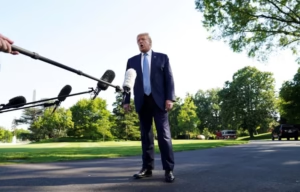
Trump himself addressed the cognitive portion of the evaluation, telling reporters he had taken a cognitive test and “got every answer right,” along with other cardiac and related assessments. Supporters have pointed to these official findings as definitive rebuttals to outside speculation.
Psychologist’s Observations of Motor Decline
Not everyone accepts the official summary at face value. Psychologist Dr. John Gartner, speaking on The Dean Obeidallah Show and cited by The Irish Star, has argued that Trump’s motor performance shows clear deterioration consistent with frontotemporal dementia (FTD). Gartner, who has long analyzed Trump’s public behavior, emphasized that dementia involves not only language changes but also progressive loss of motor coordination.
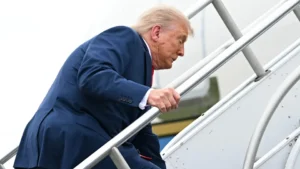
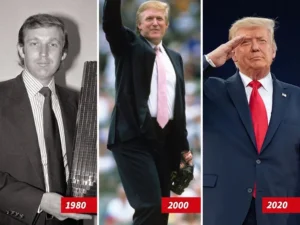
Gartner compared archival footage of a younger Trump with more recent appearances. In the 1980s, Trump appeared highly coordinated, including footage of him playing volleyball in which he dove for a ball, recovered quickly, and executed a high shot. “He was very coordinated,” Gartner said. By contrast, recent public events have shown Trump struggling on stairs, moving with a slow gait, and experiencing falls. Gartner acknowledged that isolated trips can be overinterpreted but argued that the overall pattern of slowed walking and instability is more telling.
The most specific observation involves gait. Multiple neurologists, according to Gartner, have noted a “leg swing” in which Trump’s right leg moves in a semicircle as if it were a dead weight being swung around rather than stepping normally. Gartner described this pattern as especially diagnostic. “That right leg swing is considered to be very diagnostic of a specific type of dementia, frontotemporal dementia,” he stated. A colleague identified as Dr. Zoffman reportedly told Gartner she was “absolutely convinced” of FTD based on this feature alone. Gartner has also referenced possible catheter concealment under clothing as a potential additional indicator of related neurological issues, though this remains unconfirmed speculation in public reporting.
Understanding Frontotemporal Dementia
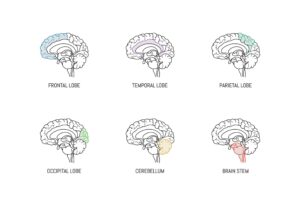
Frontotemporal dementia is a group of disorders caused by progressive nerve-cell loss in the frontal and temporal lobes of the brain—the areas involved in personality, behavior, language, and certain motor functions. Unlike Alzheimer’s disease, which often begins with memory loss, FTD more commonly presents with changes in behavior, personality, language, or movement. Motor variants can produce stiffness, balance problems, slowed gait, or unusual limb movements. Diagnosis typically requires clinical evaluation, neuropsychological testing, and brain imaging such as MRI; remote observation of video clips cannot substitute for these steps.
Behavioral-variant FTD criteria can include disinhibition, apathy, loss of empathy, compulsive behaviors, and changes in eating habits, often accompanied by a formal cognitive profile. Motor signs such as gait abnormalities are more characteristic of certain FTD subtypes that overlap with conditions affecting movement. Medical organizations, including discussions in The BMJ, have cautioned that diagnosing a specific dementia from media appearances alone is unreliable and falls short of clinical standards. Full assessment would involve instruments such as detailed cognitive examinations and structural brain imaging, none of which have been publicly released beyond the summary reports.
Contrasting Official and Outside Assessments
The tension between the White House physician’s report and outside commentary highlights a recurring pattern. Official evaluations have consistently described normal neurological function and successful completion of cognitive screening. Trump has publicly cited perfect scores on the Montreal Cognitive Assessment on multiple occasions. Critics of the outside claims note that Gartner has not examined Trump personally and that his conclusions rest on publicly available footage and speech patterns. Proponents of the concerns argue that progressive, observable changes from a documented earlier baseline—particularly in coordination and gait—warrant attention regardless of formal diagnosis.
Additional context includes Trump’s age (he turned 79 in 2025 and has since reached 80), a family history that includes Alzheimer’s in his father, and the high-stakes nature of the presidency. The Goldwater Rule, an ethical guideline discouraging psychiatrists from diagnosing public figures they have not examined, has long shaped such debates. Some clinicians argue that duty-to-warn principles apply when a leader’s capacity appears compromised; others maintain that remote speculation risks politicizing medicine and eroding public trust in clinical standards.
Public Reaction and Ongoing Scrutiny
Social media and commentary have amplified both the official assurances and the motor-symptom claims. Videos of Trump navigating stairs or walking have been shared widely, sometimes cropped or contextualized differently by opposing sides. Fact-checking outlets have examined specific clips, noting that some sequences showing apparent difficulty are incomplete or that subsequent footage shows more typical movement. The catheter discussions remain largely anecdotal and unconfirmed by medical sources.
Broader implications touch on the 25th Amendment process for presidential incapacity, which requires formal findings by the Cabinet or Congress rather than external commentary. No such process has been initiated. The White House has continued to release summaries affirming fitness, while independent observers and some medical commentators continue to catalog speech patterns, late-night posting, and physical observations.
What the Evidence Currently Supports
At present, the public record contains an official physician’s determination of excellent health and fitness, Trump’s own statements of perfect cognitive test performance, and detailed observational claims by Gartner and referenced neurologists focused on gait, leg swing, stair navigation, and contrast with earlier physical coordination. Frontotemporal dementia remains a clinical diagnosis that cannot be established from video alone. The specific motor findings described—particularly the right-leg swing—are presented by Gartner as distinctive, while official reports describe normal neurological function.
The debate is likely to continue as long as public appearances provide material for analysis and official summaries remain high-level. Readers evaluating the claims should weigh the source of each assessment, the absence of raw imaging or full neuropsychological data in the public domain, and the difference between pattern recognition in media and formal medical evaluation. Both the official reports and the outside motor observations are now part of the documented public discussion of the president’s health.
Do you think the official medical findings or the observed motor changes provide the clearer picture? The question remains open in public discourse.