Donald Trump has never been known for responding quietly to his critics.
But one social-media post following the massive “No Kings” demonstrations in October 2025 went considerably further than the typical political insult.
On October 18, President Trump shared an AI-generated video depicting himself wearing a golden crown and piloting a fighter jet marked “KING TRUMP.” The aircraft then flies over what appears to be New York City and releases huge streams of brown material onto protesters below.
Multiple outlets described the substance as resembling feces, sewage or brown sludge. Because its exact nature exists only inside an artificial video, it is more accurate to say that it appeared to depict excrement rather than state that literal feces were being dropped.
The approximately 19-second clip was bizarre even by the increasingly unconventional standards of American political social media.
And it quickly became part of a much larger debate involving presidential conduct, free speech, artificial intelligence, copyright law and the increasingly blurred line between political communication and internet trolling.
The AI video showed Trump as ‘King Trump’
The video begins with an artificial version of Trump wearing a crown inside a fighter jet.
“King Trump” is written on the aircraft.
As the jet moves over an AI-generated cityscape, it releases torrents of brown liquid over a crowd. The video then includes footage representing protesters in Times Square being covered by the material.
One of the people incorporated into the clip was Democratic social-media commentator Harry Sisson, whose real protest footage appears to have been combined with synthetic imagery.
Playing over the scene was Kenny Loggins’ 1986 hit “Danger Zone,” famously associated with the movie Top Gun.
Trump did not accompany the video with a lengthy policy explanation. Its message was communicated almost entirely through imagery: protesters were saying “No Kings,” while the video transformed Trump into a literal crown-wearing “king” attacking the demonstration from above.
There was another important detail.
Reporting and archived accounts indicate that the clip originated with an X account using the handle @xerias_x before Trump shared it on Truth Social several hours later. That means headlines saying Trump “made” the video go further than the available evidence. What can be established is that the president chose to distribute it from his account.
What were the ‘No Kings’ protests?


The video appeared on the same day millions of Americans participated in the October 18, 2025, No Kings demonstrations.
Rallies were held across all 50 states, including large gatherings in New York City, Washington, Chicago and Los Angeles as well as hundreds of smaller communities.
Organizers said the day included more than 2,700 demonstrations and estimated participation at nearly seven million people. The seven-million figure came from organizers rather than an official nationwide government count, so it is best presented as their estimate.
The demonstrators opposed policies they viewed as authoritarian or as an excessive expansion of presidential authority.
Among the issues raised by participants were immigration enforcement, domestic deployment of federal forces, executive power and concerns about democratic institutions.
Organizers emphasized peaceful protest, while Republican leaders criticized the movement and questioned its political message.
House Speaker Mike Johnson and other Republicans pushed back on suggestions that Trump behaved like a monarch. Johnson argued that protesters’ ability to criticize the president openly was itself evidence that the United States was not being governed by a king.
That disagreement is important context.
Supporters of the demonstrations saw “No Kings” as a defense of democratic checks and balances. Trump and his allies characterized much of the movement as partisan opposition and dismissed claims that he was behaving like royalty.
Trump insisted: ‘I’m not a king’
There was an obvious irony behind the artificial video.
Shortly before the demonstrations, Trump had rejected the movement’s framing.
“They say they’re referring to me as a king. I’m not a king,” he said ahead of the protests.
Afterward, he continued to dismiss the demonstrations.
Speaking to reporters aboard Air Force One, Trump called the protests “a joke” and argued that the demonstrators did not represent the country. He also repeated his rejection of the monarch comparison.
Yet online, Trump and figures around him repeatedly leaned into precisely the imagery protesters were criticizing.
In addition to the fighter-jet clip, another synthetic video showed Trump wearing a crown and holding a sword while Democratic figures appeared to bow before him.
The White House also shared imagery featuring Trump and Vice President JD Vance wearing crowns.
Supporters largely interpreted the material as trolling — an attempt to mock political opponents by deliberately embracing their criticism in an exaggerated and obviously artificial form.
Critics saw something different.
To them, having a sitting president portray peaceful demonstrators as targets to be covered in apparent excrement crossed a line between political satire and demeaning citizens exercising a constitutional right.
Those two interpretations became central to the argument surrounding the post.
Kenny Loggins had another problem with the video
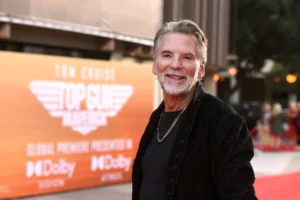
The political controversy soon developed into a music-rights dispute.
Kenny Loggins said the use of “Danger Zone” had not been authorized.
The singer said nobody had requested his permission and that, had he been asked, he would have refused. He requested that his recording be removed from the video.
Loggins also criticized what he viewed as the divisive purpose of the clip, arguing that Americans should be looking for ways to come together rather than further separating themselves politically.
The White House did not respond with a conventional legal explanation when Forbes sought comment.
Instead, its press office reportedly sent back a Top Gun meme referencing the film associated with “Danger Zone.”
The dispute placed the video inside another long-running argument surrounding political campaigns and copyrighted music.
Artists have repeatedly objected when politicians use their songs in rallies, campaign material or social-media content without their approval, even when the legal question of whether a particular use requires an artist’s personal authorization can depend on licensing arrangements and where and how the music is used.
Was the controversial video real?
This part is straightforward.
Yes, Trump really shared it.
But the events depicted inside it were not real.
Fact-checking reports confirmed that the footage was AI-generated and that no aircraft operated by Trump flew over protesters dumping anything on them.
That distinction may sound obvious because the clip was intentionally absurd.
But it points toward a larger challenge facing political communication.
AI-generated political material no longer has to be realistic enough to fool viewers to influence a conversation.
Some synthetic media is deliberately ridiculous.
It can function as propaganda, satire, attack advertising, humor or simply attention-generating content while everyone involved fully understands that the event never happened.
The question then becomes less “Is this real?” and more “Why is this being shown, and what message is it communicating?”
The episode became part of Trump’s growing use of AI
Seen from September 2026, the “King Trump” video no longer looks like an isolated experiment.
Trump and accounts associated with his administration have continued using artificial-intelligence-generated visuals as a major part of their online communication.
In September 2026, for example, the White House released an AI video depicting Trump as the comic-book superhero Green Lantern, complete with a glowing power ring, a border wall and military imagery.
Associated Press reporting in September 2026 described a broader pattern of AI memes portraying Trump as superheroes, military leaders and other larger-than-life figures as Republicans prepared for the midterm elections.
That makes the 2025 “King Trump” video notable for more than its crude joke.
It helped illustrate a communications strategy that has become increasingly visible: use artificial intelligence to create exaggerated versions of the president, generate attention and dominate online political discussion.
The technology lets political accounts create images in minutes that once would have required expensive visual-effects teams.
And the more shocking the concept, the more likely it is to spread.
Political AI creates a new problem for voters
The rise of synthetic political media creates complications far beyond a single Trump post.
Some AI political content is clearly fictional.
Other content can be difficult to distinguish from authentic photographs, speeches or videos.
During the 2026 election cycle, experts have continued warning that increasingly convincing political deepfakes could weaken public confidence not only in fake material but in genuine evidence as well.
That produces what researchers sometimes describe as a broader trust problem.
Once voters become accustomed to fabricated images and voices, real recordings can potentially be dismissed as AI, while fabricated recordings can be passed off as authentic.
Trump’s “King Trump” clip was not particularly subtle, but its use by one of the most powerful political figures in the world showed how normalized AI-generated political imagery was becoming.
Supporters saw trolling; critics saw something more serious
The reaction to the post reflected the country’s wider political divide.
Trump supporters argued that critics were taking an obvious internet joke too seriously.
Similar defenses have been offered for other AI-generated material shared by Trump and his allies. Vice President JD Vance, for example, previously defended controversial AI content targeting Democratic politicians by characterizing such material as jokes.
Critics countered that the source matters.
An anonymous meme account making a crude joke is one thing, they argued. A sitting president amplifying imagery portraying American protesters being attacked is another.
For organizers of No Kings, the video did not undermine their argument.
Indivisible co-executive director Ezra Levin responded that Trump appeared clearly bothered by the size of the demonstrations, while other organizers described the protests as expressions of patriotism and constitutional free speech rather than hostility toward the United States.
Republicans rejected that characterization and argued that organizers and Democratic supporters were exaggerating the authoritarian comparisons.
The argument therefore continued long after protesters had gone home.
Nearly a year later, the video looks less like an exception
What made the October 2025 post extraordinary at the time was the combination of elements.
A U.S. president.
A golden crown.
A fighter jet called “King Trump.”
Millions of people protesting his administration.
A synthetic attack involving what appeared to be human waste.
And a famous song whose performer said he never approved its use.
Yet by 2026, AI-enhanced political theater has only become more common.
Trump’s continued circulation of fantastical AI imagery suggests that the backlash surrounding the No Kings video did little to discourage the strategy. Recent posts and White House material have continued portraying him as fictional heroes and larger-than-life figures.
Whether voters view that approach as entertaining, offensive or simply another part of modern internet politics depends heavily on their politics.
But the underlying development is harder to dispute.
Artificial intelligence is changing what political messaging looks like.
And the “King Trump” controversy offered an unusually vivid example of how quickly a synthetic joke could become a national story involving protests, presidential power, copyright and the boundaries of political speech.
For millions of No Kings protesters, their message that day was deliberately simple: presidents are not monarchs.
Trump said the same thing publicly — “I’m not a king.”
Then his social-media account shared an AI video depicting him wearing a crown.
That contradiction was exactly why the 19-second clip attracted so much attention.